
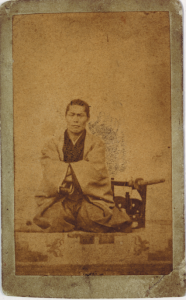
Born the son of a peasant in 1834, Kondō Isami aspired to rise above his station in life. Through his swordsmanship skills, personal ambition, and determination to serve the Tokugawa shogun, he rose to command the Shinsengumi, the formidable police force that defended the shogunate—the Tokugawa Bakufu—in Kyoto during its final years.
Kondō’s extraordinary rise was followed by a tragic fall. In the spring of 1868, as the Bakufu collapsed, he was captured and executed by forces of the new Imperial government.
Yet it was in defeat, and particularly in the face of death, that Kondō Isami perhaps most clearly demonstrated the virtues of bushidō, the way of the samurai. How he did so is explored in my forthcoming Samurai Swordsmen, Volume 2 of the Samurai Revolution Trilogy.