Samurai Swordsmen: The Definitive History of the Shinsengumi amid the Fall of the Tokugawa Shogunate is now listed on Amazon USA

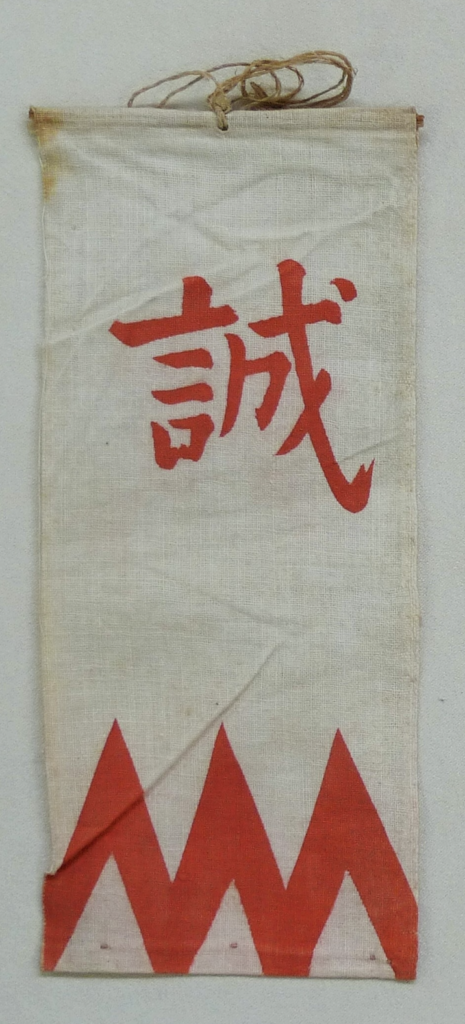
Shinsengumi sleeve badge bearing the red character makoto (“sincerity”) above a stylized mountain-like pattern. According to the Ryozen Museum of History, the badge was worn on the sleeve by Shinsengumi corpsmen for identification and to prevent accidental clashes between members. Formerly owned by Shimada Kai. Courtesy of the Ryozen Museum of History.

This volume has occupied me for years. At more than 270,000 words, it is by far the most comprehensive work I have written on the Shinsengumi and the fall of the Tokugawa Bakufu. While centered on Kondō Isami, Hijikata Toshizō, and the Shinsengumi, the book is also a broader narrative of the political and military collapse of the Tokugawa order during the final years of the samurai age.

In many ways, Samurai Swordsmen continues and expands the historical world of Samurai Revolution. Together with The Last Shogun, the third book of the Samurai Revolution Trilogy (now in progress), it forms part of a larger attempt to narrate the fall of the Tokugawa Bakufu and the men who shaped its final decades.

More updates soon.

Romulus Hillsborough

[The Shinsengumi sleeve badge bearing the character makoto (“sincerity”) is courtesy of the Ryozen Museum of History.]

Just before Sannan Keisuké’s Seppuku


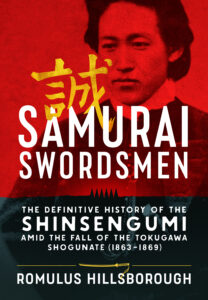
Cover of Samurai Swordsmen: The Definitive History of the Shinsengumi amid the Fall of the Tokugawa Shogunate, (1863–1869) by Romulus Hillsborough

From my forthcoming Samurai Swordsmen:

At around four o’clock in the afternoon, “at dusk on that early spring day, someone came to my house to tell us that ‘Sannan is going to commit seppuku,’” Yagi recalled. The boy and his father “rushed” to the Maekawa house just across the narrow street—and the scene they witnessed was “pathetic.” “Just as I passed through the front gate of my house, there was a girl rushing by,” whom Yagi recognized as a woman from the Shimabara pleasure quarter who “had become intimate with Sannan.” Taken by surprise, the boy, “without saying a word, stood in front of the gate and watched as the girl ran over to the latticed bow window on the west side of the Maekawa house, and while knocking [on the window] screamed” Sannan’s name “over and over.” Soon Yagi approached the house and “silently stood there watching.”


Samurai Swordsmen: The Definitive History of the Shinsengumi amid the Fall of the Tokugawa Shogunate (1863–1869) (Helion, 2026) is now in production.


Just before the Ikédaya Incident


Cover of Samurai Swordsmen: The Definitive History of the Shinsengumi amid the Fall of the Tokugawa Shogunate, (1863–1869) by Romulus Hillsborough

From my forthcoming Samurai Swordsmen: just before the Ikédaya Incident:

In the Fourth Month, Tomizawa Chūémon, the wealthy headman of Renkōji village in Tama, was in Kyoto. Ten years older than Kondō Isami, he had served as go-between for the former’s marriage and was a patron of Tennen Rishin. As such, he had close relations not only with Kondō himself but also with other Tennen Rishin swordsmen, including Hijikata, Okita, and Inoué. On 4/11, the four Shinsengumi men held a farewell party for their friend at the Shimabara pleasure quarter. It was probably at this time that Tomizawa handed Kondō an iron-ribbed fan on which he asked him to write something as a keepsake. On the front surface of the fan was a painting of a pair of “Mikawa manzai” comedians. On the back surface, which was blank, Kondō, with brush and ink, composed three large, flowing characters in classical Chinese: “I want to soar with force.” He signed his calligraphy, “Imperial Palace Guard, Kondō Isami.” He would realize his desire in less than two months at the Ikédaya inn.


Samurai Swordsmen: The Definitive History of the Shinsengumi amid the Fall of the Tokugawa Shogunate (1863–1869) (Helion, 2026) is now in production.

View the book on the Helion website

Samurai Swordsmen Listed on the Publisher’s Website

Cover of Samurai Swordsmen: The Definitive History of the Shinsengumi amid the Fall of the Tokugawa Shogunate, (1863–1869) by Romulus Hillsborough

Samurai Swordsmen: The Definitive History of the Shinsengumi amid the Fall of the Tokugawa Shogunate (1863–1869) is now listed on the website of its publisher, Helion & Company. The book is scheduled for publication in fall 2026.

The listing marks the formal public cataloging of the volume, which represents the culmination of many years of research into the history of the Shinsengumi and the political world of late Tokugawa Japan. The book builds on my earlier work while incorporating extensive primary-source material not previously available in English.

Further updates will be posted here as publication approaches.

View the book on the Helion website

Background: The Shinsengumi Hub