The Ryōma Phenomenon (3) – The Statue at Katsurahama

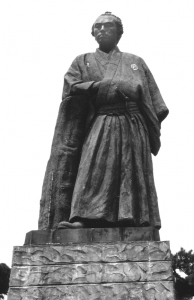
ryoma bronze
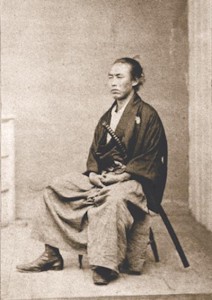
In 1928, fourteen years after the publication of Chikami’s biography mentioned in Part 2 of this series, this famous statue was unveiled at Katsurahama beach in Ryoma’s hometown of Kochi, further strengthening the foundation of “The Ryōma Phenomenon” in the 21st century. Looking out at the Pacific Ocean that he had intended to sail with his Kaientai (“Naval Auxiliary Corps”), precursor to the Mitsubishi, Ryōma, wearing boots, has his right hand inside his kimono. The boots and the pose were inspired by the famous standing photograph taken in Nagasaki in 1866, the year before his death.
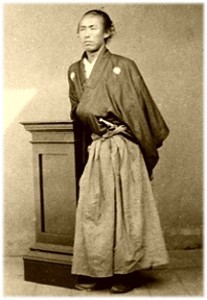
Sakamoto Ryoma

Samurai Swordsmen: The Definitive History of the Shinsengumi (Helion, 2026) is now in production.
For professional guidance on Bakumatsu–Meiji Restoration history, see Historical Consulting.
Explore my books at Books at a Glance.
The Ryōma Phenomenon (2) – Find Out Why Ryōma Still Captivates Japan

ryoma

Sakamoto Ryōma: founder of Japan’s first trading company, swaggering swordsman who packed a Smith & Wesson, outlaw, leader in the “samurai revolution” at the dawn of modern Japan – and now, in the 21st century, he’s a superstar.

With the geopolitical and economic challenges facing Japan today, many people express their wish that a leader of Ryōma’s caliber would emerge. “Who from the past millennium of world history would be most useful in overcoming Japan’s current financial crisis?” a national newspaper asked executives of some 200 Japanese corporations. Ryōma received more mention than any other historical figure, topping such giants as Thomas Edison, Leonardo da Vinci, Saigō Takamori, Oda Nobunaga and the founders of NEC and Honda.

12239281_166492783701871_854606056761245490_o

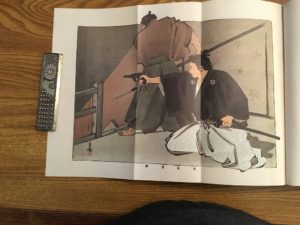
As I mentioned in a recent post, to the best of my knowledge the first book about Ryōma was Sakazaki Shiran’s novel, published in 1883. Ryoma’s fame and legacy were further boosted by Chikami Kiyomi’s 1914 biography, a famous illustration from which is shown here.

What’s so special about Ryōma? Why “The Ryoma Phenomenon” in the 21st century? To find out, read about his life and legacy in the only novel about him in English: Ryoma: Life of a Renaissance Samurai.


Samurai Swordsmen: The Definitive History of the Shinsengumi (Helion, 2026) is now in production.
For professional guidance on Bakumatsu–Meiji Restoration history, see Historical Consulting.
Explore my books at Books at a Glance.
The Ryoma Phenomenon (1) – How Japan’s “Renaissance Samurai” Became a Legend

Sakamoto Ryoma: founder of Japan’s first trading company, swaggering swordsman who packed a Smith & Wesson, outlaw, leader in the “samurai revolution” at the dawn of modern Japan – and now, in the 21st century, he’s a superstar.

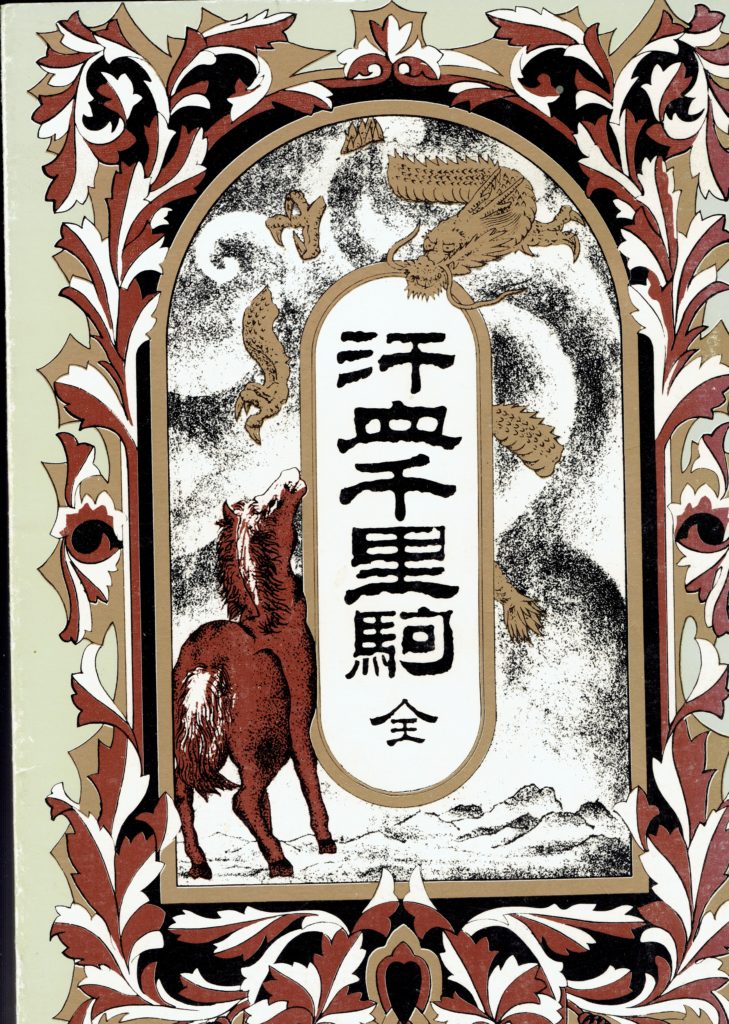
Sakazaki book cover

Recently I’ve been speaking about “The Ryoma Phenomenon,” which began perhaps with Sakazaki Shiran’s novel, published in 1883, sixteen years after Ryoma’s death.

“The Ryoma Phenomenon” is even bigger today.

But why such fuss over a young man who died nearly 150 years ago? To find out why, read Ryoma: Life of a Renaissance Samurai, the only biographical novel about him in English.

Lessons from Saigo, man of the people, amid travesty of Democracy in USA (Part 2)

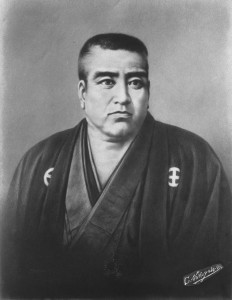
Saigo Takamori

己を愛するは、善からぬことの第一なり。

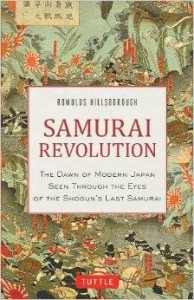
Saigo Takamori, the most powerful driving force behind the Meiji Restoration, was one of the great leaders in Japanese history. Saigo’s biographer Kaionji Chogoro wrote that he “was physiologically unable to bear” even being suspected of any sort of underhandedness. And as I wrote in Samurai Revolution, he had a deep-seated repugnance of “self-love,” which he described as “the primary immorality. It precludes one’s ability to train oneself, perform one’s tasks, correct one’s mistakes [and] . . . engenders arrogance and pride.” Would that a moralist of Saigo’s caliber emerge amid the abject corruption of America’s 2016 presidential election.

Part I of this series is here.


Read more about Saigo Takamori in Samurai Revolution.

644502_247397672083151_1209814990_n

widget_buy_amazon

Katsu Kaishu on Perseverance and “Ki”

Kaishu old man copy

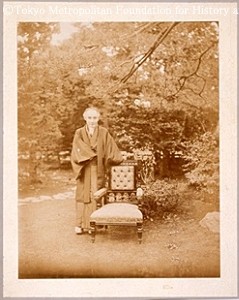
Katsu Kaishū, “the shogun’s last samurai,” was a great statesman, an accomplished swordsman, and a national hero for his all-important role in averting civil war in the spring of 1868, soon after the fall of the shogun’s government. He was also a philosopher, which is apparent in the collection of interviews he gave during the 1890s, the last decade of his life. The following, which I translated from the Japanese, is one of my favorites:

“Perseverance is the foundation of everything. It’s strange that while people nowadays make a big deal about [nourishing their bodies], they don’t know how to persevere.… Since human beings are living things, the most important thing [for a human being] is to nourish ki.* As long as a person’s ki is not starved, it doesn’t matter what he eats.”

* Ki (気): May be translated here as “vital energy.”

[From Hikawa Seiwa (Katsu Kaishū Zenshū 21) Tokyo: Kodansha, 1973 (pp. 182-183), from a December 6, 1895 interview with the newspaper Kokumin Shinbun.]

[Photo: Katsu Kaishū standing beside a chair in the garden of his Hikawa estate, Tokyo, photographed in the 1890s during the final years of his life.]


Katsu Kaishū is the “shogun’s last samurai” of Samurai Revolution, the only full-length biography in English.