At Hikawa (氷川にて)

img_1359-1

Earlier this month my friends Minako Kohyama and Michio Tsuda and I visited the Hikawa Shrine in Tokyo’s Akasaka district, near the site of Katsu Kaishū’s residence. (Ms. Kohyama is a great great grandchild of Katsu Kaishū. Mr. Tsuda is a direct descendent of Katsu Kaishū’s friend, Tsuda Sen.) We had the special opportunity to view these hanging scrolls with calligraphy written by Katsu Kaishū, Yamaoka Tesshū and Takahashi Deishū – “Bakumatsu no Sanshū.”
unknown-1

It’s common knowledge that Ryōma knew Kaishū. But until I had read a recent book by my good friend Kiyoharu Omino, “Ryōma no Yuigon,” I did not know that Ryōma had actually met Tesshu and Deishu.

From the shrine we walked to the nearby statue of Katsu Kaishū and Sakamoto Ryōma, unveiled last month at the site of Kaishū’s residence. (Ms. Kohyama is in the photo below.)
img_136814713704_1097987676957531_9140689117727583012_n

I wrote about “Bakumatsu no Sanshu” in Samurai Assassins.

Read about Kaishū’s relationship with Ryōma in my Samurai Revolution, the only full-length biography of Kaishū in English.

Kondo Isami’s Embroidered Skull

Shinsengumi Commander Kondo Isami was a peasant by birth, a warrior by nature. He was a man of traditional values and a martial mind-set, whose black training robe was embroidered in white on the backside with a large human skull – a symbol of his resolve to die in battle whenever he entered the dojo. He had enlisted in the Roshi Corps [precursor to Shinsengumi] with aspirations of becoming a samurai in the service of the shogun. As leader of the shogun’s most lethal samurai corps he secured a vehicle into the top strata of the Tokugawa hierarchy and indeed historic immortality. (excerpt from Shinsengumi: The Shogun’s Last Samurai Corps, p. 22)
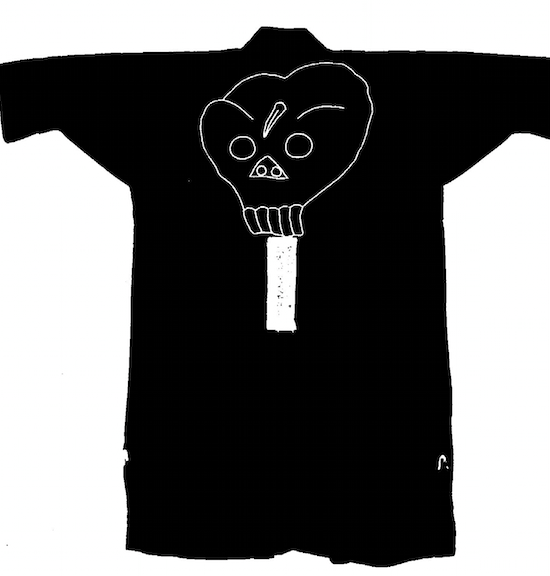
Black training robe worn by Shinsengumi commander Kondō Isami, featuring a white embroidered skull symbolizing his dedication and courage.


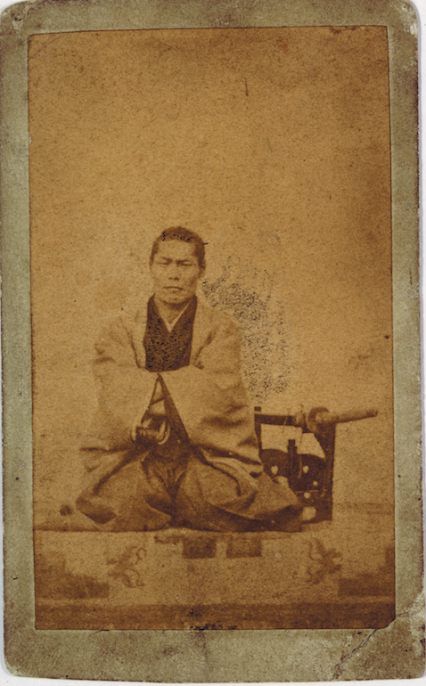
[The photograph of Kondo’s training robe is used in Shinsengumi: The Shogun’s Last Samurai Corps courtesy of Masataka Kojima. The photo of Kondo himself is used courtesy of the descendants of Sato Hikogoro and Hino-shi-Furusato Hakubutsukan.]


Follow Romulus Hillsborough on Facebook | Amazon Author page
Takasugi Shinsaku’s Indomitable Spirit

Takasugi Shinsaku

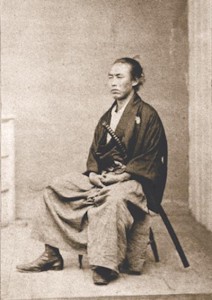
Recently I’ve been posting a lot of material about Sakamoto Ryoma. One of Ryoma’’s closest cohorts in the revolution to topple the Tokugawa Bakufu was Takasugi Shinsaku, the leader of Choshu’s revolutionary army. Aside from a bout of the smallpox that nearly killed him at age nine, Takasugi reportedly spent a relatively uneventful childhood as the only son of a high-ranking samurai in Hagi, the castle town of Choshu. Not much is known about his childhood, although a few anecdotes have been passed down.

One day during the New Year holiday of his fifth year, as he flew a kite near his home in observance of a New Year tradition, a visitor appeared. The visitor, a samurai, was dressed formally for the occasion in fine clothes–hakama and haori displaying his family crest–a gift from the Choshu daimyo. He had come to exchange New Year’s greetings with the Takasugi family. Just as he passed by the boy, the kite fell to the ground near a muddy patch of melting snow. The visitor accidentally stepped on the kite, crushing it. Since nobody was present but a small boy, he disregarded the incident and continued toward the house. But the boy was angry and picked up a handful of mud, with which he threatened to soil the visitor’s clothes unless he apologized. The visitor begged the small boy’s pardon and continued on his way.

Another episode indicative of Takasugi Shinsaku’s indomitable spirit involves the custom among the samurai of Hagi to send their young sons to the local execution grounds to witness the beheadings of criminals—which was supposed to nurture bravery. One day his mother prepared a boxed lunch and told him to go and watch the beheadings with other samurai boys. After the first beheading some of the boys ran home in horror. But not Shinsaku, who ate his boxed lunch and remained until the end of the day to watch the entire series of executions.

(source: Furukawa, Kaoru. Takasugi Shinsaku. Osaka: Sogensha, 1986; pp. 14-16)

For updates about new content, connect with me on Facebook.

Read more about Takasugi Shinsaku in my historical narrative, Samurai Revolution, and my biographical novel, Ryoma: Life of a Renaissance Samurai.


ryoma

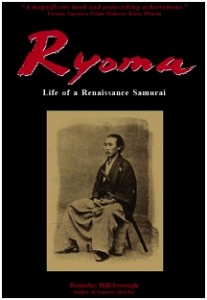
Ryoma: Life of a Renaissance Samurai, the only biographical novel about Sakamoto Ryoma in English, is available on Amazon.com.

widget_buy_amazon

“A man of consequence”

ryoma and takechi screen shot

After the assassination of the shogun’s regent, Ii Naosuke, in the Third Month of the Japanese year corresponding to 1860, the revolution was led by samurai of Satsuma, Choshu, and Tosa. Around this time in Tosa emerged two men who would inform the revolution—both charismatic swordsmen originally from the lower rungs of Tosa society.

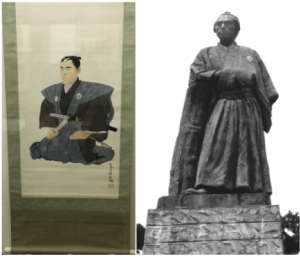
Takechi Hanpeita was a planner of assassinations and stoic adherent of Imperial Loyalism and bushido, whose political agenda led to his downfall and eventual death. Sakamoto Ryoma, one of the most farsighted men of his time, had the guts to throw off the old and embrace the new as few men ever have—and for his courage, both moral and physical, he was assassinated on the eve of a revolution of his own design. And while Hanpeita and Ryoma were close friends, they had contrasting personalities, as indicated in the following anecdote taken from my Samurai Tales:

[begin excerpt] Known for their ability to consume vast amounts of sake at a single sitting, the young men of Tosa were wont to drink a potent local brew as a condiment to political discourse. One day, upon leaving a political meeting at Hanpeita’s home, Ryoma, as was his habit, relieved himself in his friend’s front garden, so that after he had left the stench of stale urine remained. When Hanpeita’s wife complained about Ryoma’s “sickening habit,” he turned to her and sternly said, “Ryoma is a man of consequence to the nation. I think you can tolerate that much from him.” [end excerpt]

[The above portrait of Takechi Hanpeita is on exhibit at the Sakamoto Ryoma Memorial Museum in Kochi. The statue of Ryoma is at Katsurahama in Kochi.]

Read more about the lives of both men in Samurai Tales and my historical novel, Ryoma: Life of a Renaissance Samurai.

Saigō’s Letter to Kaishū

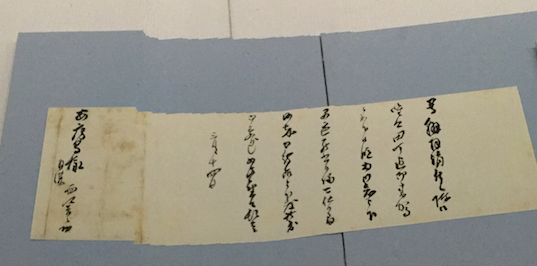
In Third Month of the Japanese year corresponding to 1868, around three months after the fall of the Tokugawa Bakufu (Shogunate), the forces of the new Imperial government were set to launch a general attack on the shogun’s capital of Edo (modern-day Tokyo). Meanwhile, Katsu Kaishū, commander-in-chief of the fallen shogun’s military, appealed to Saigō Takamori of Satsuma, the commander of the Imperial forces, to call off the attack, which would have resulted in a bloodbath in that city of well over one million people. Kaishū asked Saigō to meet to discuss terms for a peaceful surrender of Edo and its mighty castle that would be acceptable to both sides. The two commanders met twice, once each on the 13th and 14th of that month.

saigo's letter to kaishu screen shot

This letter from Saigō to Kaishū, dated 3/14, was in reply to a letter from Kaishū informing Saigō that he was waiting to meet him a second time at Satsuma’s warehouse facility (kurayashiki) in the Tamachi district of Edo. Replying that he would arrive shortly, Saigō asked Kaishū to wait for him. Saigō arrived as promised, and as a result of the ensuing “Meeting of the Two Heroes” the attack was called off.

[The letter from Saigō to Kaishu is exhibited in the Edo-Tokyo Museum in Tokyo, Japan.]


Katsu Kaishū is the “shogun’s last samurai” of Samurai Revolution, in which I wrote in detail (Chapters 27-30) about his role in averting civil war, including his talks with Saigō.