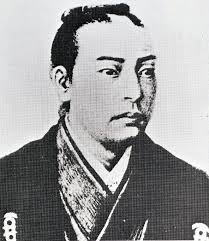
The Motives Behind Sakamoto Ryōma’s Assassination

Based on his resistance to the social iniquities and restraints under the Tokugawa Bakufu – i.e., the shogun’s government – Sakamoto Ryōma changed history through a series of unparalleled historical achievements: the founding of Japan’s first trading company; the brokering of a military-political alliance between the Bakufu’s most formidable enemies; and his great plan for peaceful restoration of Imperial rule.

After the shōgun’s historical announcement at his castle in Kyōto to relinquish power to the Imperial Court based on Ryōma’s peace plan, the situation in Kyōto was dangerous and volatile, with samurai “thirsty for blood” gathered there from all over the country, recalled Watanabé Atsushi, a Bakufu samurai who later claimed to have killed Ryōma. “Since Sakamoto was no good for the Bakufu or the Imperial Court…, I thought we had to kill him,” said Imai Nobu, a cohort of Watanabe’s, decades later.

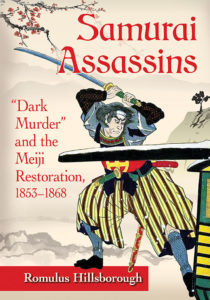
Read more about Ryoma’s assassins and their motives in my new book, Samurai Assassins.


hillsborough_978-1-4766-6880-2
widget_buy_amazon


The Assassination of Sakamoto Ryōma (1)

The assassination of Sakamoto Ryōma on the eve of a revolution of his own design was probably the most tragic event of the Meiji Restoration. And certainly it was one of the most historically significant assassinations in what was thus far the most bloody and tumultuous period in Japanese history (1853-1868). In the Prologue of my novel, Ryoma: Life of a Renaissance Samurai (Ridgeback Press, 1999), I describe Ryōma as follows: “outlaw-samurai, pistol-bearing swordsman, freedom-fighter, pioneering naval commander, entrepreneur and statesman, a youth ahead of his time with an imagination as boundless as the Pacific Ocean–was a leader in the revolution to overthrow the shogunate and form a unified democracy in Japan.”

In my new book, Samurai Assassins, the printed edition of which was released today, I wrote, “To fully understand the scale of Ryōma’s tragedy, we must realize that he was a visionary and a genius—if genius means to conceive of original ideas and to have the courage and audacity to bring them to fruition.”

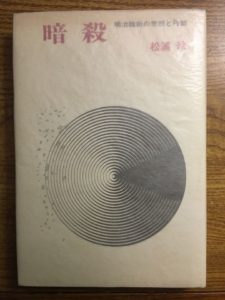
Part III of Samurai Assassins, is titled “The Assassination of Sakamoto Ryōma” His murder is shrouded in mystery. Samurai Assassins provides the first in-depth study of the tragic event in English, based mostly on primary sources.


hillsborough_978-1-4766-6880-2
widget_buy_amazon

About the Writing of My New Book, “Samurai Assassins”

My new book, Samurai Assassins, was published yesterday, March 24, by McFarland as an ebook. The paperback edition should be out before the end of this month. Samurai Assassins, as I have I have described it here, is the only thorough presentation and analysis in English of the most historically significant assassinations of the Meiji Restoration era, “the dawn of modern Japan.” On a deeper level, it is a study of the ideology and psychology behind the “samurai revolution” – which is why it so well complements my previous book Samurai Revolution: The Dawn of Modern Japan Seen Through the Eyes of the Shogun’s Last Samurai (Tuttle 2014).

I have long been intrigued by the personalities and motives of the assassins in the samurai revolution. I began writing Samurai Assassins soon after completing the manuscript of Samurai Revolution around the end of 2011. In previous books I had written about “dark murder” – a translation of the Japanese term for “assassination” – but in much less detail than in Samurai Assassins. Since “dark murder” had thus far received only cursory, if any, attention by non-Japanese writers, notwithstanding its great impact on the Meiji Restoration, and as a result on Japanese, Asian and even world history, I saw the need to write Samurai Assassins.

I finished writing the book around the end of 2014. I felt confidant that Tuttle, which had published three of my books, would jump at the chance to take this one. So I was surprised, and not a little disappointed, when they refused my proposal. But confident that the book was both original and important – not to mention a “good read” – I contacted several other publishers, and finally settled on an excellent one, McFarland, a self-described “leading independent publisher of academic and nonfiction books.” And they have done an excellent job preparing and publishing Samurai Assassins, for which I am most grateful.


hillsborough_978-1-4766-6880-2
widget_buy_amazon

Katsu Kaishū’s Portrait by US Navy Sailor Edward Kern

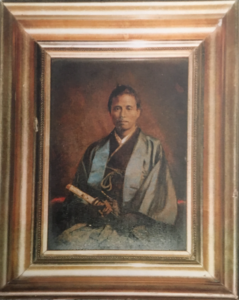
I really like this portrait of Katsu Kaishū. The artist was Edward M. Kern, one of the US Navy sailors under Lieutenant John M. Brooke who joined Capt. Kaishū and company on their historical journey aboard the warship Kanrin Maru, the first Japanese ship to reach North America upon landing at San Francisco on March 17 (St. Patrick’s Day), 1860. Based on the inscription on the backside of the painting, Kaishū was apparently known to the Americans as “Capt. Katzlintaro” (and at least one SF newspaper referred to him as Capt. Katsintarroh), Rintarō being his given name. Kern was a draftsman who had served in John Charles Fremont’s third expedition to the American West. Fremont named the Kern River in California after him. As I wrote in Samurai Revolution, the only full-length biography of Katsu Kaishū in English, the local San Francisco newspaper Daily Evening Bulletin described Katsu Kaishū as “a fine looking man, marvelously resembling in stature, form and features Colonel [John Charles] Fremont, only that his eye is darker, and his mouth less distinctly shows the pluck of its owner.”


Samurai Swordsmen: The Definitive History of the Shinsengumi (Helion, 2026) is now in production.
For professional guidance on Bakumatsu–Meiji Restoration history, see Historical Consulting.
Explore my books at Books at a Glance.
An Indispensable Document for Knowing the Facts Regarding Ryōma’s Assassination

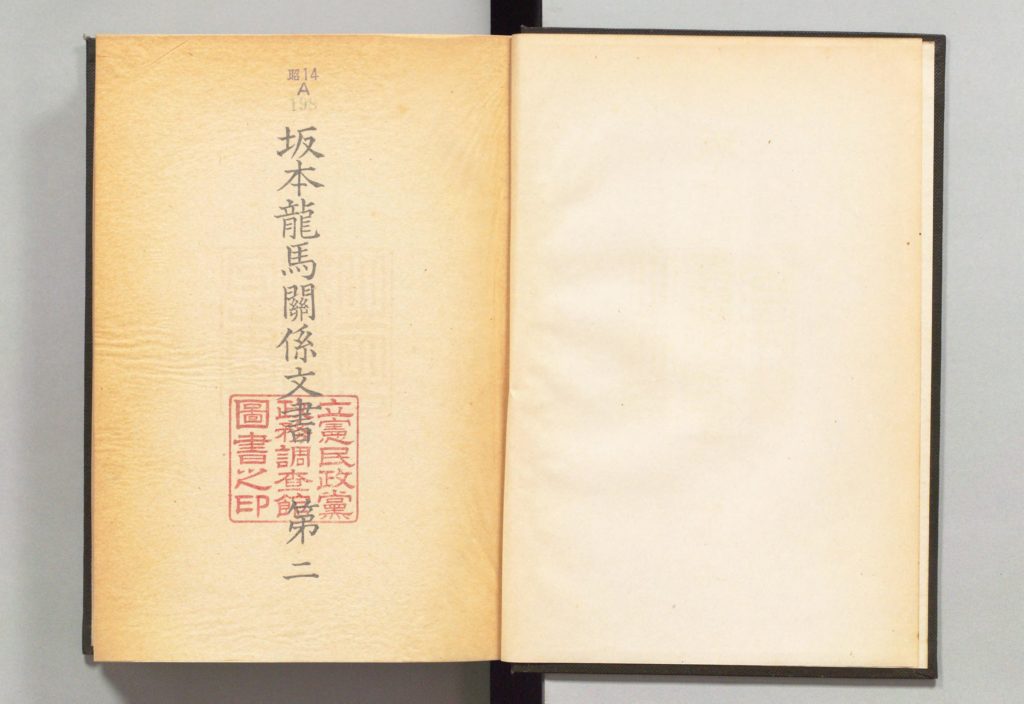
The double assassination of Sakamoto Ryōma and Nakaoka Shintarō on the eve of the collapse of the Tokugawa Bakufu is an unsolved mystery—but only to a certain extent. What is known of the details of the incident, including the circumstances surrounding Ryōma and Nakaoka just before the attack, their actual murders, and the aftermath, is based primarily on accounts from men representing the two opposing sides in the revolution. On the one hand are accounts from two men who claimed to have committed the assassinations. On the other hand are accounts from the victims’ friends, some of which is based on information heard directly from Nakaoka as he lay dying soon after the attack. Most of these accounts are included in a document entitled “Sakamoto to Nakaoka no Shi” (“The Deaths of Sakamoto and Nakaoka”).

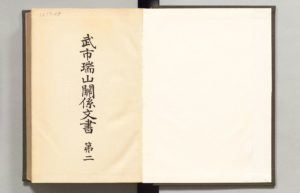
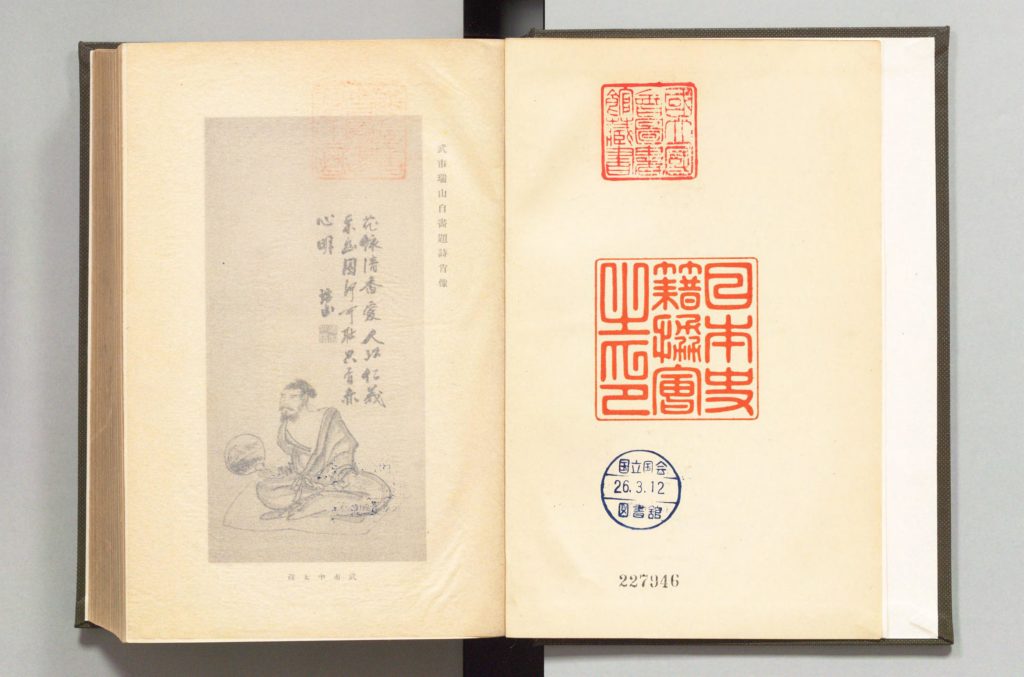
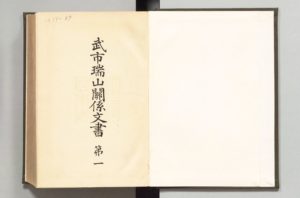
I relied heavily on this document in writing “Part III: The Assassination of Sakamoto Ryōma” of Samurai Assassins. The distinguished Meiji Restoration historian Hirao Michio described it as “indispensable for arriving at a conclusion” as to the facts behind the double assassination of Sakamoto Ryōma and Nakaoka Shintarō, since it “uses every possible piece of historical material in pursuit of the facts.” This document was originally published in 1926 as part of the Sakamoto Ryōma Kankei Monjo, Vol. II (The image of the book shown below is from the from The National Diet Library Digital Collection.).

To explore my other books, see Books at a Glance.