Takéchi Hanpeita’s Letters from Jail

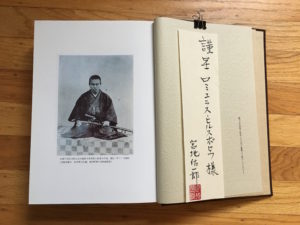
In writing Samurai Assassins, Part II: The Rise and Fall of Takéchi Hanpeita and the Tosa Loyalist Party, I referred heavily to the letters Takéchi’s wrote from jail to his wife and sisters, and to his cohorts who had not been imprisoned. The letters to his friends, written in formal language and tone befitting a samurai, provide an insight into Takéchi’s thinking, including his stoic philosophy. The letters to his wife and sisters, on the other hand, overflow with the tender feelings of a husband and brother, and include self-effacing humor, complaints, despondency, and melancholy absent in the other letters—and indeed in his entire persona observed through any other medium. To the best of my knowledge, Takéchi’s letters have rarely, if ever, been used by Western writers.The letters are published in Takéchi Zuizan Kankei Bunsho (武市瑞山関係文書; “Takéchi Zuizan-related Documents”; Zuizan was Takéchi’s pseudonym). The images of the book shown here are from the from The National Diet Library Digital Collection.


hillsborough_978-1-4766-6880-2
widget_buy_amazon

“The History of Tosa Loyalism in the Meiji Restoration” and the Writing of “Samurai Assassins”

Ishin Tosa Kinnō-shi (維新土佐勤王史; “The History of Tosa Loyalism in the Meiji Restoration”), based on a biography of Takéchi Hanpeita and biographical materials on other men associated with this history, was published in 1912 by a group of former Tosa Loyalists and other former Tosa samurai. 1912 corresponds to the last year of the Meiji era. Takéchi and his Loyalist Party, of course, played a major role in bringing about the Meiji Restoration of 1868, which was the beginning of the Meiji era.

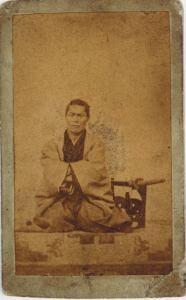
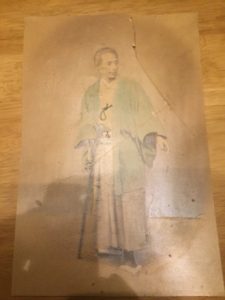
I referred to this book in Samurai Assassins, particularly in Part II: The Rise and Fall of Takéchi Hanpeita and the Tosa Loyalist Party. The cover image shown here (but not the portrait of Takechi) is from The National Diet Library Digital Collection (国立国会図書館デジタルコレクション).


hillsborough_978-1-4766-6880-2
widget_buy_amazon

“Assassination” by Matsuura Rei, One of the Greatest Writers of This History

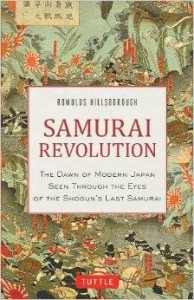
 Matsuura Rei (松浦玲) is one of the most important writers of Bakumatsu-Meiji Restoration history. His work on Katsu Kaishu is particularly important. Kaishu is “the shogun’s last samurai” of my book Samurai Revolution. I referred to Matsuura’s Ansatsu (“Assassination” — above) in my new book, Samurai Assassins. Ansatsu was published in 1979, the same year I first set foot in Japan.


hillsborough_978-1-4766-6880-2
widget_buy_amazon

Bushidō: A Universal Code for the 21st Century

My forthcoming book, Samurai Swordsmen: The Definitive History of the Shinsengumi, is scheduled for publication in fall 2026. The Shinsengumi symbol (shown here) was the character makoto, which means “sincerity,” one of the three cardinal virtues of bushidō, along with loyalty and courage. Bushidō of course means “the way of the samurai.” And while men such as Kondō Isami, commander of the Shinsengumi, lived by the code of bushidō, these three virtues are by no means exclusive to the samurai.
Consider the meaning of the symbols used to express two of these concepts in the Japanese language:
sincerity (誠), pronounced makoto
loyalty(忠), pronounced chū

Makoto is a combination of the characters for “to say” and “to do” (or “to accomplish”). “To do what one says” is to be sincere. Chū is a combination of the characters for “inside” and “heart” (or “mind”): A loyal samurai keeps his heart and mind within the fold of his feudal lord, or daimyo. This may be directed at one’s country, or even family or friends.

But even the most loyal person of the best intentions might lack the guts do what he says. It might be too dangerous. Or perhaps the sacrifice would be too great. Which is one of the reasons why courage, both physical and moral, is so important.

So if you think about it, these basic bushidō virtues are not exclusively “of the samurai” or even Japanese. Rather, it seems, “the way of the samurai” is to a certain extent universal.

This essay reflects on one of the central moral codes guiding the Shinsengumi — themes explored further in Samurai Swordsmen.


Samurai Swordsmen: The Definitive History of the Shinsengumi (Helion, 2026) is now in production.
For professional guidance on Bakumatsu–Meiji Restoration history, see Historical Consulting.
Explore my books at Books at a Glance.

Arimura Jizaemon and the Assassination of Ii Naosuke

On an unseasonably snowy spring morning in 1860 the most powerful man in Japan was cut down in broad daylight as he was about to enter Edo Castle, the seat of government of the Tokugawa Shogun, whose military regime, the Tokugawa Bakufu, had ruled for two and a half centuries.

The shogun at the time was a fifteen-year-old boy, and his regent, Ii Naosuke, who ruled with an iron fist, was widely reviled for wresting power from his political enemies, perceived lèse–majesté against a powerless yet sanctified Emperor in unilaterally concluding foreign trade treaties against the Imperial will, and his notorious purge of his political enemies from the highest echelons of the government. Ii’s assassination, which marked the beginning of the end of the shogun’s rule, was followed by eight years of chaos and turmoil and violence, which would not subside until the collapse of the shogun’s government and the restoration of Imperial power—the series of events collectively called the Meiji Restoration.

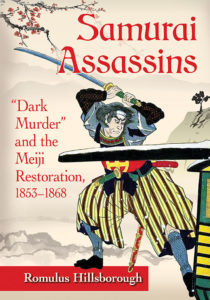
The assassination of Ii Naosuke is the subject of Part I of my three-part Samurai Assassins: “Dark Murder” and the Meiji Restoration, 1853-1868. I tell the story of this most important event of the era from the perspective of Ii’s enemies, including the band of eighteen samurai who colluded to assassinate him.

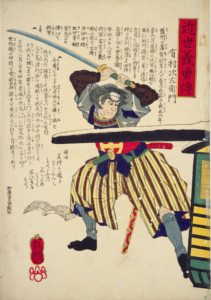
One of the eighteen, Arimura Jizaemon, who beheaded Ii, is depicted on the cover of the book. The image is part of a series entitled Kinseigiyuden (“Biographies of Loyal and Courageous Men”) by Ichieisai Yoshitsuya (1822 – 1866), originally published in a magazine called “Nishikie.”


hillsborough_978-1-4766-6880-2
widget_buy_amazon