“The heart of a samurai [must be] as solid as a rock.” Takechi Hanpeita

Takechi Hanpeita, the leader of the Tosa Loyalist Party who was determined to overthrow the Tokugawa Bakufu and restore Imperial rule, had languished in prison for nearly two years. On the 29th day of the Fifth Month of the Japanese year corresponding to 1865, he wrote to his wife from his squalid prison cell that “to lay down one’s life for one’s country or for one’s liege lord is true bushido.” Soon thereafter he was ordered to commit seppuku on the evening of the 11th day of the intercalary Fifth Month. Sentenced to die by his own hand based on trumped up charges of political crimes, he nonetheless took solace in the fact that he was at least given the honor of dying as a samurai, rather than be beheaded as a common criminal.“ [T]he heart of a samurai [must be] as solid as a rock,” he wrote. Now he would have the chance to live up to his words. His stunning seppuku, which he performed with such bravery that even his enemies witnessing the event “were left speechless,” is depicted in detail in Chapter 14 of Samurai Assassins.

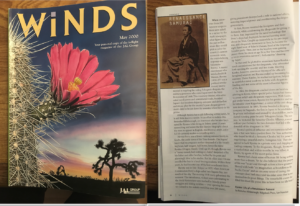
[Takechi Hanpeita is the focus of Part II of Samurai Assassins. His self-portrait, which he produced in his prison cell, appears in Samurai Assassins courtesy of Kochi Prefectural Museum of History.]


hillsborough_978-1-4766-6880-2
widget_buy_amazon

“Went up to the castle”

“Went up to the castle.” Katsu Kaishū, “the shogun’s last samurai,” repeated this phrase often in his journal, as vice commissioner and later commissioner of warships. He was, of course, recording his visits to the shogun’s castle, during the heady and dangerous years leading up to the revolution. “Went up to the castle” is the title of Samurai Revolution, Chapter 13, which opens as follows:

“ . . . I frequently encountered danger, which sometimes encouraged me. But sometimes it was difficult to endure the misery, and even when I hoped for death I survived only to suffer numerous more hardships.” (Katsu Kaishū)

The tide of revolution had been on the rise this past decade. The swirl began in Edo with the arrival of Perry’s “Black Ships” in 1853. Occasionally the tide ebbed, as during the reign of Ii Naosuké, only to surge again with the regent’s murder at the castle gate and the spree of assassinations of foreigners in Edo and Yokohama. As the Bakufu attempted in vain to stem the tide—through a union with the Imperial Court, consummated by the marriage between the young shogun and the Emperor’s sister—the architect of the marriage plan was nearly assassinated. Then sometime around the end of 1862 the tide suddenly turned, and the center stage of the gathering revolution shifted from the shogun’s stronghold at Edo to the Emperor’s capital at Kyoto.

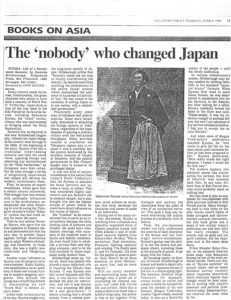
[The photo of Katsu Kaishū, taken just before surrender of Edo Castle, is used in Samurai Revolution, courtesy of Yokohama Archives of History.]

___________________

Katsu Kaishu is the “shogun’s last samurai” of Samurai Revolution, the only full-length biography of him in English.

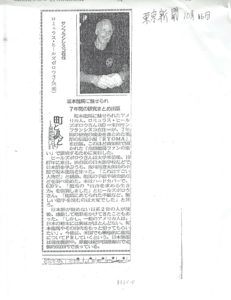
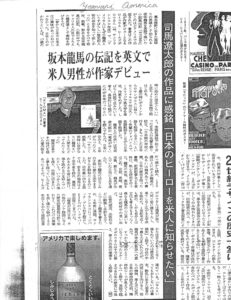
“Ryoma: Life of a Renaissance Samurai” The 20th Anniversary (12): “Ryoma never repaid the money, so I guess he still owes us.”

In researching the book, beside Ryoma’s native Kochi I traveled around Japan to the cities and towns where he was most active during the last five years of his life after he fled his native Tosa Han. These include Kyoto, Nagasaki, Kagoshima, Hagi, and the picturesque fishing village of Tomo on the Inland Sea (Hiroshima Prefecture). Among my most memorable experiences was in 1988, about a year or so into writing the book, when I visited the home of the late Masao Tanaka, a direct descendent of a boyhood friend of Ryoma’s, located in Shibamaki, in the mountains northwest of Kochi Castletown.

As I wrote in the Preface:

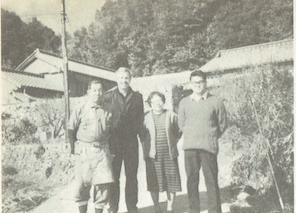
The house was the same one that Ryoma often visited in his youth, and where he apparently stopped, in need of cash, on the outset of a subversive journey he made in 1861 as the envoy of a revolutionary party leader [Takechi Hanpeita]. “My family lent Ryoma money at that time,” the elderly Mr. Tanaka told me, as we stood atop a giant rock [called “Hachijo-iwa”] behind the house, looking out at the Pacific Ocean far in the distance. Mr. Tanaka informed me that Ryoma liked to sit atop this same rock when he visited the Tanaka family, and where he would indulge in wild talk of one day sailing across the ocean to foreign lands. “Ryoma never repaid the money, so I guess he still owes us,” Mr. Tanaka joked.

[The photo above was taken in front of the Tanaka house with Mr. Tanaka (far left); my Japanese teacher Mrs. Tae Moriyama, a Kochi native; and Mr. Mamoru Matsuoka, biographer of Sakamoto Ryoma, Takechi Hanpeita, Nakaoka Shintaro, and Okada Izo, who took us to the Tanaka residence in his Jeep.]
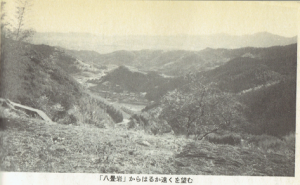
View from Hachijo-iwa
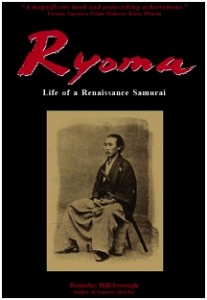
“Ryoma: Life of a Renaissance Samurai”: The 20th Anniversary (11):

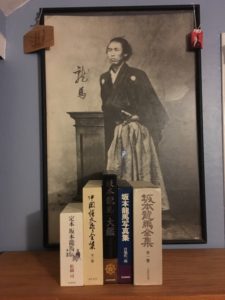
I am honored to be or have been personal friends with the authors of these very important books, whom I have relied upon heavily in writing my own books, including Ryoma.

坂本龍馬全集,中岡慎太郎全集, 坂本龍馬写真集(宮地佐一郎)

定本坂本龍馬伝 (松岡司)

坂本龍馬大鑑 (小美濃清明)

Thank you Mr. Miyaji, Mr. Matsuoka, Mr. Omino.


ryoma
widget_buy_amazon