I am making progress in the third volume of the Samurai Revolution Trilogy. Titled The Last Shogun, it will be a biography of Tokugawa Yoshinobu, who hailed from the Mito domain as the seventh son of its daimyo, Tokugawa Nariaki, one of the most important men of the era and a living symbol of the national movement of Revere the Emperor and Expel the Barbarians—Sonnō-Jōi. In fact, Lord Nariaki personified that slogan until his death in 1860, around eight years before then-Shōgun Tokugawa Yoshinobu surrendered to the Imperial Army with the restoration of Imperial rule in January 1868, the event known as the Meiji Restoration. The Meiji Restoration was brought about after fifteen years of unprecedented turmoil and bloodshed, culminating in a civil war between die-hard Tokugawa loyalists and the forces of the new Imperial regime.
The first two volumes of the Trilogy are Samurai Revolution: The Dawn of Modern Japan Seen Through the Eyes of the Shogun’s Last Samurai (Tuttle 2014) and Samurai Swordsmen: The Definitive History of the Shinsengumi amid the Fall of the Tokugawa Shogunate (1863–1869). Samurai Swordsmen is scheduled for publication this fall by UK-based Helion, which will also publish a revised and expanded edition of Samurai Revolution in spring 2027.
All three volumes are populated by a wide array of historical personages on both sides of the revolution. Among them is Katsu Kaishū, “the shogun’s last samurai” and one of the most consequential men of the era. Kaishū serves as a farsighted voice of reason throughout the Trilogy, based on his prolific writing, including most notably his Bakumatsu Nikki (Journals from the End of the Bakufu). He kept these journals from the Eighth Month of the Japanese calendrical year corresponding to 1862 until June 1870.
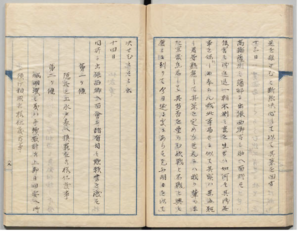
[Katsu Kaishū met twice with Saigō Kichinosuké of Satsuma, the most powerful man in the Imperial Army—on the 13th and 14th days of the Third Month of Keiō 4, the Japanese calendrical year corresponding to 1868. This page from the 3/13 entry in Kaishū’s journal discusses details of the first meeting, held at Satsuma’s Edo estate at Takanawa. (From the National Diet Library Digital Collections.)]