
The Assassination of Sakamoto Ryōma (4)

This year marks the 150th anniversary of the assassination of Sakamoto Ryōma, which is the subject of Part III of my new book, Samurai Assassins.

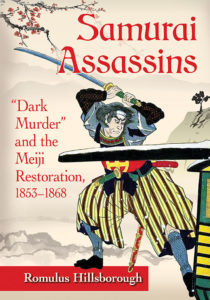
Ryōma’s assassination is shrouded in mystery, and this book provides the first in-depth study of the tragic event in English, based mostly on primary sources. My most important primary sources for Part III include Ryōma’s letters; testimonies and writings by, and interviews of, his alleged assassins; and accounts from people who were either present at the assassination scene or who arrived shortly after the fact. These primary sources, described in Chapter 17, are published in Miyaji Saichirō’s monumental Sakamoto Ryōma Zenshū. (from the Preface)


hillsborough_978-1-4766-6880-2
widget_buy_amazon

Assassination of Sakamoto Ryōma (3)

The assassination of Sakamoto Ryōma on the eve of a peaceful revolution of his own design was a tragedy. Following is an excerpt (without footnotes) from Chapter 15 of Samurai Assassins:
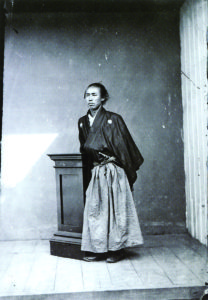
Though Ryōma was the author of the plan for the peaceful restoration of Imperial rule, he was also a leading proponent of Tōbaku, “Down with the Bakufu.” These two seemingly contradictory stances underlie the tragedy of his assassination. In a letter to Ryōma dated Keiō 3/9/4 (1867), the Chōshū leader Katsura Kogorō, using the name Kido Junichirō, likened Tōbaku to a “Great Drama,” the final act of which was getting under way in Kyōto, as Satsuma and Chōshū, in collaboration with Court nobleman Iwakura Tomomi, prepared to destroy the Bakufu. With Ryōma’s assassination around two months later, on the eve of a peaceful revolution of his own design, that drama turned tragic.

Ryōma’s murder by multiple sword wounds to the body and a blow to the head from which his brains reportedly protruded even as he was still able to move around and speak, was as horrible as it was tragic. To fully understand the scale of Ryōma’s tragedy, we must realize that he was a visionary and a genius—if genius means to conceive of original ideas and to have the courage and audacity to bring them to fruition. The German philosopher Friedrich Nietzsche, Ryōma’s contemporary, alluded to genius, I think, with the following statement: “When a human being resists his whole age and stops it at the gate to demand an accounting, this must have influence.” Based on his determined resistance to the social iniquities and restraints under the Tokugawa Bakufu and its archaic feudal system, Sakamoto Ryōma influenced “his whole age” through a series of unparalleled historical achievements: Japan’s first trading company, the Satsuma-Chōshū Alliance, and his great plan for peaceful restoration of Imperial rule.

hillsborough_978-1-4766-6880-2
widget_buy_amazon

Ryōma: Ten Often Overlooked Facts (3)

3) Concerned about things bigger than himself: During the last few years of his life, it seems that Sakamoto Ryōma, while clearly realizing that his life was in danger, was concerned about bigger things than just himself. Illustrating this is an excerpt from my new book, Samurai Assassins (without footnotes):

Ryōma had been staying in a secluded room at the house of a purveyor of soy called the Ōmiya, located in Kawaramachi just across the street from Tosa’s Kyōto headquarters. While apparently disregarding the danger to himself, he worried about the lives of his fellow patriots. To protect them, he planned to send as many as possible to Ezo (modern-day Hokkaidō) in the far north of the country to settle and exploit that mineral-rich wilderness and train them in the naval sciences. He was working on the plan with Hayashi Kenzō, a samurai from Hiroshima Han. In a letter to Hayashi …, Ryōma alluded to the great danger facing the nation under the Bakufu and urged his friend to be careful for his life. “Now is the time for us to act. Soon we must decide on our direction, whether it lead to pandemonium or paradise.” Early in the morning five days later, Hayashi, summoned by Ryōma from Ōsaka for “an urgent discussion” at the Ōmiya, encountered the aftermath of that pandemonium. Upon entering the building he saw “bloody footprints here and there”; then “dashing up the stairway to see if Sakamoto was okay,” he found Ryōma’s corpse, “his sword drawn, lying in a pool of blood.”

Ryōma: Ten Often Overlooked Facts (2)


2) Gifted Writer of Prose: Sometime in the early hours of Keiō 2/1/24 (1866), two days after overseeing the conclusion of the Satsuma-Chōshū Alliance in Kyōto, Sakamoto Ryōma was attacked, wounded, and nearly killed by a Bakufu police squad at the Teradaya inn in Fushimi, just south of Kyōto. Ryōma described the attack and his narrow escape in a letter to his family, much of which is excerpted in my accounts of the incident in Ryoma: Life of a Renaissance Samurai and Samurai Revolution.

The attack at the Teradaya and the narrow escape (much to the credit of his girlfriend Oryō, who worked as a maid at the inn) have become legendary through literature and film. Similarly storied are the wedding ceremony between Ryōma and Oryō shortly thereafter, and their subsequent honeymoon (said to be the first in Japan) at the hot springs in the Kirishima mountains of Satsuma, where Ryōma recuperated from his wounds and took a much needed rest. Ryōma, whose myriad talents included a vivid, fluent writing style, described all of this and much more in two letters to his family, both dated Keiō 2/12/4 (1866). The first of these letters, in which Ryōma “took a hard look at a critical moment in his own existence, is a rarity in Bakumatsu history,” Miyaji Saichirō remarked. (Ryōma Hyakuwa, p. 150) Shiba Ryōtarō, whose popular novel Ryōma ga Yuku immortalized Sakamoto Ryōma in the psyche of the Japanese people, called the letter “the first piece of nonfiction literature of the Bakumatsu.” (Qtd. in Miyaji, Ryōma Hyakuwa, p. 152) Ryōma’s graphic account of the attack, I believe, captures the violence of the times as few surviving documents do.

Ryōma: Ten Often Overlooked Facts (1)

Sakamoto Ryōma’s legacy is based on a series of unparalleled historical achievements during the last few years of his short life: Japan’s first trading company, the Satsuma-Chōshū Alliance, and his great plan for peaceful restoration of Imperial rule. I have discussed these in detail in my books, including Ryoma: Life of a Renaissance Samurai, Samurai Revolution, and Samurai Assassins.

Here I present the first of ten often overlooked facts to take a closer look at Sakamoto Ryōma, the man.

1) GeniusAs I mentioned in Samurai Assassins, Ryōma was a visionary and a genius—if genius means to conceive of original ideas and to have the courage and audacity to bring them to fruition. Nietzsche, Ryōma’s contemporary, alluded to genius with the following statement: “When a human being resists his whole age and stops it at the gate to demand an accounting, this must have influence.” Based on his determined resistance to the social iniquities and restraints under the Tokugawa Bakufu and its archaic feudal system, Ryōma influenced “his whole age” through the historical achievements mentioned above.