Remembering Two Warriors of Peace on 70th Anniversary of Hiroshima Atomic Bombing

11709620_131201433879737_5402870527297746320_n11659288_131201073879773_5929836316449749938_n

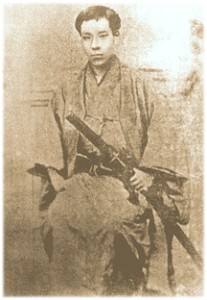
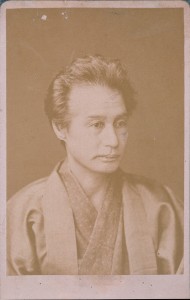
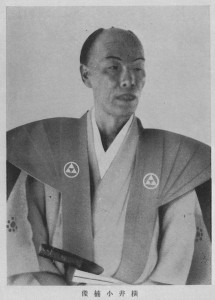
On the 70th anniversary of the dropping of the atomic bomb on Hiroshima, I think of two warriors of peace in 19th century Japan, Yokoi Shōnan (on the right) and Katsu Kaishū, during their country’s most turbulent era thus far. The following is a slightly edited excerpt from my Samurai Revolution: The Dawn of Modern Japan Seen Through the Eyes of the Shogun’s Last Samurai:Shortly after Perry’s arrival in the summer of 1853, Yokoi had advised the Tokugawa Bakufu that refusing to communicate with foreign nations would make Japan look bad to the rest of the world. Rather, the government should “communicate with righteous nations, but reject unrighteous nations.” But, he professed, if any country should illegally threaten Japan with warships and troops, then Japan must fight to defend itself. Kaishū thought Yokoi so profound as to be frightening. “I’ve seen two frightening men in my life,” he recalled many years later. “Yokoi Shōnan and Saigō [Takamori]. . . . Yokoi didn’t know that much about the West; I taught him a thing or two [on that subject]. But there were often times, when it came to the high tone of his ideas, that I felt I could never reach [his level]. . . . Although Yokoi was not very good at working on his own, if there was anyone around who could implement his ideas, I thought that the two of them [could accomplish great things.]” In the coming revolution, Katsu Kaishū’s confidants on the anti-Tokugawa side—Sakamoto Ryōma of Tosa and Saigō Takamori of Satsuma—would implement Yokoi’s ideas.

Yokoi was a famous admirer of George Washington. He admired the man who had led the American revolutionary forces against the British, for his selflessness in stepping down as president when the time came. Calling Washington a “red-haired, blue-eyed saint,” Yokoi believed that the world would never again see the likes of such a selfless leader. Like Kaishū, Yokoi hated war. Once he told a fellow Kumamoto samurai of his desire to travel to America to meet the president and “conclude a peace treaty. Then I’d like to travel to other countries and do the same, until there is no more war in this world.”

Yokoi was assassinated in early 1869, a year after the fall of the Bakufu, by reactionaries opposing the Westernization of Japan, for which they blamed Yokoi and others, including his close friend Katsu Kaishū, the “shogun’s last samurai.”

For updates about new content, connect with me on Facebook.


Samurai Revolution is the only biography of Katsu Kaishu in English.
644502_247397672083151_1209814990_n

widget_buy_amazon

Writing Vs. Book Promotion

Over the past few months I’ve done something that I have not done in many years: I’ve put aside my writing to promote it. From a reader’s perspective, it might sound blasphemous; from the writer’s perspective it’s an imperative – which I ignored for around ten years while writing Samurai Revolution and my next book, Samurai Assassins, completed earlier this year but not yet published.

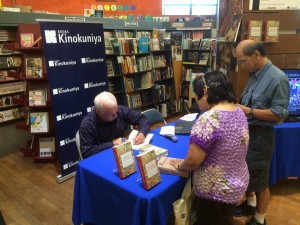
And so, while planning strategy for the Sakamoto Ryoma Film Project which I recently announced through an Open Letter to “all Ryoma fans,” I’ve presented Samurai Revolution at two venues in Washington state this week: Kinokuniya Bookstore in Seattle and A Book For All Seasons in Leavenworth; and I have another presentation scheduled at Kinokuniya in San Francisco on August 1.

Through these events I’ve rediscovered the pleasure of talking about this history and my books with interested people. Two such people are kendo instructor Aniceto Seto and his student Lynn Miyauchi, whom I had the pleasure of meeting at the Seattle event. Both of them brought copies of my past books for me to sign, including hard cover copies of Ryoma: Life of a Renaissance Samurai, though it’s been out of print for over ten years. It is through people like Mr. Seto and Ms. Miyauchi that I am reminded of another imperative: that I really must get back to my writing as soon as possible.

seattle kino july 18 with readers

Signing copies for Aniceto Seto and Lynn Miyauchi


For updates about new content, connect with me on Facebook.


644502_247397672083151_1209814990_n

widget_buy_amazon


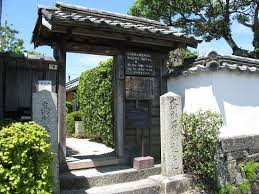
Takasugi Shinsaku’s House

shinsaku's house

Takasugi Shinsaku, the military leader of Choshu’s revolutionary forces in the war against the Bakufu in 1866, resented the coerced foreign trade treaties unilaterally concluded by the Bakufu in the summer of 1858. A favorite student of Yoshida Shoin, Takasugi had been a staunch advocate of “expel the barbarians” until he realized that it would be impossible to do so without first overthrowing the Bakufu, which he blamed for letting the foreigners in. The realization came during a trip to Shanghai in 1862, briefly recounted in my essay posted on this website and in more detail in Samurai Revolution.

Given Takasugi’s natural resentment of the foreign intruders, I was at once amused and moved by a comment from an old woman in his hometown of Hagi. It was during one of my trips to that historic city in Yamaguchi Prefecture, in August of either 1986 or 1987 (I can’t remember which). At that time I visited the historic houses of both Takasugi and Katsura Kogoro, the political leader of the Choshu revolutionaries. The old woman was selling copies of Takasugi’s biography (by Furukawa Kaoru, published in 1971) in front of his house. She must have been in her eighties – which means Takasugi would have been of her grandfather’s generation. It is entirely possible that her family lived in Hagi for many generations; if so, it is likely that she grew up hearing stories of Takasugi. When I bought a copy of the book, she smiled and told me that Shinsaku would be tickled pink to know that an American was buying his biography!

Takasugi Shinsaku


Samurai Swordsmen: The Definitive History of the Shinsengumi (Helion, 2026) is now in production.
For professional guidance on Bakumatsu–Meiji Restoration history, see Historical Consulting.
Explore my books at Books at a Glance.


Katsu Kaishū’s “praiseworthy anecdote” during the ceremony of the surrender of Edo Castle

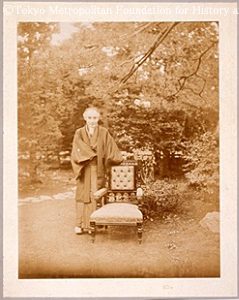
Katsu Kaishū standing beside a chair in the garden of his Hikawa estate in Tokyo, photographed late in his life.While reviewing my material for Samurai Revolution, I was reminded of one of my favorite comments from Katsu Kaishū in his old age. The setting was the formal surrender of Edo Castle to the new Imperial government in spring 1868, four months after the abolition of the Tokugawa Bakufu by the new Imperial government – i.e., The Restoration of Imperial Rule of Old. The ceremony took place in the interior of the citadel, attended by samurai of various feudal domains including Satsuma and Choshū. As I wrote in Samurai Revolution (excluding footnotes):

Kaishū did not attend the ceremony in which the castle was officially surrendered. Rather, he went to navy headquarters on the bay, where he had some of his men climb to the rooftop to watch and listen for gunshots coming from the direction of the castle. If anything happened, he wrote, he was prepared to report to the Imperial Army and accept the responsibility by taking his own life. “Fortunately, nothing happened”—the ceremony was concluded without incident.

But there was a “praiseworthy anecdote” which Kaishū heard from [his friend] Ōkubo Ichiō. Saigō, it seems, remained typically placid throughout the ceremony:

“…[w]hat was truly amazing was that when the formalities began for surrendering the castle, Saigō dozed off. Then when the ceremony was finished and the other representatives were leaving, he just sat there calmly. Ichiō, who was near him, couldn’t stand it. “Saigō-san, Saigō-san,” he said, waking him up, “the ceremony is over and everyone’s leaving.” At which Saigō, a bit startled, rubbed his sleepy face then calmly left. Ichiō was struck with admiration. What an audacious fellow! Exhausted after dozens of days, he took the opportunity to doze off while the castle was being surrendered—truly unbelievable!”

“And so,” Kaishū concluded the above account, told in January 1896, “that’s why he’s at the top of the list of the great men of the Restoration.” (p. 500)

[The photo of Katsu Kaishū was taken in the garden at his Hikawa estate during the final years of his life.]


Katsu Kaishū is the “shogun’s last samurai” of Samurai Revolution,the only biography in English.

My Favorite Japanese History Writers

The best writers of Japanese history are, quite naturally, Japanese. Nearly all of them concentrate on the most important era in modern Japanese history: the final fifteen years of the Tokugawa Shogunate, from the arrival of Perry in the summer of 1853, which kicked off the revolution, to the fall of the Tokugawa Shogunate in late 1868. Japanese writers call this era “Bakumatsu,” literally “end of the shogunate.” I describe it as “the samurai revolution at the dawn of modern Japan.”

Japanese writers concentrate on the Bakumatsu not only because it is the beginning of modern Japan, but also because it is by far the most interesting and spellbinding era in Japanese history. In writing about this history they naturally focus on the most powerful and spellbinding personalities of the era. These include such household names as Sakamoto Ryōma, Saigō Takamori, Katsu Kaishū, Tokugawa Yoshinobu, Takasugi Shinsaku, Yoshida Shōin, Katsura Kogorō, Takechi Hanpeita, Nakaoka Shintarō, Ōkubo Toshimichi, Sakuma Shōzan, Yamauchi Yōdō, Tokugawa Nariaki, and last but not least the Shinsengumi, an organization whose leaders, Kondō Isami and Hijikata Toshizō garner the most attention. Readers of my books are familiar with all of these personalities and more.

When I started studying this history over thirty years ago, I was living in Tokyo. At first I read everything I could get my hands on about the Bakumatsu. It didn’t take long before I discovered that there was a gaping dearth of material in English about the Bakumatsu. So I naturally focused on Japanese writers, and after a few years of reading I was able to discern the best among them. I adopted their approach to writing this history, including their focus on the most powerful and spellbinding personalities. These Japanese writers have been my teachers throughout my writing career. My debt to them is enormous.

Following is the first part of a series of articles in which I introduce these writers. (In keeping with normal Japanese practice, their names are presented with family name first.) 

Hirao Michio (平尾道雄) (1900 – 1979) : Hirao Michio might be called the “godfather” of Tosa historians during the 20th century. His biographies of Sakamoto Ryōma, Nakaoka Shintarō, and Yamauchi Yōdō are definitive. His two most well-known books on Ryōma are probably Sakamoto Ryōma: Kainetai Shimatsuki and Ryōma no Subete. Of his writings on Nakaoka, I have mostly referred to Nakaoka Shintarō: Rikuentai Shimatsuki. (The “Kaientai” in the title the first Ryōma biography cited refers to Ryōma’s Naval Auxiliary Corps in Nagasaki. The “Rikuentai” in the title of the Nakaoka biography refers to Nakaoka’s Land Auxiliary Corps in Kyoto.) Hirao’s history of the Shinsengumi, Teihon Shinsengumi Shiroku (The Definitive History of the Shinsengumi), was published in 1928, shortly after Shimozawa Kan’s more famous Shinsengumi Shimatsuki. Like Hirao’s other books, it is invaluable. I referred to it while writing Shinsengumi: The Shogun’s Last Samurai Corps and my forthcoming Samurai Swordsmen: The Definitive History of the Shinsengumi. I referred to Hirao’s Ishin Ansatsu Hiroku, a collection of accounts of historically significant assassinations during the Bakumatsu, particularly in Samurai Assassins.

The closest I ever got to actually meeting Hirao Michio was vicariously through Ogura Katsumi, then-curator of The Sakamoto Ryōma Memorial Museum in Kochi. Mr. Ogura, a former newscaster, served as the moderator of a symposium about Sakamoto Ryoma held in Yonago City, Tottori, in May 2002. I was invited as a panelist and stayed at the same hotel as Mr. Ogura, who briefly shared with me memories of Mr. Hirao and also of Marius Jansen, the Princeton historian perhaps best known for his biography Sakamoto Ryoma and the Meiji Restoration. I regret that I never had the chance to meet Prof. Jansen, whom Mr. Ogura had met in Kochi. While the two of us spoke at our hotel, Mr. Ogura remarked—surely out of kindness—that my Japanese pronunciation was “better” than Prof. Jansen’s. Mr. Ogura’s books include Ryōma ga Nagai Tegami wo Kaku Toki (When Ryōma Wrote Long Letters). Mr. Ogura passed away in May 2005.