On The 150th Anniversary of the Meiji Restoration (15): My Motivation In Writing “Samurai Revolution”


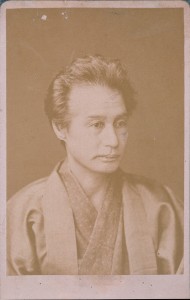
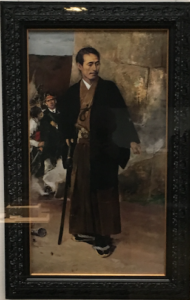
This evening my wife mentioned that she saw an NKH program about Ernest Satow’s villa in Nikko. It reminded me of Katsu Kaishū and his relationship with Satow, secretary to Sir Harry Parkes, the British minister to Japan, around the time of the surrender of Edo Castle in 1868. I reminded my wife of the portrait of Kaishū (above), based on the photograph at the British Legation in Yokohama taken by Satow. At that time Kaishū was in command of the forces of the fallen shogun.  “I was so very sleepy at the time,” Kaishū recalled years later. “But they dragged me over there. Satow took it, because, as he said, ‘You’re going to be killed.’” Both Satow and Parkes were worried for his life, Kaishū said. And so they urged him to take refuge at the British Legation. Kaishū refused their offer on the grounds that he wouldn’t have been able to perform his job, “if I feared assassination. I thought that dying for the country was the duty of any [patriot] and wasn’t about to do something as cowardly as hide out at a foreign legation.”

Katsu Kaishū is “the shogun’s last samurai” of Samurai Revolution: The Dawn of Modern Japan Seen Through the Eyes of the Shogun’s Last Samurai. I was motivated to write the book based on of my immense admiration for the man – for his moral and physical courage and his humanity.
On The 150th Anniversary of the Meiji Restoration (14): The more I know, the more I need to know

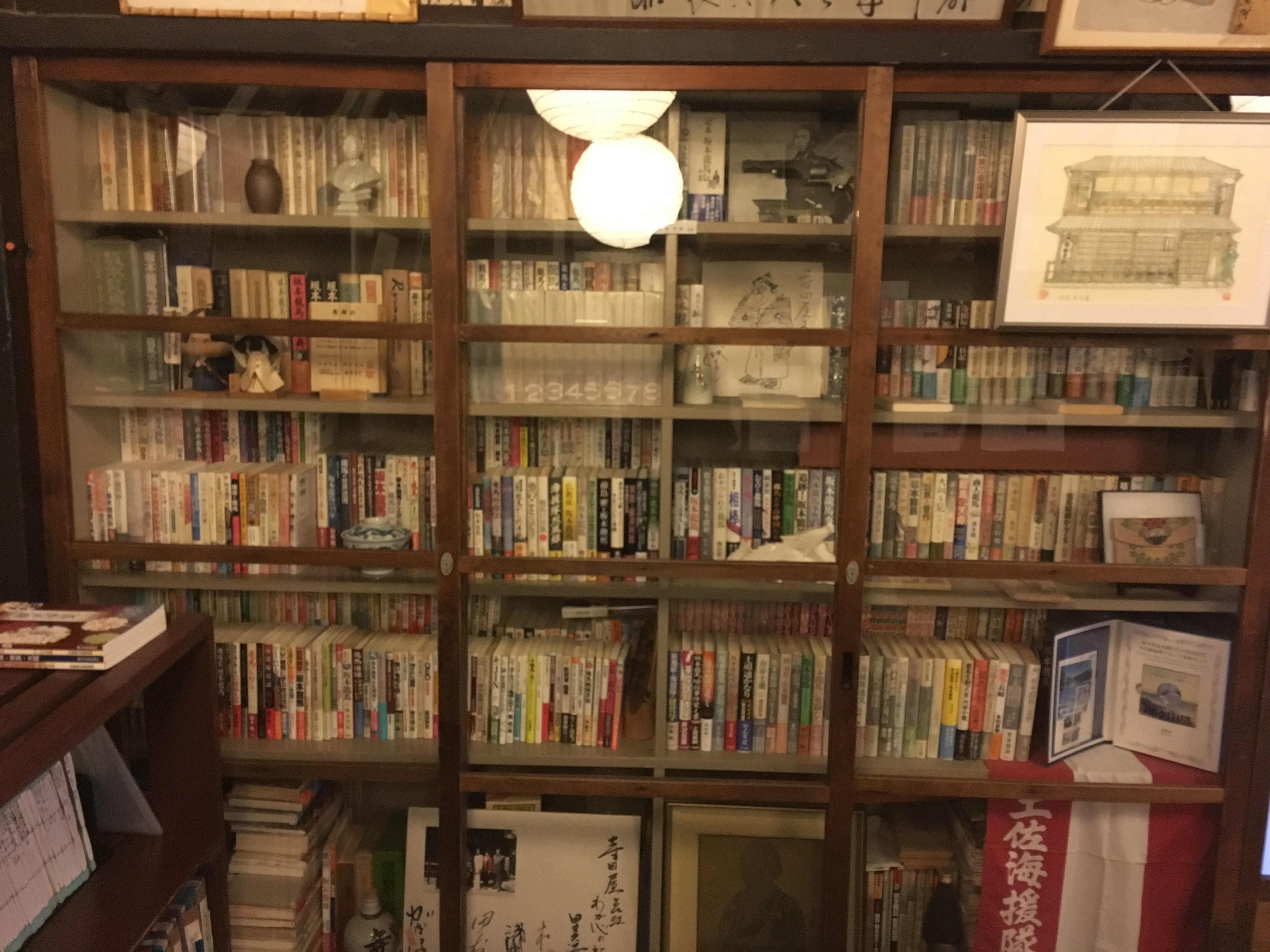
The more I know, the more I need to know: That has been my mantra for most of my adult life, including the more than three decades that I’ve been researching and writing about Bakumatsu history (1853 -68)—“the dawn of modern Japan.” Much of my research has included historical texts, journals, letters, and memoirs written by samurai in archaic Japanese. I’ve learned a lot—a real lot—about those crazed, tumultuous, fascinating times. I hope my readers feel my experience and share my fascination.

[I took the above photo in the library at the famed Teradaya inn in Fushimi, Kyoto, in October 2016.]

Think big! Create! Persevere!

On The 150th Anniversary of the Meiji Restoration (12)

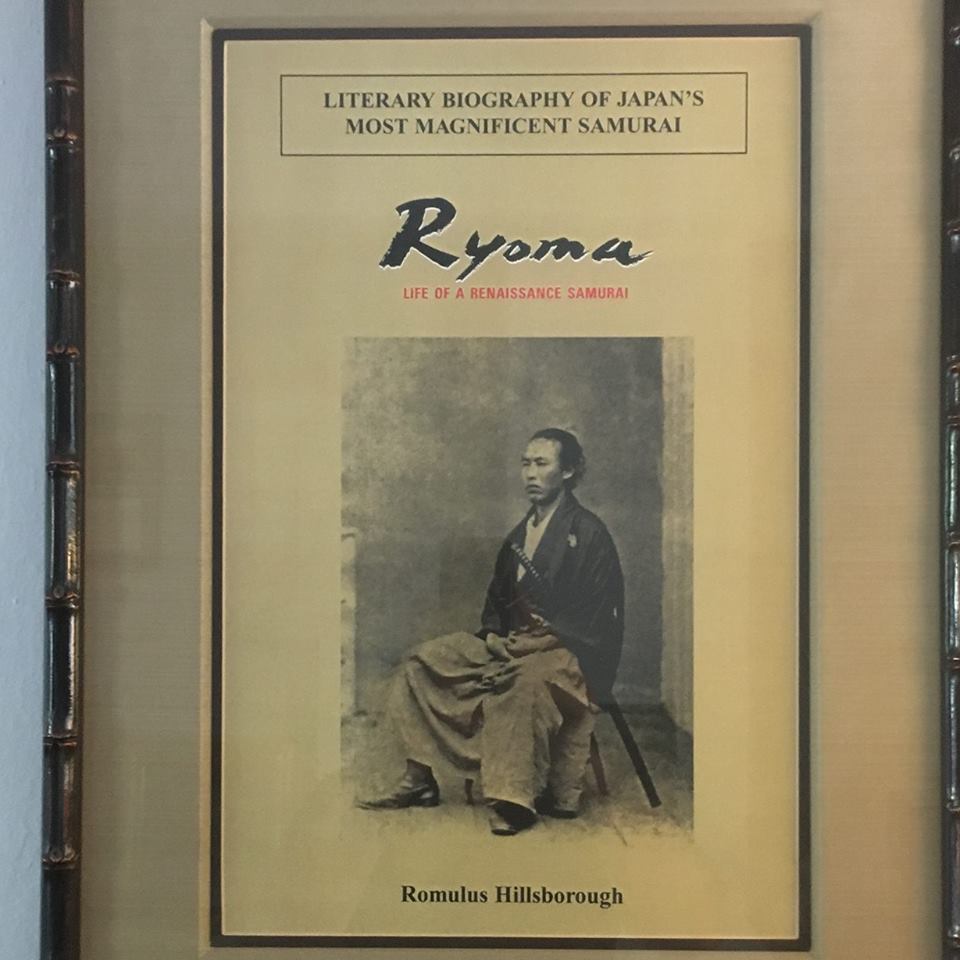
Ryoma: Life of a Renaissance Samurai and the Sakamoto Ryoma Film Project

Meiji Restoration hero Sakamoto Ryoma is a national icon in Japan. My first encounter with Ryoma was through Shiba Ryotaro’s popular biographical novel, Ryoma ga Yuku. So fascinated was I by Ryoma’s life story, particularly his indispensible role in the “samurai revolution at the dawn of modern Japan,” that I thought that people all over the world should know about him. Which was why I wrote Ryoma: Life of a Renaissance Samurai (Ridgeback Press, 1999), the only biographical novel about Ryoma in English. “It is a cultural loss that an historical figure of such magnificent stature has failed to gain the full attention of the Western world,” I wrote in the Preface. Since then, for many years, I have hoped that, through my book, Ryoma would become a household name around the world.

I think that things are moving in that direction. But a film about Ryoma, produced and/or directed by a major Hollywood name, would “seal the deal.” Which is why for these past few years I have reached out to “Ryoma fans” around the world for their ideas to make this dream a reality. Please keep your ideas coming – through my website or my Facebook page.

Think big! Create! Persevere!


widget_buy_amazon

On The 150th Anniversary of the Meiji Restoration (11)

About “Samurai Revolution”: In My Own Words

Samurai Revolution is a comprehensive history of the Meiji Restoration from the perspective of one of its most important men, Katsu Kaishū, “the shogun’s last samurai.” The only full-length biography of Kaishū in English, it is also, to the best of my knowledge, the only English-language study of the personalities of the other key figures in the “samurai revolution at the dawn of modern Japan.”

On The 150th Anniversary of the Meiji Restoration (10): Timeless Words of Wisdom from “the Shogun’s Last Samurai”

“It’s impossible to gauge worldly affairs in advance. You can put up a net and wait for a bird, but what will you do if the bird flies over it? You can make a square box and try to put everything in the world inside of it. But some things are round and others triangular. If you took something that was round or triangular and tried to fit it inside the box, you’d certainly have a hard time of it.” — Katsu Kaishū on the importance of flexibility in conducting affairs of state (from Samurai Revolution, Chapter 9)