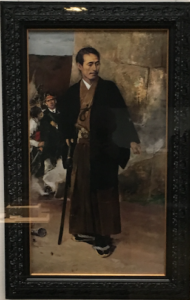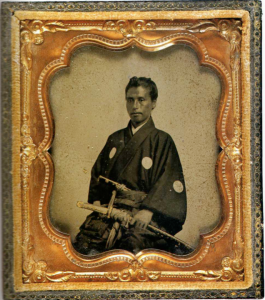
Hijikata Toshizō, Vice Commander of the Shinsengumi

A few years after the Shinsengumi was formed in Kyoto in the spring of 1863, people in Hijikata’s native Hino could hardly believe reports of the bloodletting in Kyoto at the hands of the vice-commander because “he was such a gentle person,” according to one writer.  But “Toshizō was a different man with a real sword in hand.” Once when Hijikata briefly returned to Hino, he reportedly told a gathering of family and friends that the blade of one of his swords had “corroded” from overexposure to human blood.

_________________

This post relates to my forthcoming book, Samurai Swordsmen: The Definitive History of the Shinsengumi (1863–1869). See the Shinsengumi Hub for additional essays and updates. I also provide consulting on Bakumatsu–Meiji Restoration history and culture to authors, editors, publishers, documentarians, producers, screenwriters, and other professionals who need expert guidance on the era.

To explore my other books, see Books at a Glance.

Follow me on Facebook | Amazon Author page

On The 150th Anniversary of the Meiji Restoration (16): My Inspiration In Writing About the Samurai Revolution

Often I ask myself: Why do I spend so much of my life writing about men of a culture that is completely foreign to my own, who lived and died in the century before my birth? My answer is always the same: Because these guys are the most inspirational, awesome, and just downright likeable men I have ever “known.” Or in the vernacular, they kick ass! Among them are Katsu Kaishū, the focus of my Samurai Revolution; and Yamaoka Tesshū, Kaishū’s close friend and confidant, renowned swordsman, and Zen adept. Following is an excerpt from Samurai Revolution (without footnotes):

Yamaoka Tesshū died of stomach cancer on July 19 [1888] at age fifty-three. On the day of his death, Kaishū called on him at his home in Tōkyō. Upon entering the house he found the sword master surrounded by visitors and sitting in zazen—the practice of Zen meditation—wearing a “pure white kimono” under a Buddhist robe, “with perfect composure,” Kaishū recalled. He asked his friend if the end was near. “Tesshū opened his eyes slightly and, smiling, replied without [showing] pain, ‘Thanks so much for coming, Sensei. I am about to enter Nirvana.’ Then I said to him, ‘Become Buddha,’ and left.” According to Kaishū’s oral recollection ten years later in October 1898 (Meiji 31), Yamaoka died shortly after he left him. At the time of his death, “he had a white fan in hand.” Chanting a Buddhist prayer, he “smiled at all present, including his wife, children, and relatives,” and, even after he finally died, maintained the proper sitting posture. In manifesting Buddhist enlightenment, Kaishū remarked, Yamaoka demonstrated “just how well he understood bushidō.”

(The photograph of Yamaoka Tesshū is in Samurai Revolution, courtesy of Fukui City History Museum.)


S644502_247397672083151_1209814990_n

widget_buy_amazon


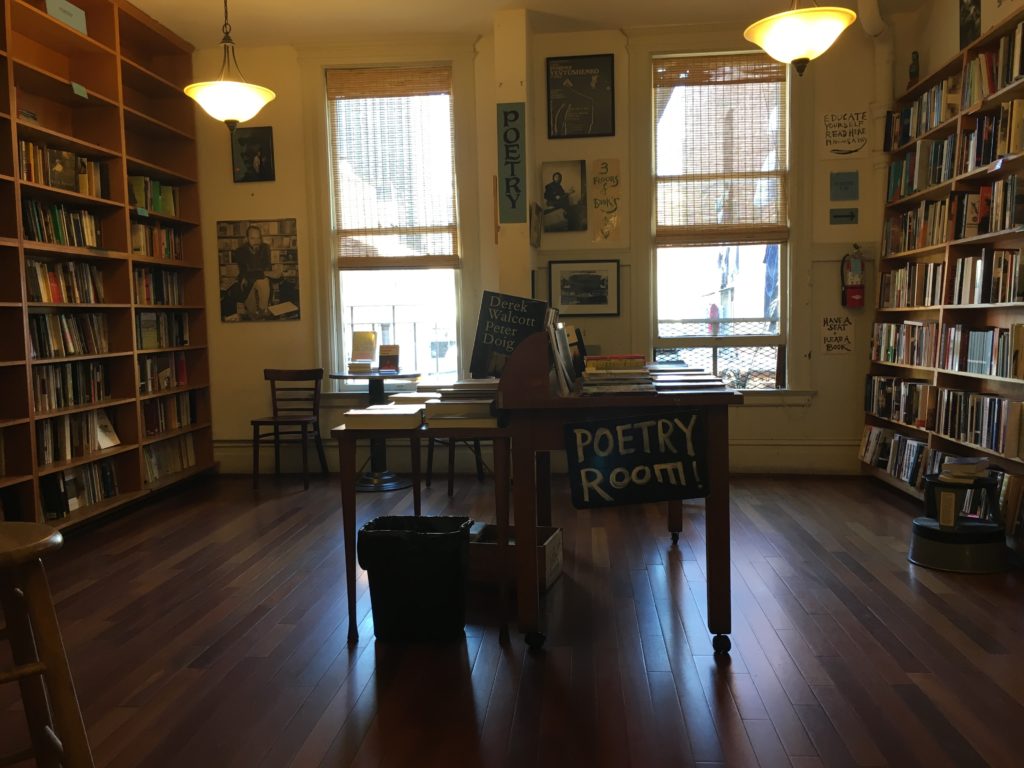
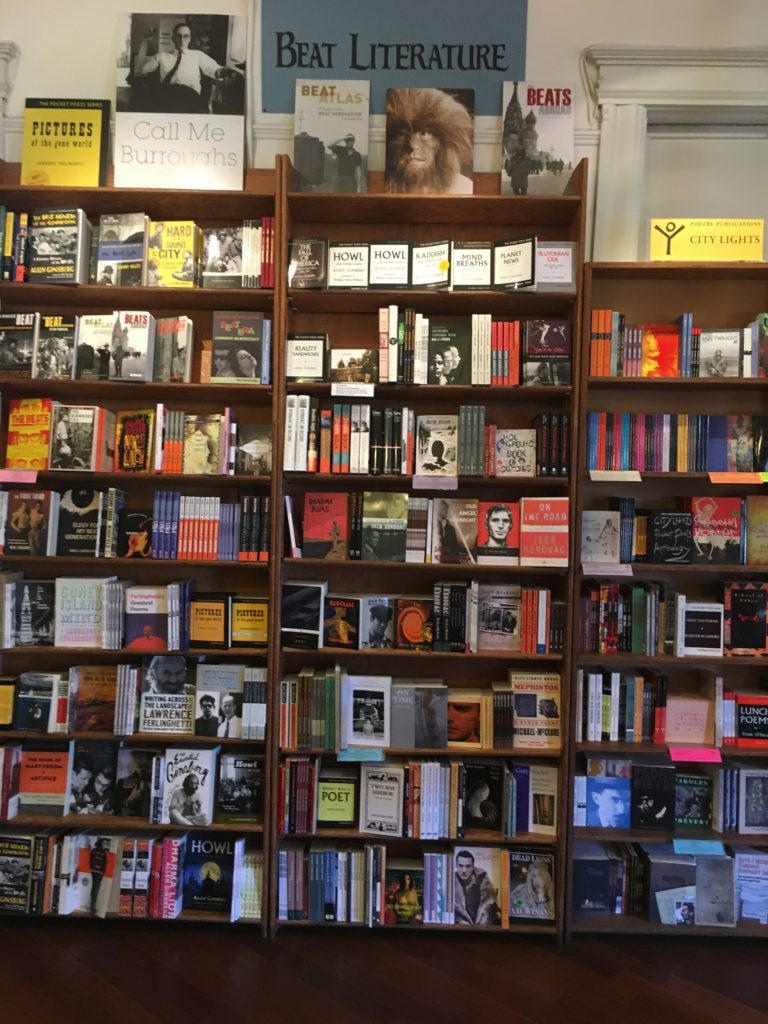
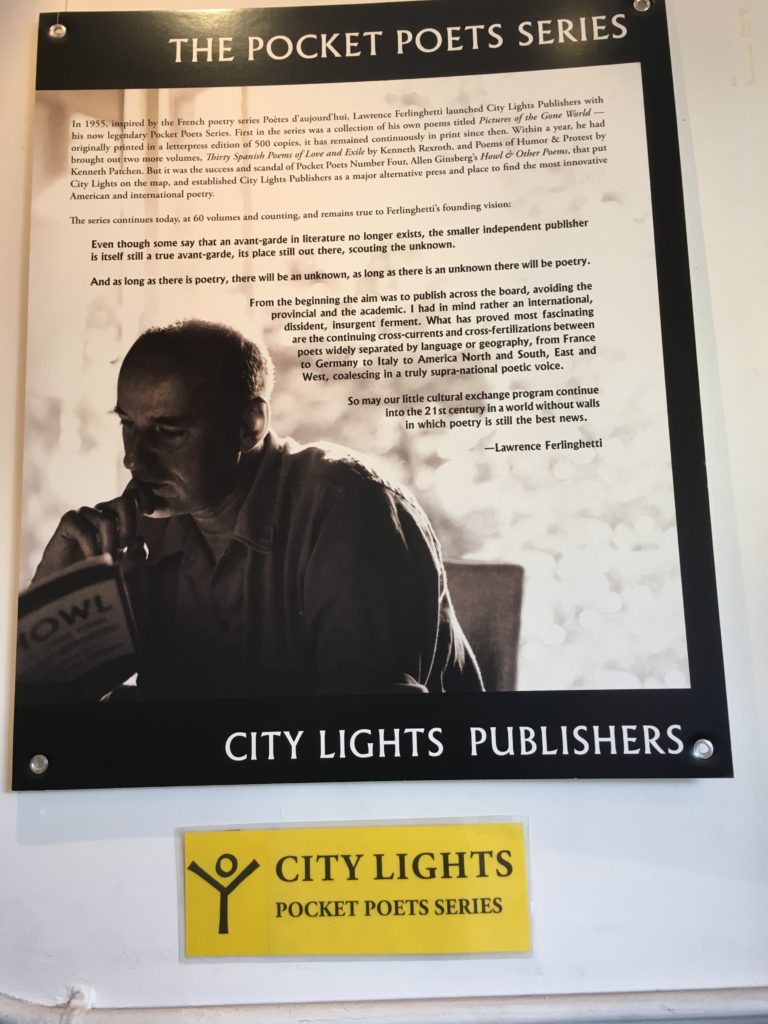
City Lights Bookstore (San Francisco)

San Francisco has a rich literary history. My favorite bookstore in San Francisco is City Lights — in North Beach. City Lights invites people (via signs in the store) to “sit down and read a book.”
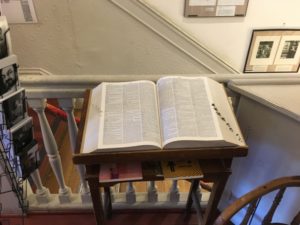
I like the bookstore’s Poetry Room (which contains an English dictionary, a very old edition of Webster’s I think — below).
City Lights was founded by the Beat poet Lawrence Ferlinghetti, who turned 99 this year.
 
I’ve been to City Lights many times. It is one of my favorite places in San Francisco. I don’t like to take good things for granted — not good karma. So I took these photos yesterday — I thought I needed to.
Think big! Create! Persevere!
 

On The 150th Anniversary of the Meiji Restoration (15): My Motivation In Writing “Samurai Revolution”


This evening my wife mentioned that she saw an NKH program about Ernest Satow’s villa in Nikko. It reminded me of Katsu Kaishū and his relationship with Satow, secretary to Sir Harry Parkes, the British minister to Japan, around the time of the surrender of Edo Castle in 1868. I reminded my wife of the portrait of Kaishū (above), based on the photograph at the British Legation in Yokohama taken by Satow. At that time Kaishū was in command of the forces of the fallen shogun.  “I was so very sleepy at the time,” Kaishū recalled years later. “But they dragged me over there. Satow took it, because, as he said, ‘You’re going to be killed.’” Both Satow and Parkes were worried for his life, Kaishū said. And so they urged him to take refuge at the British Legation. Kaishū refused their offer on the grounds that he wouldn’t have been able to perform his job, “if I feared assassination. I thought that dying for the country was the duty of any [patriot] and wasn’t about to do something as cowardly as hide out at a foreign legation.”

Katsu Kaishū is “the shogun’s last samurai” of Samurai Revolution: The Dawn of Modern Japan Seen Through the Eyes of the Shogun’s Last Samurai. I was motivated to write the book based on of my immense admiration for the man – for his moral and physical courage and his humanity.