“Ryoma: Life of a Renaissance Samurai”: The 20th Anniversary (5)

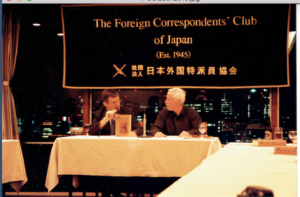
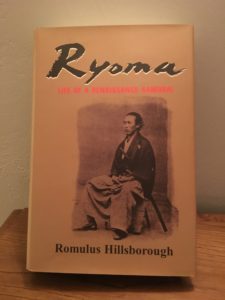
The book was published in February 1999. In the following October I had the pleasure of speaking at the Foreign Correspondents’ Club of Japan in Yurakucho, Tokyo. I rather enjoyed the event, introducing Sakamoto Ryoma to a bunch of foreign journalists stationed in Tokyo. I had just come from Kochi, where I had the honor of speaking at the 11th annual national gathering of “Ryoma fans”  (全国龍馬ファンの集い高知大会).

A Writer and His Thoughts (1)

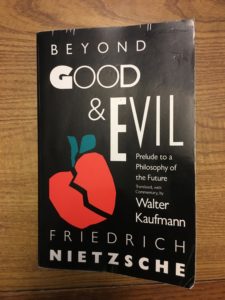
Recently (while writing my next book, and as a kind of intellectual break from Bakumatsu Japan), I’ve been rereading Nietzsche, including Beyond Good and Evil, published in 1886. Along with several other works of Nietzsche, it has been a great influence on my thinking and intellectual development over these past many years. In 1886 Nietzsche was not yet a popular writer. “I am making the experiment of having something published at my own expense,” he wrote to a friend at the time, adding that if only 300 copies could be sold, he could recoup the cost. As of a year later, only 114 copies had been sold of “one of the great books of the nineteenth century, indeed of any century,” remarks Nietzsche’s translator, Walter Kaufmann, in the “Translator’s Preface.”

“Ryoma: Life of a Renaissance Samurai”: The 20th Anniversary (4)

Five Years and Eight Months: A Coincidence

Ryoma fled Tosa Han in the Third Month of Bunkyu 2 (1862). He accomplished all of his important work during the remainder of his life, which was about five year and eight months. He was motivated, in part, by a desire to travel the world – which certainly included the United States. (Ryoma’s mentor, Katsu Kaishu, must have told him about his own experience as captain of the first Japanese ship to reach the United States in early 1862.)

In the introduction to Ryoma, I wrote: “I will never forget my visit to the home of Masao Tanaka, a direct descendent of a boyhood friend of Ryoma’s, located in the mountains northwest of Kochi Castletown. The house was the same one that Ryoma often visited in his youth, and where he apparently stopped, in need of cash, on the outset of a subversive journey he made in 1861 as the envoy of a revolutionary party leader. “My family lent Ryoma money at that time,” the elderly Mr. Tanaka told me, as we stood atop a giant rock behind the house, looking out at the Pacific Ocean far in the distance. Mr. Tanaka informed me that Ryoma liked to sit atop this same rock when he visited the Tanaka family, and where he would indulge in wild talk of one day sailing across the ocean to foreign lands.”

Ryoma of course did not survive the Meiji Restoration to fulfill his dream. But, as explained in part 3 of this series, it took me about five years and eight months to create Ryoma, my purpose of which was to tell his fascinating story to the rest of the world. I like to think that in that sense his dream was partially fulfilled.

“Ryoma: Life of a Renaissance Samurai”: The 20th Anniversary (3)

After I finished reading Shiba’s novel Ryoma ga Yuku, about the life and times of Sakamoto Ryoma, I spent about six months studying the most important nonfiction books I could find about my subject (to be discussed in a later blog). I started writing the book in January 1987, just after returning from a trip to Kyoto, where I had explored all of the must-see Ryoma-related sites and more – including the temple bells resounding through the frigid hills of Higashiyama on New Year’s Eve, a wonder I shall never forget! I would continue my Ryoma-related travels, including around Kochi, Nagasaki, Yamaguchi, Kagoshima, and Hiroshima prefectures, for the next several years.

I set myself a target of writing five pages per day (on a Wang word processor – anyone remember that?) in my “new” tiny apartment in Shimokitazawa (which would become one of my favorite districts in Tokyo). I usually spent between five and seven hours a day, five days a week, writing – while working for a Japanese weekly magazine. I kept up this regimen (more or less) for almost five years, until finishing the last page of the final first draft (much of which I had already rewritten or revised multiple times) in September 1991. The final draft was more than twice as long as the published book.

National Diet Library’s Online Database (2)

I’ve mentioned that Japan’s National Diet Library’s online database is a treasure trove of primary sources of Bakumatsu-Meiji Restoration history. These include 加太邦憲自歴譜 (Kabuto Kuninori Jirekifu), the autobiography of Kuwana samurai Kabuto Kuninori, published posthumously in 1928, three years after his death.

Kabuto was in Kyoto on and off during the last three or four years of the Bakufu. The daimyo of Kuwana, Matsudaira Sadaaki, inspector of the Imperial Court and nobles, (Kyoto Shoshidai), was the younger brother of the daimyo of Aizu, Matsudaira Katamori, protector of Kyoto (Kyoto Shugoshoku), who oversaw the Shinsengumi. Kabuto’s book is yet another valuable primary source in my research on the Shinsengumi.
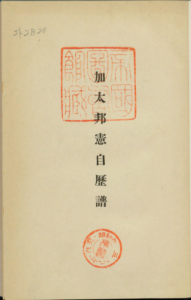
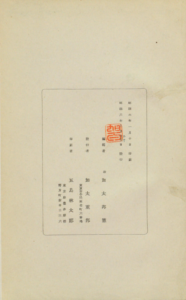
 

Kabuto’s book is yet another valuable primary source in my research on the Shinsengumi, particularly for my forthcoming Samurai Swordsmen: The Definitive History of the Shinsengumi (1863–1869). See the Shinsengumi Hub for additional essays and updates.

_____________

Recently I have been focusing on my forthcoming Samurai Swordsmen: The Definitive History of the Shinsengumi (1863–1869), scheduled for publication in fall 2026 with Helion. I also provide consulting on Bakumatsu–Meiji Restoration history and culture to authors, editors, publishers, documentarians, producers, screenwriters, translators, and other professionals who need expert guidance on the era.

To explore my books see Books at a Glance.

Follow me on Facebook | Amazon Author page