

Giri: Is It Alive in Japanese Society Today?

義理

Giri, usually translated as “duty,” “obligation,” or “moral debt,” is one of the most misunderstood elements of Japanese ethics. In the Bakumatsu era it shaped the behavior of men like Takéchi Hanpeita, Katsu Kaishū, and Sakamoto Ryōma, and it raises an important question today: does giri still survive in modern Japan?

In Samurai Revolution (Chapter 5) I wrote the following: “Giri was integral to bushidō, the code of the samurai, a basic tenet of which was “strictness with superiors, and leniency with subordinates.” Based on loyalty to one’s feudal lord (i.e., obligation for favor received from one’s lord) and integrity founded on shame, giri, to a great extent, accounted for the harmony in samurai society, and it was an inherent element of both the aesthetics and the moral courage of the samurai caste.
unknown-2

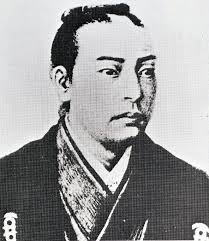
Takechi Hanpeita (武市半平太), leader of the Tosa Loyalist Party in the 1860s, wrote: “to be born a human being and not to have a sense of giri and gratitude is to be less than a beast.” (人と生まれて義理と恩とをしらざれハちくしょふにもおとり申し候)

 
Katsu_Kaishu
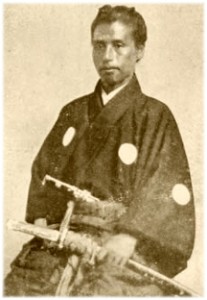
In Samurai Revolution (Chapter 5) I reported that Katsu Kaishū, in his history of the Japanese navy (海軍歴史), compared the Japanese navy to the navies of other countries. He implied that in the Japanese system severe punishment of sailors by commanding officers was probably unnecessary because, “We sustain the hearts and minds of our people only through obligation and justice, and integrity and shame.” (「皇国は属殊にして外国の風に似ず、ただ恩義と廉恥を以て衆心を維持」する)
Sakamoto Ryoma
When Sakamoto Ryōma famously led a Chōshū warship against the Tokugawa Navy at Shimonoseki, more than the danger of battle he feared that he might encounter his former mentor, Katsu Kaishū, in command of the enemy fleet. “I could never fight against him,” he later told Tosa’s minister of justice, Sasaki Sanshirō (later Sasaki Takayuki).
 
Clearly giri was alive and powerful in the Bakumatsu years. Whether any of it survives in 21st-century Japan is another question entirely.
 
[For a fuller discussion of giri and its role in samurai ethics, see my Samurai Revolution, Samurai Assassins, and Samurai Swordsmen: The Definitive History of the Shinsengumi (forthcoming from Helion).]