
Katsu Kaishū’s Journals and Shinsengumi History

My forthcoming book, Samurai Swordsmen: The Definitive History of the Shinsengumi, is scheduled for publication in fall 2026 with Helion. Katsu Kaishū’s journals of the era, Bakumatsu Nikki, are among my most important sources. Though Kaishū did not have much direct encounter with the Shinsengumi leaders, Kondō Isami and Hijikata Toshizō, he captured the zeitgeist of the era to such an extent—astutely documenting its politics, culture, and society—that his journals were indispensable in writing this in-depth history of the Shinsengumi.

The journals were kept separately, though entries occasionally overlap. The regular journal, covering the final years of the Bakufu and the Meiji Restoration, was kept from Bunkyū 2/intercalary 8/17 (October 10, 1862)—upon the author’s appointment to the high post of vice commissioner of warships—until Meiji 3/6/4 (June 4, 1870), about a year after the end of the Boshin War. The Keiō 4 Boshin NikkiBoshin being the Chinese zodiac cycle corresponding to the Japanese calendrical year Keiō 4 (1868 on the Western calendar)—covers the heady months from Keiō 3/10/22 (November 17, 1867), eight days after the fifteenth shogun, Tokugawa Yoshinobu, officially announced his intention to abdicate and restore Imperial rule, until Keiō 4/5/15 (1868), the day the Imperial Army defeated the Shōgitai, “Corps of Clear Loyalty,” in the hills of Ueno northeast of the castle, essentially eliminating the resistance in Edo among diehard vassals of the former shogun. Both journals contain copies of important letters to and from Katsu Kaishū.

[The above is a photo of my personal copy of Bakumatsu Nikki, vol. 1, of the 22-volume Kodansha edition of Katsu Kaishū Zenshū, the collected works of Katsu Kaishū, published in 1976.]


For professional guidance on Bakumatsu–Meiji Restoration history, see Historical Consulting.
Explore my books at Books at a Glance.
Key Japanese Words in Romulus Hillsborough’s Books: (7)— Bakumatsu

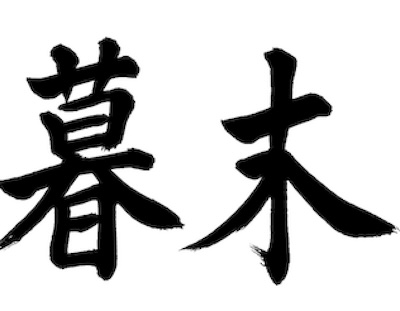
Bakumatsu literally means “end of the Bakufu,” the military regime of fifteen generations of heads of the House of Tokugawa, each one holding the title of shogun. Their hegemony over Japan began in 1603 and lasted more than two and a half centuries. The first character of Bakumatsu, also pronounced maku, signifies a curtain or tent, recalling the field headquarters of medieval commanders. The second character, matsu, simply means “end.” So Bakumatsu signified not a political program or ideology, but a historical reality: the final years of Tokugawa rule.


Most historians date the Bakumatsu from Perry’s arrival in 1853 to the Restoration of Imperial Rule in early 1868 — the coup that ended Tokugawa rule. The reasoning is that Perry’s arrival is widely construed to have sparked the “beginning of the end” of the Tokugawa Bakufu—though three consecutive shoguns would cling to power for another fourteen and a half years before the final fall. Bakumatsu is a relatively recent term, which was not used by people who lived through those years. The term came into common use only after the Meiji government had consolidated power and historians could look back on the collapse of the Bakufu as a distinct era. An early example of its use is from one of the most celebrated and important men of the era, Katsu Kaishū, in an interview with the magazine Tenchijin in October 1898, just a few months before his death. “Although it has only been thirty years since the Bakufu fell, there isn’t one person who has written a perfect history of the Bakumatsu,” Kaishū said. (Quoted in Hikawa SeiwaKatsu Kaishū Zenshū 21 (Tokyo: Kodansha, 1973), p. 293)


The emotional weight of the word is powerful. It evokes not only political upheaval but also the moral exhaustion of a system that had preserved peace for two and a half centuries. It was a time when loyal retainers faced impossible choices between serving their daimyo—or the shogun, as in the case of Katsu Kaishū and tens of thousands of other Bakufu samurai—and the emerging concept of a unified nation under the Emperor. It was also an age of extraordinary creativity, when Japan’s brightest minds grappled with how to reconcile the old way of life, based in no small measure on the samurai code of bushido.

When I use the term “Samurai Revolution,” I mean precisely this: the transformation of Japan that began with the Bakumatsu, and encompassed the Meiji Restoration and the subsequent civil war (Boshin War) that continued until May 1869.


Samurai Swordsmen: The Definitive History of the Shinsengumi (Helion, 2026) is now in production.
For professional guidance on Bakumatsu–Meiji Restoration history, see Historical Consulting.
Explore my books at Books at a Glance.


Key Japanese Words in Romulus Hillsborough’s Books: (5)

Screen Shot 2016-06-16 at 12.24.52 PM

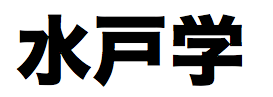
Mitogaku (水戸学): An ultra-nationalistic school of thought that originated in the Mito domain during the 17th century. It has been translated by Marius Jansen (The Making of Modern Japan) as “Mito scholarship”; but from its union of mythology and religion with government and politics, and the fervor by which it was embraced by Imperial Loyalists throughout Japan, I think that “Mitoism” is a more suitable translation. Either way, it was the cornerstone of Imperial Loyalism and the foundation of the samurai revolution at the dawn of modern Japan, generally known the Meiji Restoration.