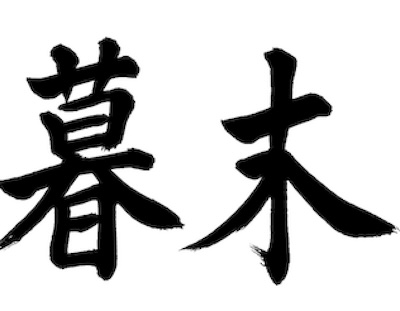
My forthcoming book, Samurai Swordsmen: The Definitive History of the Shinsengumi, is scheduled for publication in fall 2026 with Helion. Katsu Kaishū’s journals of the era, Bakumatsu Nikki, are among my most important sources. Though Kaishū did not have much direct encounter with the Shinsengumi leaders, Kondō Isami and Hijikata Toshizō, he captured the zeitgeist of the era to such an extent—astutely documenting its politics, culture, and society—that his journals were indispensable in writing this in-depth history of the Shinsengumi.
The journals were kept separately, though entries occasionally overlap. The regular journal, covering the final years of the Bakufu and the Meiji Restoration, was kept from Bunkyū 2/intercalary 8/17 (October 10, 1862)—upon the author’s appointment to the high post of vice commissioner of warships—until Meiji 3/6/4 (June 4, 1870), about a year after the end of the Boshin War. The Keiō 4 Boshin Nikki—Boshin being the Chinese zodiac cycle corresponding to the Japanese calendrical year Keiō 4 (1868 on the Western calendar)—covers the heady months from Keiō 3/10/22 (November 17, 1867), eight days after the fifteenth shogun, Tokugawa Yoshinobu, officially announced his intention to abdicate and restore Imperial rule, until Keiō 4/5/15 (1868), the day the Imperial Army defeated the Shōgitai, “Corps of Clear Loyalty,” in the hills of Ueno northeast of the castle, essentially eliminating the resistance in Edo among diehard vassals of the former shogun. Both journals contain copies of important letters to and from Katsu Kaishū.

[The above is a photo of my personal copy of Bakumatsu Nikki, vol. 1, of the 22-volume Kodansha edition of Katsu Kaishū Zenshū, the collected works of Katsu Kaishū, published in 1976.]
For professional guidance on Bakumatsu–Meiji Restoration history, see Historical Consulting.
Explore my books at Books at a Glance.