On The 150th Anniversary of the Meiji Restoration (20)

Mitogaku: Cornerstone of Imperial Loyalism

In the early part of the nineteenth century an ultra-nationalistic school of thought attained prominence in Mito Han, one of the Three Tokugawa Branch Houses (Go-sanké), whose heads were direct descendants of Tokugawa Iéyasu, the first shōgun of the Tokugawa Bakufu. The school of thought was called Mitogaku. It has been translated as “Mito scholarship”; but from its union of mythology and religion with government and politics, and the fervor by which it was embraced, “Mitoism,” I think, is a better rendering. No matter how it is translated, it was the cornerstone of Imperial Loyalism and the foundation of the revolution which got under way with the assassination of Ii Naosuké in 1860.

Mitoism had originated much earlier, under Tokugawa Mitsukuni (1628-1700), the second daimyo of Mito who had ruled during the early Tokugawa era. It was taken up in the early nineteenth century by Aizawa Seishisai, a Mito samurai and Confucianist. Both men are associated with two highly influential literary works which have been called the “Old Testament” and “New Testament” of the early Meiji Restoration period. Begun under Mitsukuni was Dai Nihonshi, a history of Japan, which emphasized loyalty to the Emperor. Aizawa, who lived until 1863, four years before the fall of the Bakufu, wrote Shinron (“New Theses”) in 1825. Since ancient times China, the “Central Country,” had been the pinnacle of civilization and culture. But Aizawa affirmed the superiority of Japan and Japanese culture. Shinron, whose teachings of Japanese superiority and Imperial Loyalism would be revived by Imperial Japan’s fascist government in the twentieth century, begins by stating that “our Divine Realm is where the sun emerges. It is the source of the primordial vital force sustaining all life and order. Our Emperors, descendants of the Sun Goddess, Amaterasu, have acceded to the Imperial Throne in each and every generation, a unique fact that will never change. Our Divine Realm rightly constitutes the head and shoulders of the world and controls all nations.”

The spirit of “Imperial Reverence” (Sonnō) did not originate in Mito. Rather, it took root throughout Japan among the educated classes, including samurai, wealthy merchants, landowning peasants, and shōya (peasant officials who oversaw rural villages), under the rule of the Bakufu, based on Confucianism, particularly Neo-Confucianism. But Mito incorporated an intense ultra-nationalism that developed into Imperial Loyalism under the slogan Sonnō-Jōi (abbreviated as Son-Jō)—“Imperial Reverence and Expel the Barbarians”—coined by Tokugawa Nariaki, the ninth daimyo of Mito, and father of the last shōgun, Tokugawa Yoshinobu.

In 1841, Nariaki established the famed Kōdōkan within the precincts of Mito Castle, as the official school of Mito Han. In 1856 he directed the physician Matsunobé Nen, a distinguished calligrapher, to compose the now-famed “Sonjō” tablet, which hangs on the back wall of a room beyond an entrance to the Kōdōkan.

Photos from top to bottom: Sonjō tablet; entrance to Kōdōkan, with Sonjō tablet visible at rear; a volume of Dai Nihonshi

[The text above is a partially edited excerpt (without footnotes) from the Introduction of Samurai Assassins.]


hillsborough_978-1-4766-6880-2
widget_buy_amazon

On The 150th Anniversary of the Meiji Restoration (19): Katsu Kaishū on “dangerous times”

“Those were dangerous times. If you happened to encounter a samurai on the road he would soon have his hand on the hilt of his sword. There were many swordfights each day. I got into some dangerous situations myself—but made it through without getting killed.” Katsu Kaishū, “The Shogun’s Last Samurai”

Katsu Kaishū is the “shogun’s last samurai of Samurai Revolution, the only full-length biography of him in English.

On The 150th Anniversary of the Meiji Restoration (16): My Inspiration In Writing About the Samurai Revolution

Often I ask myself: Why do I spend so much of my life writing about men of a culture that is completely foreign to my own, who lived and died in the century before my birth? My answer is always the same: Because these guys are the most inspirational, awesome, and just downright likeable men I have ever “known.” Or in the vernacular, they kick ass! Among them are Katsu Kaishū, the focus of my Samurai Revolution; and Yamaoka Tesshū, Kaishū’s close friend and confidant, renowned swordsman, and Zen adept. Following is an excerpt from Samurai Revolution (without footnotes):

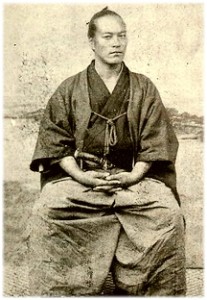
Yamaoka Tesshū died of stomach cancer on July 19 [1888] at age fifty-three. On the day of his death, Kaishū called on him at his home in Tōkyō. Upon entering the house he found the sword master surrounded by visitors and sitting in zazen—the practice of Zen meditation—wearing a “pure white kimono” under a Buddhist robe, “with perfect composure,” Kaishū recalled. He asked his friend if the end was near. “Tesshū opened his eyes slightly and, smiling, replied without [showing] pain, ‘Thanks so much for coming, Sensei. I am about to enter Nirvana.’ Then I said to him, ‘Become Buddha,’ and left.” According to Kaishū’s oral recollection ten years later in October 1898 (Meiji 31), Yamaoka died shortly after he left him. At the time of his death, “he had a white fan in hand.” Chanting a Buddhist prayer, he “smiled at all present, including his wife, children, and relatives,” and, even after he finally died, maintained the proper sitting posture. In manifesting Buddhist enlightenment, Kaishū remarked, Yamaoka demonstrated “just how well he understood bushidō.”

(The photograph of Yamaoka Tesshū is in Samurai Revolution, courtesy of Fukui City History Museum.)


S644502_247397672083151_1209814990_n
widget_buy_amazon


On The 150th Anniversary of the Meiji Restoration (15): My Motivation In Writing “Samurai Revolution”


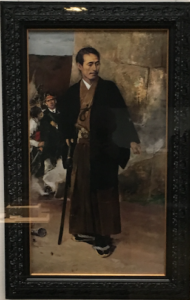
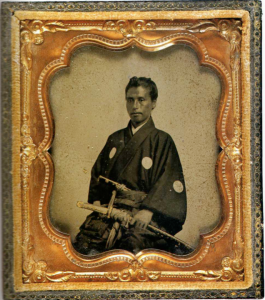
This evening my wife mentioned that she saw an NKH program about Ernest Satow’s villa in Nikko. It reminded me of Katsu Kaishū and his relationship with Satow, secretary to Sir Harry Parkes, the British minister to Japan, around the time of the surrender of Edo Castle in 1868. I reminded my wife of the portrait of Kaishū (above), based on the photograph at the British Legation in Yokohama taken by Satow. At that time Kaishū was in command of the forces of the fallen shogun.  “I was so very sleepy at the time,” Kaishū recalled years later. “But they dragged me over there. Satow took it, because, as he said, ‘You’re going to be killed.’” Both Satow and Parkes were worried for his life, Kaishū said. And so they urged him to take refuge at the British Legation. Kaishū refused their offer on the grounds that he wouldn’t have been able to perform his job, “if I feared assassination. I thought that dying for the country was the duty of any [patriot] and wasn’t about to do something as cowardly as hide out at a foreign legation.”

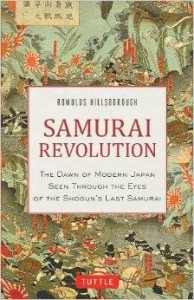
Katsu Kaishū is “the shogun’s last samurai” of Samurai Revolution: The Dawn of Modern Japan Seen Through the Eyes of the Shogun’s Last Samurai. I was motivated to write the book based on of my immense admiration for the man – for his moral and physical courage and his humanity.

On The 150th Anniversary of the Meiji Restoration (12)

Ryoma: Life of a Renaissance Samurai and the Sakamoto Ryoma Film Project

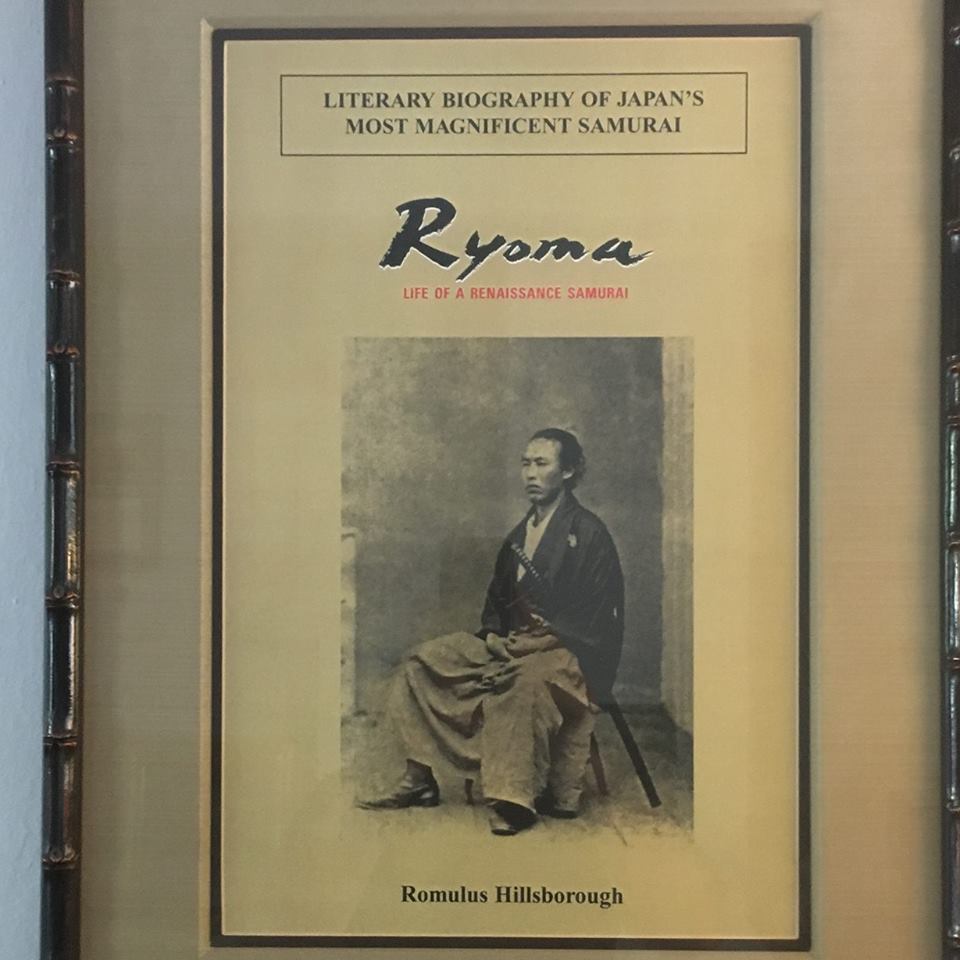
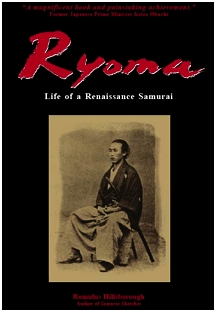
Meiji Restoration hero Sakamoto Ryoma is a national icon in Japan. My first encounter with Ryoma was through Shiba Ryotaro’s popular biographical novel, Ryoma ga Yuku. So fascinated was I by Ryoma’s life story, particularly his indispensible role in the “samurai revolution at the dawn of modern Japan,” that I thought that people all over the world should know about him. Which was why I wrote Ryoma: Life of a Renaissance Samurai (Ridgeback Press, 1999), the only biographical novel about Ryoma in English. “It is a cultural loss that an historical figure of such magnificent stature has failed to gain the full attention of the Western world,” I wrote in the Preface. Since then, for many years, I have hoped that, through my book, Ryoma would become a household name around the world.

I think that things are moving in that direction. But a film about Ryoma, produced and/or directed by a major Hollywood name, would “seal the deal.” Which is why for these past few years I have reached out to “Ryoma fans” around the world for their ideas to make this dream a reality. Please keep your ideas coming – through my website or my Facebook page.

Think big! Create! Persevere!


widget_buy_amazon