Samurai Revolution in Chinese: 武士革命

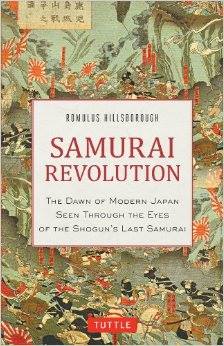
It is a pleasure to share that my book Samurai Revolution: The Dawn of Modern Japan Seen Through the Eyes of the Shogun’s Last Samurai has been translated into Chinese under the title 武士革命 (Samurai Revolution). This translation was published in China by 光明日报出版社 (Guangming Daily Publishing House), and translated by 袁皓天. The Chinese subtitle, 明治维新与近代日本的崛起, means The Meiji Restoration and the Rise of Modern Japan.

A Warm Reception in the Chinese-speaking World

The appearance of 武士革命 has not gone unnoticed. It has been:

  • Catalogued on Douban — China’s influential book database and reading community, where readers can rate, review, and discuss books. The listing includes full details on the Chinese edition and its translator.
  • Reviewed in major media — The respected Chinese outlet The Paper (澎湃新闻) published a review on April 12, 2023, under the title 书评 |《武士革命》——美国当代尽的幕末新史著作 (Book Review | Samurai Revolution — A Comprehensive Contemporary American Work on the Bakumatsu and Meiji Restoration). The review discusses the themes and depth of the book, underscoring its significance for readers interested in Japan’s 19th-century transformation.
  • Discussed by readers — On Douban, Chinese readers have written reviews such as 海舟眼中的幕末 (The Bakumatsu Through the Eyes of Katsu Kaishū), reflecting on the narrative and its characters.
  • Referenced on Zhihu — A major knowledge-sharing platform in China, where readers recommend 武士革命 alongside other works on the Bakumatsu and Meiji Restoration.
  • Shared on social media — Facebook and other platforms carry posts and comments from Chinese-speaking readers comparing the translation with the original edition.

What the Reviewers Say

The Paper review states: “A major hallmark of Samurai Revolution is its comprehensive documentation, with nearly 130 pages devoted to detailed references, annotations, and citations. Each chapter begins with a quotation from Katsu Kaishū’s writings, another unique feature of the book. The author also cites the perspectives of numerous other historians to supplement his arguments, particularly those of Matsuura Rei. He also presents diverse perspectives on the same historical facts and boldly offers speculation on matters not found in historical sources.”

Douban, meanwhile, describes the book as, “A clear and complete chronicle of the Meiji Restoration, [which] clearly outlines the key events from the end of the shogunate to the Meiji Restoration, with a fluent and engaging narrative.”


What It Means to Me as the Author

Seeing Samurai Revolution cross into another language and culture is deeply rewarding. It confirms that the story of the samurai revolution — Japan’s turbulent transition from the Tokugawa Shogunate to the modern Meiji state — speaks not only to readers in the West, but also to those in East Asia, where this history is part of the shared past of the region. For me, 武士革命 is more than a translation: it is evidence that the themes of change, revolution, and modernization resonate universally.

It is also gratifying given the importance of Chinese culture in samurai society. Educated men during the Edo period — not only samurai but also merchants and peasants — were steeped in the Chinese classics, and often wrote in Japanized Chinese (kanbun). In this sense, the appearance of Samurai Revolution in Chinese closes a historical circle, linking past and present across languages and cultures.


For more about my books in English, including Samurai Revolution, visit my Books at a Glance page. Read about my forthcoming Samurai Swordsmen here.

Follow me on Facebook | Amazon Author page
Prophetic Words in Sakamoto Ryōma’s Final Letter

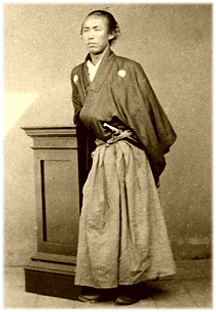
Amid the national upheaval of the Samurai Revolution of the 1860s, Sakamoto Ryōma left behind prophetic words in his final letter—speaking not only to the Japan of his time but also to the timeless struggle for meaning and direction in times of change.

At the height of the tumult of the revolution, and less than one month since the last shogun, Tokugawa Yoshinobu, had announced his intention to abdicate and restore Imperial rule based on an historic peace plan, the author of that plan was engrossed in yet another plan to send men to Ezo (modern-day Hokkaido) in the far north of Japan to settle and exploit that mineral-rich wilderness, train them in the naval sciences, and save them from dying in the revolution.

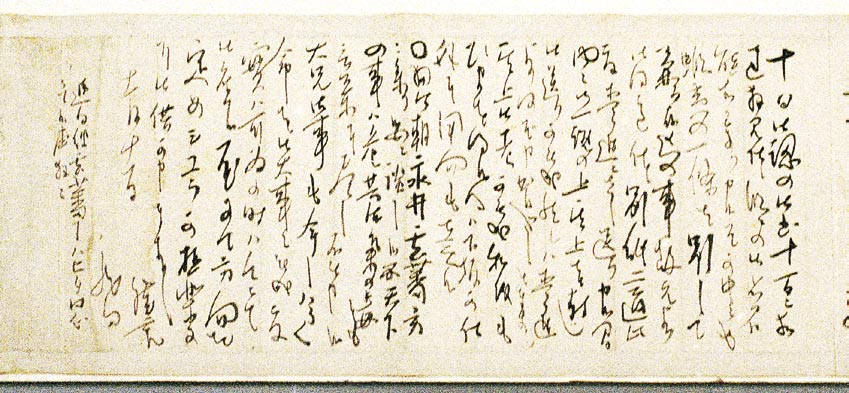
Ryōma was working on the plan with Hayashi Kenzō, a Hiroshima samurai in the employ of Satsuma. In the eerily prophetic closing to a letter to Hayashi, Ryōma, just four days before his assassination, advised his friend to be very careful for his life, then wrote, “Now is the time for us to act. Soon we must decide on our direction, whether it lead to pandemonium or paradise” (my translation).

Early in the morning five days later, Hayashi, summoned by Ryōma from “an urgent discussion” at his hideout in Kyoto, encountered the aftermath of that pandemonium. Entering the house Hayashi saw “bloody footprints here and there”; then “dashing up the stairway to see if Sakamoto was okay,” he found Ryōma’s corpse, “his sword drawn, lying in a pool of blood.”

[Sakamoto Ryōma’s letter written days before his assassination (dated the 11th day of the 11th month of Keiō 3 (December 1, 1867). Source: Sakamoto Ryōma Memorial Museum.]


Samurai Swordsmen: The Definitive History of the Shinsengumi (Helion, 2026) is now in production.
For professional guidance on Bakumatsu–Meiji Restoration history, see Historical Consulting.
Explore my books at Books at a Glance.

Samurai Revolution: A New Edition Coming

I’m pleased to share an important update about my book Samurai Revolution: The Dawn of Modern Japan Seen Through the Eyes of the Shogun’s Last Samurai.

First published by Tuttle in 2014, Samurai Revolution received strong reviews and has maintained a steady readership for more than a decade. The book has been an important part of my life for many years—during the 10 years I was writing it and since it was published—and I’ve been gratified by the interest it has generated among readers around the world.

As of this month, the publishing rights have reverted to me. This means the original edition is no longer in print—but it also opens the door for a fresh new edition. I’m planning for Samurai Revolution to be republished in the near future, likely in 2026, with updates that reflect on Katsu Kaishū’s enduring legacy and the extraordinary era he helped shape.

I’ll be sharing more details as they come together. For now, I simply want to thank my readers for your continued support, and to let you know that Samurai Revolution will return in a new edition before long.

Stay updated here.

Assassination of Sakamoto Ryōma: Shinsengumi Suspected

[Note: Sakamoto Ryōma—whose life I chronicled in Ryoma: Life of a Renaissance Samurai—was assassinated in Kyoto near the end of 1867, at the pivotal moment when the Tokugawa regime was collapsing. Ryōma’s assassination is the subject of Part III of Samurai Assassins.]

[Imai Nobuo — Kyoto Mimawarigumi samurai who confessed involvement in the 1867 assassination of Sakamoto Ryōma]

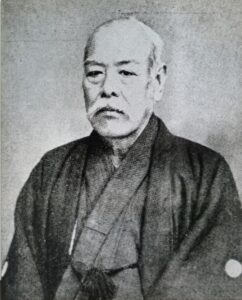
Imai Nobuo — Kyoto Mimawarigumi samurai who confessed involvement in the 1867 assassination of Sakamoto RyōmaDuring the years that the Shinsengumi were arresting and killing anti-Bakufu rebels on the streets and alleys of Kyoto, another Bakufu security force called Kyoto Mimawarigumi (Kyoto Patrol Corps) were doing the same thing. While the Shinsengumi corpsmen, from Commander Kondō Isami and Vice-commander Hijikata Toshizō on down, were rōnin, the Kyoto Patrol Corps generally consisted of direct vassals of the shogun. When a band of Mimawarigumi swordsmen, including Imai Nobuo, assassinated Sakamoto Ryōma and his cohort Nakaoka Shintarō at the former’s hideout in Kyoto around the end of 1867, the Shinsengumi were suspected. In 1870, Imai confessed to the authorities that he and others had acted under orders from their commander, Sasaki Tadasaburō, who was also involved. But Imai claimed that he had not had a hand in the actual killings, since he and two others had been downstairs guarding the place while the others went upstairs, where they attacked Ryōma and Nakaoka. Ryōma’s assassination is the subject of Part III of Samurai Assassins.
Imai’s confession notwithstanding, for decades it was “generally believed that Sakamoto Ryōma and Nakaoka Shintarō were killed by Kondō Isami and Hijikata Toshizō,” he said in 1900 in an interview for an article titled “Sakamoto Ryōma Satsugaisha” (“Sakamoto Ryōma’s Killers”). “But actually I did it.” As I wrote in Samurai Assassins,  

Shinsengumi corpsman Shimada Kai denied that the Shinsengumi had anything to do with the assassinations, saying that they did not hear about the incident until the next day. Shimada’s claim is supported by another former Shinsengumi corpsman, Yūki Minizō. “We were at Kondō’s place that night,” Yūki recalled years later. “. . . When we heard about the assassinations the next day, we said to one another that whoever did it must have been a very skilled swordsman. . . . When we heard that it was Imai who had done it, it made sense. Imai was well known in Edo at that time for his great skill with a short sword. When he was set to attack, it was said that all you could see was his sword. Imai was the only person who could have done such work in such cramped quarters in so short a time.”

For on the assassination of Ryōma and Nakaoka, see An Indispensable Document for Knowing the Facts Regarding Ryōma’s Assassination.

The conflicting accounts of Ryōma’s assassination remain one of the enduring mysteries of the Bakumatsu era. I explore these events in detail in my forthcoming book, Samurai Swordsmen: The Definitive History of the Shinsengumi (1863–1869). For details see the Shinsengumi Hub.


Samurai Swordsmen: The Definitive History of the Shinsengumi (Helion, 2026) is now in production.
For professional guidance on Bakumatsu–Meiji Restoration history, see Historical Consulting.
Explore my books at Books at a Glance.

The Samurai, the Ship, and the Golden Gate

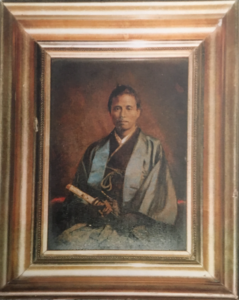
Katsu Kaishu’s portrait by US Navy sailor Edward Kern
On St. Patrick’s Day, 1860, the first Japanese warship to reach North America entered San Francisco Bay—a moment noted in the local Daily Alta California on March 18:

“His Imperial Japanese Majesty’s war steamer Candinmarru, commanded by Kat-sin-tarroh, a Captain in the Japanese Navy, arrived in our harbor yesterday, and anchored off Vallejo street wharf, at three o’clock P.M., after 37 days’ passage from Uragawa. . . .”

The Daily Alta, of course, was referring to the arrival of the Japanese warship Kanrin Maru, captained by Katsu Kaishū, the “shogun’s last samurai” of my book Samurai Revolution. The American journalists really had no way to know the correct transliteration of the Japanese names, probably because at that early date there was still no standardization thereofand they certainly bastardized the pronunciation (Katsu Kaishū was his pseudonym; his given name was Katsu Rintarō).

Following is an excerpt from the book (without footnotes):

At dawn of the thirty-eighth day at sea, Katsu Kaishū caught his first sight of the North American continent—and one can only imagine the intense interest with which he took up his binoculars to view through dense fog the coastal mountains in the distance, “like great waves rising above the clouds,” he wrote in a journal-like account of his San Francisco experience in History of the Navy. The captain would have been standing on the deck of his warship—a white banner emblazoned with the red rising sun flying at the mainmast; at the mizzenmast a signal flag of red and white displaying [Admiral] Kimura’s family crest of an encircled diamond. As the Kanrin passed safely through the strait called the Golden Gate, into San Francisco Bay, Kaishū paid special attention to the forts on the north and south shores, for the state-of-the-art military technology naturally concerned the military scientist who would construct modern batteries on the coast of his own country. To this purpose, during his sojourn in and around San Francisco he kept meticulous notes. The battery at Fort Point, on the south shore, he wrote,”is equipped with tens of large guns. The battery is made entirely of brick, with loopholes at three levels. The flat upper surface, sixty or seventy ken [around 109 or 127 meters] in length and of a suitable width, is large enough to mount smaller guns. From the outside there appears to be plenty of room for posting sentries at the rear. On the hillside on the left [north] shore are lights for targeting vessels entering and leaving the bay.”

From the topography of the city, “with mountains on all four sides,” Kaishū was struck by “its similarity to our Nagasaki.” Presently, a tugboat approached. “Two of its men boarded our ship. . . . We requested them to lead us [further] into the bay.” “They were going to salute us with cannon fire from land,” wrote Fukuzawa Yukichi, who sailed on the Kanrin as a steward to Kimura. “If they were going to salute us, then we had to return the honor.” But the captain hesitated on the grounds that his tiny ship might not withstand the shock. Meanwhile, Senior Officer Sasakura Kiritarō was eager to return the salute. “No,” said the captain. “Rather than attempting to return the salute and failing, it would be better to let the matter alone.” But Sasakura was determined. “I can do it,” he said. “I’ll show you.” “Don’t be stupid,” the captain retorted. “There’s no way you can do it. But if you try and succeed, you can have my head.” Permission granted, Sasakura ordered some of the men to clean the guns and prepare the gunpowder. He returned the salute superbly, as Kaishū probably expected, assisted by Junior Officer Akamatsu Daizaburō, who used an hourglass to time the intervals between shots. Then Sasakura got his feathers fluffed up and strutted right up to his captain. “Your head belongs to me,” he announced for all to hear. “But I think you’d better keep it where it is for a while. I’m sure you’ll be needing it during the rest of our voyage.” Sasakura’s remark drew laughter from the entire company.

[Katsu Kaishū, portrait by U.S. Navy sailor Edward Kern (1860)]

_____________________

Katsu Kaishū is the “shogun’s last samurai” of Samurai Revolution, the only biography in English.