Mamoru Matsuoka: A Tribute to a Major Historian of the Meiji Restoration

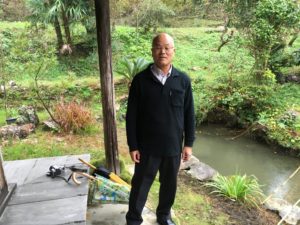
Students and writers of Meiji Restoration history lost an important teacher this week with the passing of historian Mamoru Matsuoka in Kochi, Japan, his hometown, and also the home of major Restoration figures such as Sakamoto Ryōma, Takechi Hanpeita, and Nakaoka Shintarō, on whom he wrote insightful and meticulously researched biographies.

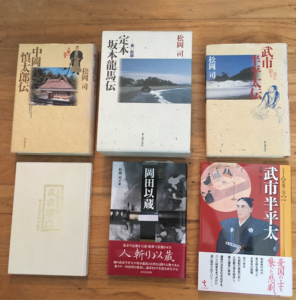
Of several fine biographies of Ryōma that I have read, Matsuoka-sensei’s Teihon Sakamoto Ryoma-den is the “authoritative edition,” as the title indicates. His works on Takechi and Nakaoka have been of particular value to me as a writer because of the dearth of reliable biographies about these two men.

Matsuoka-sensei was my friend. As a writer, I am greatly indebted to him. My deepest condolences to his family.

[The photo of Matsuoka-sensei was taken in the garden at the ancestral home of Takechi Hanpeita in Kochi, on November 13, 2015. These six of his books are, clockwise from upper left: “Nakaoka Shintaro-den” (biography of Nakaoka Shintaro); “Teihon Sakamoto Ryoma-den” (biography of Sakamoto Ryoma: authoritative edition); “Takechi Hanpeita-den” (biography of Takechi Hanpeita); “Takechi Hanpeita”; “Seiden Okada Izo” (authentic biography of Okada Izo); “Tosa Kinno-to Shuryo Takechi Zuizan: Mikokai Shiryo no Shokai” (Tosa Loyalist Party Leader Takechi Zuizan: A Presentation of Unpublished Materials)]

Shiba Ryotaro’s “Junshi”

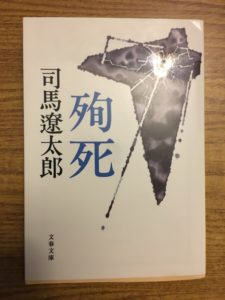
Shiba Ryotaro’s masterpiece Ryoma ga Yuku immortalized Sakamoto Ryoma in the psyche of the Japanese people. Along with that book and many others by Shiba, I also love this one, Junshi, about General Nogi Maresuke, the famed hero of the Russo-Japan War, formerly a samurai of Chōshū, whose seppuku in the wake of the death of the Meiji Emperor shocked the country. Junshi is the ancient practice of following one’s lord in death – and Shiba’s account of the incident is nothing short of awesome.

_____________

Recently I have been focusing on my forthcoming Samurai Swordsmen: The Definitive History of the Shinsengumi (1863–1869), scheduled for publication in fall 2026 with Helion. I also provide consulting on Bakumatsu–Meiji Restoration history and culture to authors, editors, publishers, documentarians, producers, screenwriters, and other professionals who need expert guidance on the era.

To explore my books on the Meiji Restoration, see Books at a Glance.

Follow me on Facebook | Amazon Author page

Miyaji Saichirō’s Monumental Works

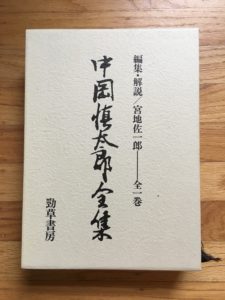
As a writer of Bakumatsu history, two of the most important books I own are Sakamoto Ryōma Zenshū (坂本龍馬全集) (Kōfūsha Shuppan, 1978) and Nakaoka Shintarō Zenshū (中岡慎太郎全集) (Keisō Shobō, 1991), collections of letters to and from their respective subjects, and other related documents, compiled and meticulously annotated by Miyaji Saichirō. I have relied heavily on Sakamoto Ryōma Zenshū in all my own books.

miyaji-and-osaragi-kochi

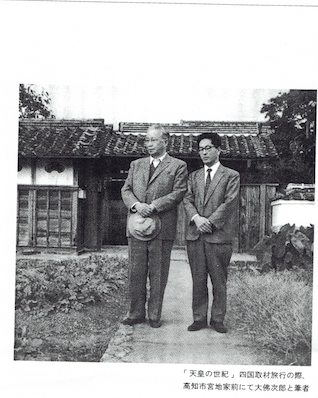
[The above photo, published in “Ryōma Times,” No. 41 (newsletter of Tokyo Ryoma-kai), shows Miyaji Saichirō (right) on a trip to Kochi in 1968, with his mentor, the famous writer Osaragi Jirō, who at the time was working on Tennō no Seiki, his masterpiece of Bakumatsu-Meiji Restoration history.]

I first met Miyaji-sensei around November 1988, while working as a writer for Flash, a weekly magazine in Tokyo. The magazine was doing a special feature on Sakamoto Ryōma to commemorate his upcoming birthday. Since I was then working on my novel about the life and times of Sakamoto Ryōma, the editor in charge asked me to accompany him to Miyaji-sensei’s home to interview him. Needless to say, I was thrilled to meet the great writer, whose books I depended on heavily in writing my novel.

Miyaji-sensei, born in Ryōma’s native Kochi, lived in Mitaka, Tokyo. He greeted us at the front door of his home, dressed in traditional kimono. During our visit I remember him saying something to the effect that he thought of me as an “American Ryōma.”

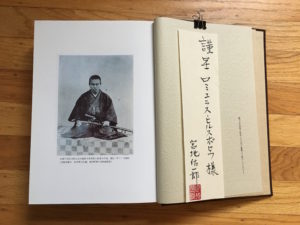
Years later, in December 1999, Miyaji-sensei gave me this copy of Nakaoka Shintarō Zenshū. He included this signed “complements from the author” slip, inscribed to me.
img_1500img_1504-1

Related article: “The Ryoma Phenomenon” – 龍馬現象 (11): My Five Favorite Books About Ryoma

Shiba Ryōtarō’s Masterpiece: “Ryōma ga Yuku”

shiba ryo with ryoma et al

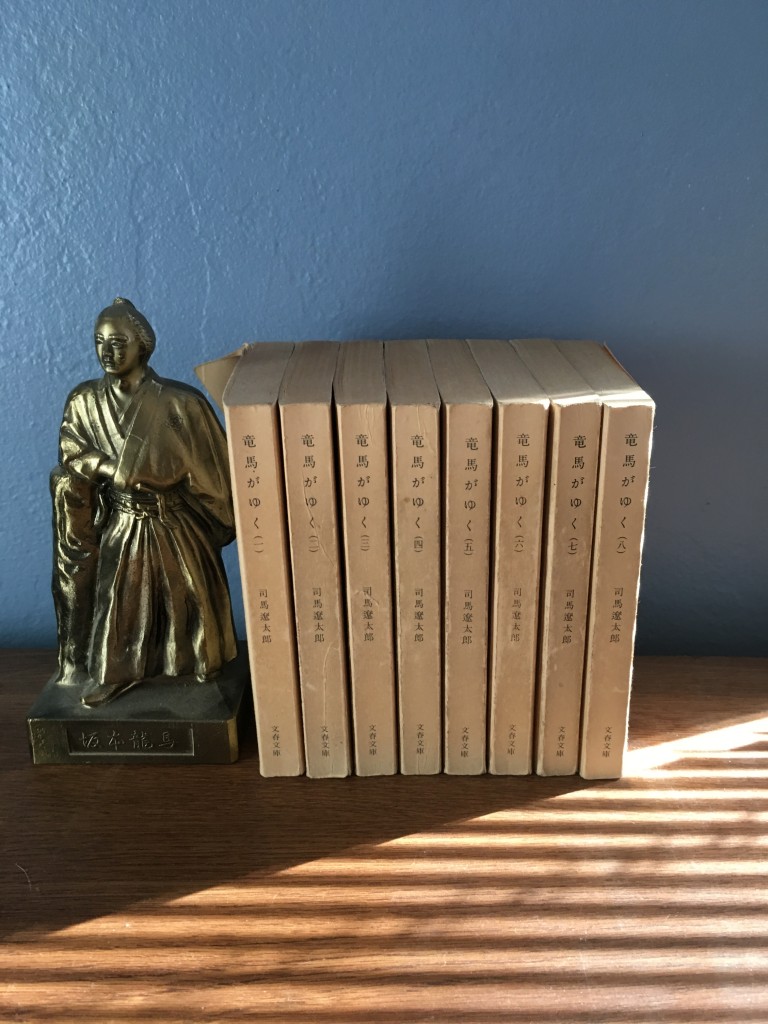
Among my favorite Japanese writers is the prolific historical novelist Shiba Ryōtarō (1923 – 1996), whose masterpiece Ryōma ga Yuku immortalized Sakamoto Ryōma in the psyche of the Japanese people. Originally published in serial form in the national newspaper Sankei Shimbun in 1962, this epic of the life and times of Sakamoto Ryōma comprises eight paperback volumes in its current printed form. My other favorite books by Shiba include Moeyo-ken, which focuses on Hijikata Toshizō, vice commander of the Shinsengumi; Yotte Sōrō, whose protagonist, Yamauchi Yōdō, the flamboyant daimyo of Ryōma’s native Tosa, played an important role in this history; Hitokiri Izō, the haunting portrait of the notorious assassin Okada Izō; and Saigō no Shōgun, about the life and times of the brilliant last shogun, Tokugawa Yoshinobu. Among these, Yotte Sōrō and Saigō no Shōgun have been published in English under the respective titles of Drunk as a Lord (Yōdō’s nom de plume was Geikaisuiko, “Drunken Lord of the Sea of Whales,” for the rich bounty of whales off the Tosa coast), and The Last Shogun: The Life of Tokugawa Yoshinobu.

I was introduced to Sakamoto Ryōma and the epic history of the Bakumatsu (i.e., the final fifteen years of the Tokugawa Shogunate: 1853 – 1868) through Ryōma ga Yuku, when a friend gave me a copy of Vol. 1, sometime around 1982. I owe my inspiration for my historical novel, Ryoma: Life of a Renaissance Samurai, to Shiba’s book.

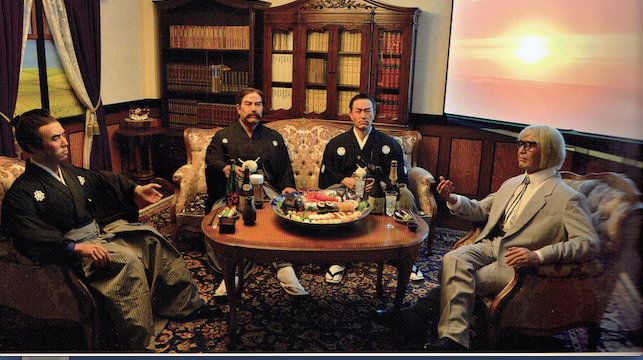
The above photo from Ryōma Rekishikan, a museum in Ryōma’s hometown of Kochi, shows one of 27 scenes of wax figures, some historical others personal, from Ryōma’s life. The fourth scene on the tour depicts Ryōma’s birth in Kochi in 1835. Scene 26 shows the gruesome assassinations of Ryōma and his friend and cohort in the revolution, Nakaoka Shintarō, in Kyoto in 1867. The final scene, number 27, depicts four immortals, perhaps discussing the state of Japan and the world today: Shiba Ryōtarō sits opposite Ryōma, joined by Mitsubishi founder Iwasaki Yatarō (left) and Nakaoka.

Below is a photo of my personal set of Ryōma ga Yuku, the jackets long since worn out.

IMG_0510


Samurai Swordsmen: The Definitive History of the Shinsengumi (Helion, 2026) is now in production.
For professional guidance on Bakumatsu–Meiji Restoration history, see Historical Consulting.
Explore my books at Books at a Glance.


My Favorite Japanese History Writers

The best writers of Japanese history are, quite naturally, Japanese. Nearly all of them concentrate on the most important era in modern Japanese history: the final fifteen years of the Tokugawa Shogunate, from the arrival of Perry in the summer of 1853, which kicked off the revolution, to the fall of the Tokugawa Shogunate in late 1868. Japanese writers call this era “Bakumatsu,” literally “end of the shogunate.” I describe it as “the samurai revolution at the dawn of modern Japan.”

Japanese writers concentrate on the Bakumatsu not only because it is the beginning of modern Japan, but also because it is by far the most interesting and spellbinding era in Japanese history. In writing about this history they naturally focus on the most powerful and spellbinding personalities of the era. These include such household names as Sakamoto Ryōma, Saigō Takamori, Katsu Kaishū, Tokugawa Yoshinobu, Takasugi Shinsaku, Yoshida Shōin, Katsura Kogorō, Takechi Hanpeita, Nakaoka Shintarō, Ōkubo Toshimichi, Sakuma Shōzan, Yamauchi Yōdō, Tokugawa Nariaki, and last but not least the Shinsengumi, an organization whose leaders, Kondō Isami and Hijikata Toshizō garner the most attention. Readers of my books are familiar with all of these personalities and more.

When I started studying this history over thirty years ago, I was living in Tokyo. At first I read everything I could get my hands on about the Bakumatsu. It didn’t take long before I discovered that there was a gaping dearth of material in English about the Bakumatsu. So I naturally focused on Japanese writers, and after a few years of reading I was able to discern the best among them. I adopted their approach to writing this history, including their focus on the most powerful and spellbinding personalities. These Japanese writers have been my teachers throughout my writing career. My debt to them is enormous.

Following is the first part of a series of articles in which I introduce these writers. (In keeping with normal Japanese practice, their names are presented with family name first.) 

Hirao Michio (平尾道雄) (1900 – 1979) : Hirao Michio might be called the “godfather” of Tosa historians during the 20th century. His biographies of Sakamoto Ryōma, Nakaoka Shintarō, and Yamauchi Yōdō are definitive. His two most well-known books on Ryōma are probably Sakamoto Ryōma: Kainetai Shimatsuki and Ryōma no Subete. Of his writings on Nakaoka, I have mostly referred to Nakaoka Shintarō: Rikuentai Shimatsuki. (The “Kaientai” in the title the first Ryōma biography cited refers to Ryōma’s Naval Auxiliary Corps in Nagasaki. The “Rikuentai” in the title of the Nakaoka biography refers to Nakaoka’s Land Auxiliary Corps in Kyoto.) Hirao’s history of the Shinsengumi, Teihon Shinsengumi Shiroku (The Definitive History of the Shinsengumi), was published in 1928, shortly after Shimozawa Kan’s more famous Shinsengumi Shimatsuki. Like Hirao’s other books, it is invaluable. I referred to it while writing Shinsengumi: The Shogun’s Last Samurai Corps and my forthcoming Samurai Swordsmen: The Definitive History of the Shinsengumi. I referred to Hirao’s Ishin Ansatsu Hiroku, a collection of accounts of historically significant assassinations during the Bakumatsu, particularly in Samurai Assassins.

The closest I ever got to actually meeting Hirao Michio was vicariously through Ogura Katsumi, then-curator of The Sakamoto Ryōma Memorial Museum in Kochi. Mr. Ogura, a former newscaster, served as the moderator of a symposium about Sakamoto Ryoma held in Yonago City, Tottori, in May 2002. I was invited as a panelist and stayed at the same hotel as Mr. Ogura, who briefly shared with me memories of Mr. Hirao and also of Marius Jansen, the Princeton historian perhaps best known for his biography Sakamoto Ryoma and the Meiji Restoration. I regret that I never had the chance to meet Prof. Jansen, whom Mr. Ogura had met in Kochi. While the two of us spoke at our hotel, Mr. Ogura remarked—surely out of kindness—that my Japanese pronunciation was “better” than Prof. Jansen’s. Mr. Ogura’s books include Ryōma ga Nagai Tegami wo Kaku Toki (When Ryōma Wrote Long Letters). Mr. Ogura passed away in May 2005.