Katsu Kaishū’s Journals and Shinsengumi History

My forthcoming book, Samurai Swordsmen: The Definitive History of the Shinsengumi, is scheduled for publication in fall 2026 with Helion. Katsu Kaishū’s journals of the era, Bakumatsu Nikki, are among my most important sources. Though Kaishū did not have much direct encounter with the Shinsengumi leaders, Kondō Isami and Hijikata Toshizō, he captured the zeitgeist of the era to such an extent—astutely documenting its politics, culture, and society—that his journals were indispensable in writing this in-depth history of the Shinsengumi.

The journals were kept separately, though entries occasionally overlap. The regular journal, covering the final years of the Bakufu and the Meiji Restoration, was kept from Bunkyū 2/intercalary 8/17 (October 10, 1862)—upon the author’s appointment to the high post of vice commissioner of warships—until Meiji 3/6/4 (June 4, 1870), about a year after the end of the Boshin War. The Keiō 4 Boshin NikkiBoshin being the Chinese zodiac cycle corresponding to the Japanese calendrical year Keiō 4 (1868 on the Western calendar)—covers the heady months from Keiō 3/10/22 (November 17, 1867), eight days after the fifteenth shogun, Tokugawa Yoshinobu, officially announced his intention to abdicate and restore Imperial rule, until Keiō 4/5/15 (1868), the day the Imperial Army defeated the Shōgitai, “Corps of Clear Loyalty,” in the hills of Ueno northeast of the castle, essentially eliminating the resistance in Edo among diehard vassals of the former shogun. Both journals contain copies of important letters to and from Katsu Kaishū.

[The above is a photo of my personal copy of Bakumatsu Nikki, vol. 1, of the 22-volume Kodansha edition of Katsu Kaishū Zenshū, the collected works of Katsu Kaishū, published in 1976.]


For professional guidance on Bakumatsu–Meiji Restoration history, see Historical Consulting.
Explore my books at Books at a Glance.
Key Japanese Words in Romulus Hillsborough’s Books: (7)— Bakumatsu

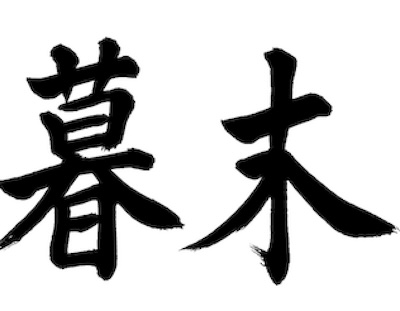
Bakumatsu literally means “end of the Bakufu,” the military regime of fifteen generations of heads of the House of Tokugawa, each one holding the title of shogun. Their hegemony over Japan began in 1603 and lasted more than two and a half centuries. The first character of Bakumatsu, also pronounced maku, signifies a curtain or tent, recalling the field headquarters of medieval commanders. The second character, matsu, simply means “end.” So Bakumatsu signified not a political program or ideology, but a historical reality: the final years of Tokugawa rule.


Most historians date the Bakumatsu from Perry’s arrival in 1853 to the Restoration of Imperial Rule in early 1868 — the coup that ended Tokugawa rule. The reasoning is that Perry’s arrival is widely construed to have sparked the “beginning of the end” of the Tokugawa Bakufu—though three consecutive shoguns would cling to power for another fourteen and a half years before the final fall. Bakumatsu is a relatively recent term, which was not used by people who lived through those years. The term came into common use only after the Meiji government had consolidated power and historians could look back on the collapse of the Bakufu as a distinct era. An early example of its use is from one of the most celebrated and important men of the era, Katsu Kaishū, in an interview with the magazine Tenchijin in October 1898, just a few months before his death. “Although it has only been thirty years since the Bakufu fell, there isn’t one person who has written a perfect history of the Bakumatsu,” Kaishū said. (Quoted in Hikawa SeiwaKatsu Kaishū Zenshū 21 (Tokyo: Kodansha, 1973), p. 293)


The emotional weight of the word is powerful. It evokes not only political upheaval but also the moral exhaustion of a system that had preserved peace for two and a half centuries. It was a time when loyal retainers faced impossible choices between serving their daimyo—or the shogun, as in the case of Katsu Kaishū and tens of thousands of other Bakufu samurai—and the emerging concept of a unified nation under the Emperor. It was also an age of extraordinary creativity, when Japan’s brightest minds grappled with how to reconcile the old way of life, based in no small measure on the samurai code of bushido.

When I use the term “Samurai Revolution,” I mean precisely this: the transformation of Japan that began with the Bakumatsu, and encompassed the Meiji Restoration and the subsequent civil war (Boshin War) that continued until May 1869.


Samurai Swordsmen: The Definitive History of the Shinsengumi (Helion, 2026) is now in production.
For professional guidance on Bakumatsu–Meiji Restoration history, see Historical Consulting.
Explore my books at Books at a Glance.
 

Samurai Revolution in Chinese: 武士革命

It is a pleasure to share that my book Samurai Revolution: The Dawn of Modern Japan Seen Through the Eyes of the Shogun’s Last Samurai has been translated into Chinese under the title 武士革命 (Samurai Revolution). This translation was published in China by 光明日报出版社 (Guangming Daily Publishing House), and translated by 袁皓天. The Chinese subtitle, 明治维新与近代日本的崛起, means The Meiji Restoration and the Rise of Modern Japan.

A Warm Reception in the Chinese-speaking World

The appearance of 武士革命 has not gone unnoticed. It has been:

  • Catalogued on Douban — China’s influential book database and reading community, where readers can rate, review, and discuss books. The listing includes full details on the Chinese edition and its translator.
  • Reviewed in major media — The respected Chinese outlet The Paper (澎湃新闻) published a review on April 12, 2023, under the title 书评 |《武士革命》——美国当代尽的幕末新史著作 (Book Review | Samurai Revolution — A Comprehensive Contemporary American Work on the Bakumatsu and Meiji Restoration). The review discusses the themes and depth of the book, underscoring its significance for readers interested in Japan’s 19th-century transformation.
  • Discussed by readers — On Douban, Chinese readers have written reviews such as 海舟眼中的幕末 (The Bakumatsu Through the Eyes of Katsu Kaishū), reflecting on the narrative and its characters.
  • Referenced on Zhihu — A major knowledge-sharing platform in China, where readers recommend 武士革命 alongside other works on the Bakumatsu and Meiji Restoration.
  • Shared on social media — Facebook and other platforms carry posts and comments from Chinese-speaking readers comparing the translation with the original edition.

What the Reviewers Say

The Paper review states: “A major hallmark of Samurai Revolution is its comprehensive documentation, with nearly 130 pages devoted to detailed references, annotations, and citations. Each chapter begins with a quotation from Katsu Kaishū’s writings, another unique feature of the book. The author also cites the perspectives of numerous other historians to supplement his arguments, particularly those of Matsuura Rei. He also presents diverse perspectives on the same historical facts and boldly offers speculation on matters not found in historical sources.”

Douban, meanwhile, describes the book as, “A clear and complete chronicle of the Meiji Restoration, [which] clearly outlines the key events from the end of the shogunate to the Meiji Restoration, with a fluent and engaging narrative.”


What It Means to Me as the Author

Seeing Samurai Revolution cross into another language and culture is deeply rewarding. It confirms that the story of the samurai revolution — Japan’s turbulent transition from the Tokugawa Shogunate to the modern Meiji state — speaks not only to readers in the West, but also to those in East Asia, where this history is part of the shared past of the region. For me, 武士革命 is more than a translation: it is evidence that the themes of change, revolution, and modernization resonate universally.

It is also gratifying given the importance of Chinese culture in samurai society. Educated men during the Edo period — not only samurai but also merchants and peasants — were steeped in the Chinese classics, and often wrote in Japanized Chinese (kanbun). In this sense, the appearance of Samurai Revolution in Chinese closes a historical circle, linking past and present across languages and cultures.


For more about my books in English, including Samurai Revolution, visit my Books at a Glance page. Read about my forthcoming Samurai Swordsmen here.

Follow me on Facebook | Amazon Author page

Prophetic Words in Sakamoto Ryōma’s Final Letter

Amid the national upheaval of the Samurai Revolution of the 1860s, Sakamoto Ryōma left behind prophetic words in his final letter—speaking not only to the Japan of his time but also to the timeless struggle for meaning and direction in times of change.

At the height of the tumult of the revolution, and less than one month since the last shogun, Tokugawa Yoshinobu, had announced his intention to abdicate and restore Imperial rule based on an historic peace plan, the author of that plan was engrossed in yet another plan to send men to Ezo (modern-day Hokkaido) in the far north of Japan to settle and exploit that mineral-rich wilderness, train them in the naval sciences, and save them from dying in the revolution.

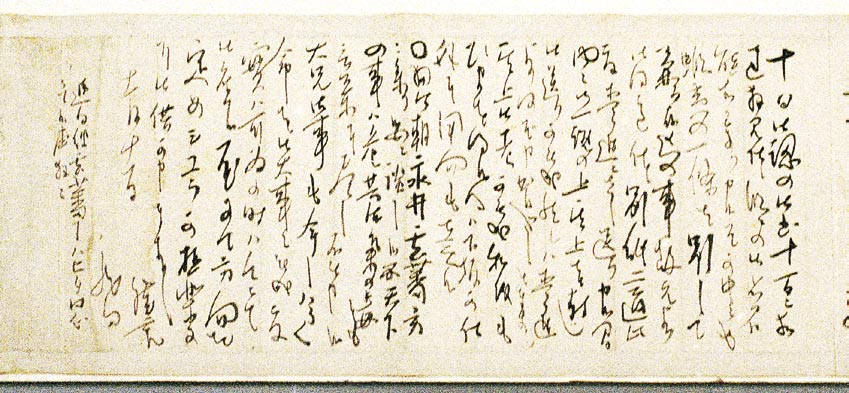
Ryōma was working on the plan with Hayashi Kenzō, a Hiroshima samurai in the employ of Satsuma. In the eerily prophetic closing to a letter to Hayashi, Ryōma, just four days before his assassination, advised his friend to be very careful for his life, then wrote, “Now is the time for us to act. Soon we must decide on our direction, whether it lead to pandemonium or paradise” (my translation).

Early in the morning five days later, Hayashi, summoned by Ryōma from “an urgent discussion” at his hideout in Kyoto, encountered the aftermath of that pandemonium. Entering the house Hayashi saw “bloody footprints here and there”; then “dashing up the stairway to see if Sakamoto was okay,” he found Ryōma’s corpse, “his sword drawn, lying in a pool of blood.”

[Sakamoto Ryōma’s letter written days before his assassination (dated the 11th day of the 11th month of Keiō 3 (December 1, 1867). Source: Sakamoto Ryōma Memorial Museum.]


Samurai Swordsmen: The Definitive History of the Shinsengumi (Helion, 2026) is now in production.
For professional guidance on Bakumatsu–Meiji Restoration history, see Historical Consulting.
Explore my books at Books at a Glance.
Samurai Revolution: A New Edition Coming

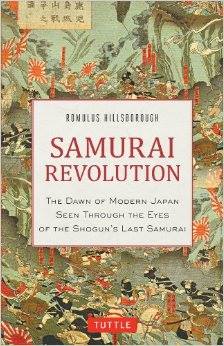
I’m pleased to share an important update about my book Samurai Revolution: The Dawn of Modern Japan Seen Through the Eyes of the Shogun’s Last Samurai.

First published by Tuttle in 2014, Samurai Revolution received strong reviews and has maintained a steady readership for more than a decade. The book has been an important part of my life for many years—during the 10 years I was writing it and since it was published—and I’ve been gratified by the interest it has generated among readers around the world.

As of this month, the publishing rights have reverted to me. This means the original edition is no longer in print—but it also opens the door for a fresh new edition. I’m planning for Samurai Revolution to be republished in the near future, likely in 2026, with updates that reflect on Katsu Kaishū’s enduring legacy and the extraordinary era he helped shape.

I’ll be sharing more details as they come together. For now, I simply want to thank my readers for your continued support, and to let you know that Samurai Revolution will return in a new edition before long.

Stay updated here.