
In Defense of Japan’s Wartime History

Japanese Prime Minister Shinzo Abe has criticized what he claims are inaccurate depictions of “Japan’s actions during World War II, opening a new front in a battle to sway American views of the country’s wartime history,” The New York Times reported on January 30, 2015. Abe has “vowed to step up efforts to fight what he called mistaken views abroad concerning Japan’s wartime actions, when the Japanese military conquered much of Asia.” In fact Japan colonized Korea and Taiwan long before the war. But Japan’s imperialism in Asia was a direct reaction to similar behavior by Western powers in the nineteenth century—namely the United States, Great Britain, and France—which had threatened Japan’s sovereignty.

To understand Abe’s position, and the position of many conservatives in Japan today—which history teaches us is actually quite reasonable—we must know something of the history of the forced opening of Japan by the aforementioned three Western powers in the mid-nineteenth century. It is the history of the Meiji Restoration, also known as “the dawn of modern Japan,” which marked the transfer of power from the shogun to the emperor and unified the nation under the Imperial monarchy in late 1867. One of the most tumultuous and violent periods in Japanese history, the Meiji Restoration kicked off the rise of Imperial Japan—and with it Japan’s colonization of Asian countries.

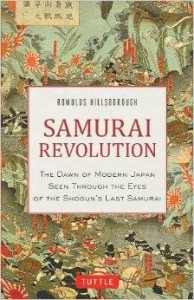
Until Japan’s treaty with Commodore Matthew Perry of the United States Navy, concluded under the threat of attack by American warships in 1854, and the coerced trade treaties with the United States, France, Great Britain, and other foreign nations that came a few years later, Japan, under the rule of the Tokugawa Shogunate, had been isolated from the rest of the world. Unlike the great Western powers, which had colonized parts of China and India, Japan had not conquered or colonized any foreign nation or territory during the two and half centuries of Tokugawa rule. Great Britain had subjugated much of India in the early part of the century; it had ceded Hong Kong in 1842, under the Treaty of Nanking, which ended the first Opium War. In reaction to Western imperialism, farsighted men in Japan advocated the development of a “strong military and rich nation” to protect Japan’s sovereignty. As I wrote in my recent book, Samurai Revolution: The Dawn of Modern Japan Seen Through the Eyes of the Shogun’s Last Samurai, (Tuttle, 2014), Katsu Kaishu, a founder of the Japanese navy, envisaged a “Pan Asian navy” to be led by Japan based on a “Triple Alliance” with Korea and China, as part of a far-reaching scheme to meet the Western threat from a position of strength. To defend against Western encroachment, Katsu wrote in the spring of 1863, Japan should “dispatch ships to Asian countries to persuade their leaders to form an Asian Alliance and build up our navies . . . and conduct international trade and academic research.” Katsu submitted his plan to the shogunate, which agreed with him.

Katsu’s plan had been triggered by Russia’s occupation of the Japanese island of Tsushima in 1861. Tsushima, located in the strait between Japan and Korea, was one of hundreds of feudal domains comprising Japan before the Meiji Restoration. About a month after Katsu submitted his plan to the government, Tsushima proposed a plan of its own to invade and conquer Korea before that country could be taken over by Western powers, which would not only endanger Tsushima, but all of Japan. Other voices in Japan, including Shimazu Nariakira, the lord of the great domain of Satsuma, also called for overseas conquest as a means of protecting Japanese sovereignty. As I noted in Samurai Revolution, Nariakira, who died in 1858, perceived China’s weakness against France and Britain as a direct threat to Japan. He said that Japan must establish military bases in China and Taiwan to demonstrate its military power to the West to avoid “the same fate as that which has befallen China” because “as soon as England achieves its design on China, it will most certainly direct its military might eastward” toward Japan. Japan must “take the initiative,” Nariakira asserted, and “dominate China, otherwise “we will be dominated. We must prepare defenses with this thought in mind. Considering the present situation, it behooves us first to raise an army, seize a part of China’s territory, and establish a base on the Asiatic mainland. We must strengthen Japan without delay and display our military power abroad. This would make it impossible for England or France to interfere in our affairs despite their strength.” But it was not Nariakira’s purpose to bring about “the liquidation of China, but rather to see China awaken and reorganize itself in order that together we might defend ourselves against England and France”—which resembles Katsu’s vision of a Triple Alliance with China and Korea. But, according to Nariakira, based on China’s self-asserted superiority over Japan, it was doubtful that China would agree to cooperate with Japan. “Consequently, we must first undertake defensive preparations against foreign encroachment. . . . The initial requirement is the acquisition of both Taiwan and Foochow [Fuzhou].”

Satsuma (modern-day Kagoshima Prefecture) was one of two feudal domains that orchestrated and led the revolution to overthrow the shogunate and restore the Imperial monarchy. The other one was Choshu (modern-day Yamaguchi Prefecture). Prime Minister Abe’s forebears, including his grandfather, Nobusuke Kishi, a prime minister in the 1950s, were from Choshu. After the Restoration, continuing with their drive to build a “strong military and rich nation,” former samurai of Satsuma and Choshu, as leaders of the Imperial government, developed a military strong enough to defeat China and Russia in wars and colonize Taiwan and Korea. Future Japanese leaders created a “Greater East Asia” sphere to counter Western power. Their policy was inextricably entwined with the events leading up to World War II. Abe and other conservatives “have bridled at historical depictions of Japan as the sole aggressor in the war, saying that it fought to liberate Asia from Western domination,” The Times reports. The leaders of Asian nations such as China and South Korea, which call “Abe a revisionist out to whitewash Japanese wartime atrocities,” might, along with their counterparts in the United States and other Western countries, benefit by considering the origins of Japan’s aggression through an unbiased review of Meiji Restoration history—including the ideas of Shimazu Nariakira, Katsu Kaishu, and other leading personalities in that history.

For updates about new content, connect with me on Facebook.


644502_247397672083151_1209814990_n

widget_buy_amazon

Samurai Lineage Underlies Japanese Premier’s Drive to Strengthen Military

The Japanese prime minister’s recent reinterpretation of Japan’s pacifist Constitution, which likely will enable its military to engage in war for the first time since World War II, has triggered outrage in Japan and other Asian nations, including China and South Korea. Japan’s postwar military, called the Self-Defense Forces, has thus far been limited mostly to defending the country. Prime Minister Shinzo Abe’s asserted right of “collective self-defense” would enable it for the first time to aid allies under attack, including for example shooting down a North Korean missile aimed at the United States. Abe’s recent remark that collective self-defense is as important as the Meiji Restoration has garnered significant attention.

The Meiji Restoration, which marked the return of power from the shogun to the emperor in 1868, is widely regarded as “the dawn of modern Japan.” One of the most tumultuous and violent periods in Japanese history, it kicked off the rise of Imperial Japan. Abe’s comparing it to strengthening the military should come as no surprise. His visit last December to Yasukuni Shrine in Tokyo, whose honored dead include WWII war criminals, caused an international uproar based on the shrine’s symbol of Imperial Japan’s military aggression and colonialism in Asia. Abe has long called for rewriting the Constitution to expand Japan’s military. His forebears, including his grandfather, Nobusuke Kishi, a prime minister in the 1950s, were from Choshu (modern-day Yamaguchi Prefecture). Choshu was one of two samurai clans most responsible for bringing about the Meiji Restoration. After the United States, Great Britain, France and others forced unfair trade treaties on the thus far isolated country in 1858, samurai from Choshu and other parts of Japan, most notably Satsuma (modern-day Kagoshima Prefecture), called for a “strong military and rich nation” under a newly restored monarchy to fend off Western imperialism. They developed a military strong enough to overthrow the shogun’s dynasty, which had ruled the country for over two and a half centuries.

After the Meiji Restoration, former samurai of Choshu and Satsuma dominated the Imperial government, including its powerful military, for over half a century. During that time, Japan defeated China and Russia in wars and colonized Taiwan and Korea. Choshu men continued to control Japan’s army until the 1920s. Samurai of Choshu are among the most revered in Japanese history, and their exploits of a century and a half past are widely depicted today in popular Japanese media including film, TV, books, animation, video games and manga comics. Certainly Prime Minister Abe is mindful of his forebears’ legacy as he asserts Japan’s right to have a standing army in face of China’s formidable threat of military dominance in Asia.

For updates about new content, connect with me on Facebook.


Read about the Meiji Restoration in Samurai Revolution.

644502_247397672083151_1209814990_n

widget_buy_amazon

Japan’s Surge of Militarism: An Historical Perspective

Japanese Prime Minister Shinzo Abe’s recent visit to Yasukuni Shrine in Tokyo has caused an international uproar based on the shrine’s symbol of Imperial Japan’s military aggression and colonialism in Asia. The current emperor, Akihito, and his predecessor and father, Hirohito, both refused to visit Yasukuni. Their refusals were based on the shrine’s military symbolism and probably also on the more obvious reason that the powerless monarch of a pacifist Japan has no business worshipping at a Shinto shrine whose honored dead include WWII war criminals.

Abe’s visit to Yasukuni is part of his master plan to revive the country’s economy in order to rebuild Japan into the military power that it once was. He reasonably defends the visit as a customary practice among heads of state to pay respects to war dead. Nonetheless it seems clear that Abe wants a standing army like other world powers, capable of waging war anywhere. And it’s a reasonable desire, especially in face of dangerous tensions with China over the disputed Senkaku Islands and Japan’s sovereignty over Okinawa. Part of Abe’s plan is to rewrite Japan’s pacifist Constitution, including Article 9, which restricts the country’s right to go to war. The emperor has expressed disapproval of this part of Abe’s plan and his high regard for peace. However, if history repeats itself (and it does), it would be imprudent to take solace in the current emperor’s pacifism, or to be absolutely certain that the Constitution might not be rewritten so as to restore Imperial power as well.

Akihito’s pacifism and Abe’s military designs are reminiscent of their respective ancestors. Akihito’s great-great grandfather, Emperor Komei, opposed war during the turbulent years leading up to the 1867 overthrow of the military government of the Tokugawa Shogun. (Actually Komei opposed civil war among Japanese, but not war against the foreign “barbarians” who threatened Japan’s sovereignty.) Like Akihito, Komei was a figurehead with no political power. Since Komei wanted nothing more than peace in his empire, he supported the tried-and-true Tokugawa regime that had ruled peacefully for two and a half centuries. Ironically this put him at odds with the so-called Imperial Loyalists, who would crush the Tokugawa by military force and place the emperor in power. Leading the Imperial Loyalism movement were samurai of two powerful clans: Satsuma (modern-day Kagoshima Prefecture) and Choshu (modern-day Yamaguchi Prefecture). Abe’s forebears were Choshu samurai.

The revolution was a reaction to Western powers including Great Britain, France and the United States, who had forced unfair trade treaties on the thus far isolated Japanese nation. Since the shogun had been unable to keep the “barbarians” out, the Imperial Loyalists vowed to “expel the barbarians” under a restored Imperial monarchy. One of their slogans was a “strong military and rich nation” in order to defend against foreign countries that threatened Japan’s sovereignty.

After Komei’s sudden death in late 1866 (some claim by poisoning), he was succeeded by his 16-year-old son, posthumously named Meiji after the era during which he ruled. The leaders of Satsuma and Choshu colluded with the boy’s maternal grandfather and a few other noblemen of the Imperial Court to control the emperor, whom they privately (and irreverently) referred to as “gyoku” (“jewel”)—a symbol by which to carry out the revolution. In early 1868, Satsuma and Choshu led an Imperial army of samurai from various clans to victory against the deposed shogun’s army, which would have been unthinkable under Komei.

During its infancy, the Meiji government was dominated by three samurai from Satsuma and Choshu and two noblemen of the Imperial Court. Satsuma and Choshu continued to control Japan’s Imperial government, including the military, under Emperor Meiji until the beginning of the 20th century. The Constitution of 1889 was written by Ito Hirobumi, Japan’s first prime minister, formerly of Choshu. Of the nation’s first fourteen cabinets (1885 to 1912) eight were led by former Choshu samurai, and three by men of Satsuma. Choshu dominated the army until the 1920s, after Meiji’s death. These government leaders never abandoned their drive for a “strong military and rich nation”—which was why they were able to defeat China and then Russia in wars, and colonize Taiwan and Korea under Meiji’s rule.

Abe’s maternal grandfather, Nobusuke Kishi, was from Choshu. Before becoming prime minister in the 1950s, Kishi had served in the cabinet of wartime prime minister Hideki Tojo, who was executed for war crimes in 1948. Emperor Akihito, now eighty years old, is the first Japanese emperor since 1867 to have ascended the throne as a powerless figurehead. His eldest son, Crown Prince Naruhito, will become Japan’s next emperor. Like his father, Naruhito is a direct descendent of Komei. But they are also descendants of Meiji and Hirohito, both wartime emperors. Though Akihito has no political power, neither did Komei. But Meiji certainly did. And though until just recently a militarized Japan would have been unthinkable, such is no longer the case. If Abe has his way and is able to rewrite the Constitution, what’s to stop him from restoring political power to the emperor? At any rate, it will be a point of no small interest to see if Naruhito has inherited his father’s love of peace and not his grandfather’s and great-great grandfather’s willingness to go to war.

For updates about new content, connect with me on Facebook.


Read about the fall of the Tokugawa Shogunate and the rise of Imperial Japan in Samurai Revolution.

644502_247397672083151_1209814990_n

widget_buy_amazon

Historically Japan Trumps China in Claim to Okinawa

A widely circulated New York Times article (“Calls Grow in China to Press Claim for Okinawa,” June 14, 2013) reignited debate over the question of sovereignty in the Ryukyus—whether the islands properly belong to Japan or China. Unfortunately, the article omitted several important historical and cultural facts essential for an informed discussion of this sensitive issue.

The Times cites a Chinese official who argues against Japan’s sovereignty “because its inhabitants paid tribute to Chinese emperors hundreds of years before they started doing so in Japan.” The piece also quotes a Boston University professor who asserts that Japan conquered the Ryukyus in 1609. It is certainly true that the Ryukyus had been under the nominal suzerainty of China since 1372. But it is a misconception of Japanese history to say that the Ryukyu Kingdom subsequently paid tribute to Japan or that Japan conquered the Ryukyus in the seventeenth century.

Continue reading