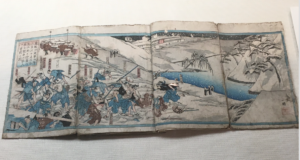
Ii Naosuké’s Assassination, As Depicted in Woodblock Print at Kōdōkan in Mito

Ii Naosuké, regent to the shōgun, was the archenemy of Tokugawa Nariaki, daimyo of Mito. As regent, he was the most powerful man in Japan. He was assassinated in broad daylight at the gate called Sakurada-mon, a main entrance to Edo Castle, on an unseasonably snowy morning in spring 1860, by seventeen Mito samurai and one from Satsuma. The murder was the most brazen offense ever committed against the Tokugawa Bakufu and the most politically significant assassination in an era plagued with assassination and bloodshed. The Bakufu collapsed around eight years later. Following is an excerpt from Samurai Revolution (without footnotes):

The regent’s sedan was surrounded by more than sixty men of [Ii Naosuké’s] Hikoné Han, including bodyguards, foot soldiers, luggage bearers, and sandal carriers. The Hikoné men wore wide-brimmed sedge or lacquered hats and cloaks of oiled paper. Since the hilts of their swords were covered with small cloth pouches to protect against the falling snow they could not readily draw their blades. Suddenly one of the assassins threw off his hat, removed his jacket, drew his sword and cut one of Ii Naosuké’s guards across the forehead, then slashed another man diagonally across the body. One of the assassins fired a pistol, at which signal several others drew their swords and charged. “Look out!” one of the Hikoné men shouted, as the regent issued an order for his guards to remain by his side. But in the chaos all but one of them became separated from the regent, brandishing their swords and spears against the sudden attack. Several of the assailants managed to penetrate the guards’ line and reach the sedan. They stabbed the regent through the side of the vehicle and pulled him to the snowy ground. The one Satsuma man, Arimura Jizaémon, beheaded him, and holding the head up high triumphantly announced that he had killed Ii Naosuké. [end excerpt]

I wrote in detail about the political rivalry between Ii Naosuké and Tokugawa Nariaki in Samurai Revolution. Part I of Samurai Assassins, entitled “The Assassination of Ii Naosuké and the Beginning of the End of the Tokugawa Bakufu,” provides a detailed account of the so-called “Incident Outside Sakurada-mon.”
Two “Philosopher Kings” of the Bakumatsu

The powerful feudal lords Tokugawa Nariaki of Mito (left) and Shimazu Nariakira of Satsuma (right) fit, to a certain extent, the definition of Platonic “philosopher king.” They were of course contemporaries; and Nariakira supported Nariaki’s son, Yoshinobu, in the political fight against the shogun’s regent, Ii Naosuke, to succeed Shogun Iesada.

Tokugawa Yoshinobu was the last shogun. The most powerful driving force behind the overthrow of Yoshinobu’s government, the Tokugawa Bakufu, and Yoshinobu himself, was Saigo Takamori of Satsuma. Saigo was Nariakira’s favorite vassal (samurai).

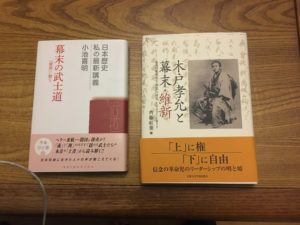
I will not discuss the relationship between the two feudal lords here. Nor will I explain why I call them “philosopher kings,” other than to mention that both realized some very important technological, pedagogical and philosophical changes in their respective domains. I have written about both of these feudal lords, and of course about Yoshinobu and Saigo, in my two most recent books, Samurai Revolution and Samurai Assassins.

[The photo of Tokugawa Nariaki is from the Tokugawa Museum. The photo of Shimazu Nariaki is from the National Diet Library.]

_____________

Recently I have been focusing on my forthcoming Samurai Swordsmen: The Definitive History of the Shinsengumi (1863–1869), scheduled for publication in fall 2026 with Helion. I also provide consulting on Bakumatsu–Meiji Restoration history and culture to authors, editors, publishers, documentarians, producers, screenwriters, translators, and other professionals who need expert guidance on the era.

To explore my books on the Bakumatsu-Meiji Restoration, see Books at a Glance.

Follow me on Facebook | Amazon Author page


Jinbocho: Tokyo’s Used Bookstore District: A Writer’s Bookshelf (11)

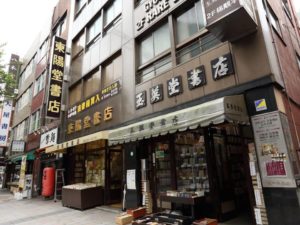
Along with Ueno Park, the used bookstore district in Jinbocho is one of my favorite places in Tokyo. I spent hours browsing there earlier this month. I have found so many invaluable books there over the years.

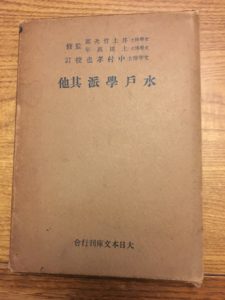
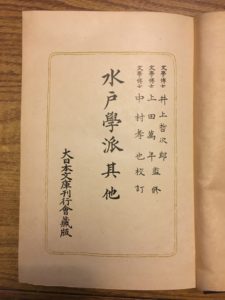
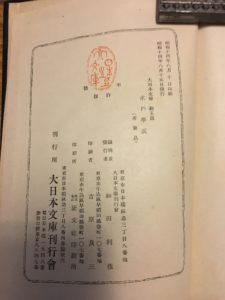
Recently at Jinbocho, I found this gem. Published in 1939, it includes the most important primary sources to focus on the origins of Mitogaku.

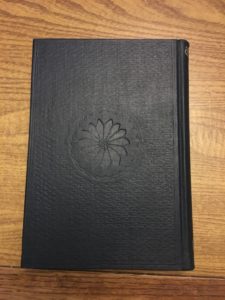
The Imperial Chrysanthemum on the front cover is interesting (1939).

[The photo of the Jinbocho street scene is from travel.mynavi.jp.]

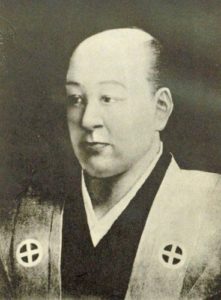
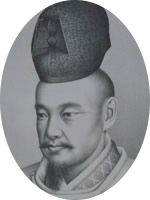
Tokugawa Nariaki, Father of Last Shōgun Tokugawa Yoshinobu

Tokugawa Nariaki was the ninth daimyo of Mito and father of the last shogun, Tokugawa Yoshinobu. He was a reactionary who despised everything Western. He advocated answering foreign demands on Japanese sovereignty with cannon fire and the tempered razor-sharp steel of the Japanese sword. His Mito domain, the cradle of Imperial Loyalism, attracted Imperial Loyalists throughout Japan; and it was Nariaki who coined the Loyalists’ war cry of Sonnō-Jōi—Revere the Emperor and Expel the Barbarians (abbreviated as Son-Jō).

In 1841 Nariaki established the famed Kōdōkan within the precincts of Mito Castle, as the official school of Mito Han. The famous “Sonjō” tablet (below) hangs on the back wall of a room beyond an entrance to the Kōdōkan.

For more on Tokugawa Nariaki’s life and influence, read my post on the two “philosopher kings” of the Bakumatsu.

[The photograph of Nariaki is from the Tokugawa Museum in Mito.]


_____________

Recently I have been focusing on his forthcoming Samurai Swordsmen: The Definitive History of the Shinsengumi (1863–1869), scheduled for publication in fall 2026 with Helion. I also provide consulting on Bakumatsu–Meiji Restoration history and culture to authors, editors, publishers, documentarians, producers, screenwriters, and other professionals who need expert guidance on the era.

To explore my books on the Meiji Restoration, see Books at a Glance.

Follow me on Facebook | Amazon Author page