Samurai Swordsmen Listed on the Publisher’s Website

Samurai Swordsmen: The Definitive History of the Shinsengumi amid the Fall of the Tokugawa Shogunate (1863–1869) is now listed on the website of its publisher, Helion & Company. The book is scheduled for publication in fall 2026.

The listing marks the formal public cataloging of the volume, which represents the culmination of many years of research into the history of the Shinsengumi and the political world of late Tokugawa Japan. The book builds on my earlier work while incorporating extensive primary-source material not previously available in English.

Further updates will be posted here as publication approaches.

View the book on the Helion website

Background: The Shinsengumi Hub


From Traitor to Count: Katsu Kaishū on the Rise and Fall of Reputation

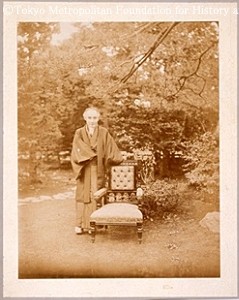
Katsu Kaishū standing beside a chair in the garden of his Hikawa estate in Tokyo, photographed late in his life.

While revising Samurai Revolution for its expanded new edition, I’ve been rereading Katsu Kaishū’s later interviews—many of them at once hilarious and profound. One favorite comes from an 1895 Kokumin Shimbun (newspaper) interview, when Kaishū was seventy-three years old. In the interview he alluded to his title of count, bestowed by the Emperor eight years prior:

I’m naturally a bad person, which is why I put a market price on society. I know that when the price goes up, it’ll eventually go back down. When the price goes down, it’ll eventually go back up. And it never takes more than ten years for the market price to rise and fall. So, if I see that the price for me is down, all I need do is hunker down and wait a while—and sure enough it’ll rise again. The former villain and traitor Katsu Rintarō [Rintarō being his given name] is now Count Katsu Awa [his official name in later life]. But even if I act as if I’m important now, after a while I’ll only grow old and senile, and nobody will even bother to spit on me then. So anyway, that’s the way the market price of society is. A person who has the patience to wait out those ten years of rising and falling is a great man. And actually I’m one of them.

[Katsu Kaishū is the “shogun’s last samurai” of Samurai Revolution.]

A Universal and Timeless Passage from Samurai Revolution

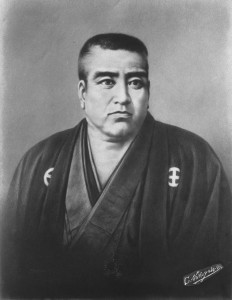
Saigō Takamori (1828–1877), key figure in the overthrow of the Tokugawa Bakufu (Shogunate) and leader of the Meiji Restoration. Widely recognized as one of Japan’s most revered samurai.

[After the Meiji Restoration of 1868] Saigō disdained the extravagant lifestyles and arrogance of government officials in Tokyo, particularly central government leaders whom he considered “thieves” for their high salaries and residences in former estates of feudal lords, while the common people around them suffered. In one of his moral precepts he stated that a government leader, in order to carry out his office properly, must conduct himself frugally with utmost restraint and decorum, and “be on guard against extravagance,” as a role model for the people. But, he admonished, those leaders of the post-Restoration government who had installed themselves in stately residences, adorned themselves with the finest clothes, and “keep beautiful mistresses and contrive to enrich themselves,” could never accomplish the great tasks which comprised the very purpose of the Restoration.


Samurai Swordsmen: The Definitive History of the Shinsengumi (Helion, 2026) is now in production.
For professional guidance on Bakumatsu–Meiji Restoration history, see Historical Consulting.
Explore my books at Books at a Glance.

Revising Samurai Revolution: New Sources and an Enriched Historiography

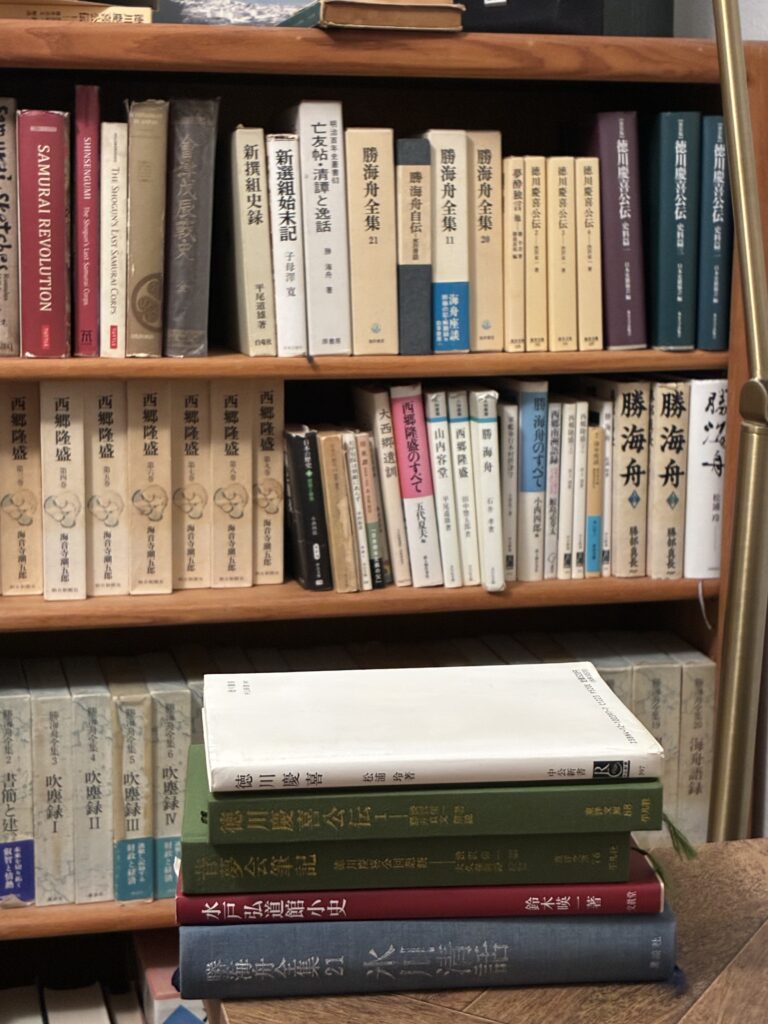
I am pleased with the recent progress I have made in revising Samurai Revolution for a new edition. The revision reflects an enriched historiography grounded in expanded use of key primary sources, including the journals, letters, and memoirs of Katsu Kaishū, letters of Sakamoto Ryōma, Nakaoka Shintarō, and Saigō Takamori, and further analysis informed by leading Japanese historians. I’ll share publication updates as the project develops. Thank you to everyone following the work.


Samurai Swordsmen: The Definitive History of the Shinsengumi (Helion, 2026) is now in production.
For professional guidance on Bakumatsu–Meiji Restoration history, see Historical Consulting.
Explore my books at Books at a Glance.