
Bakumatsu–Meiji Restoration Expertise
Grounded Directly in Japanese Archival and Primary Sources
Four decades of research, six books, and sixteen years in Japan form the foundation of my consulting practice.
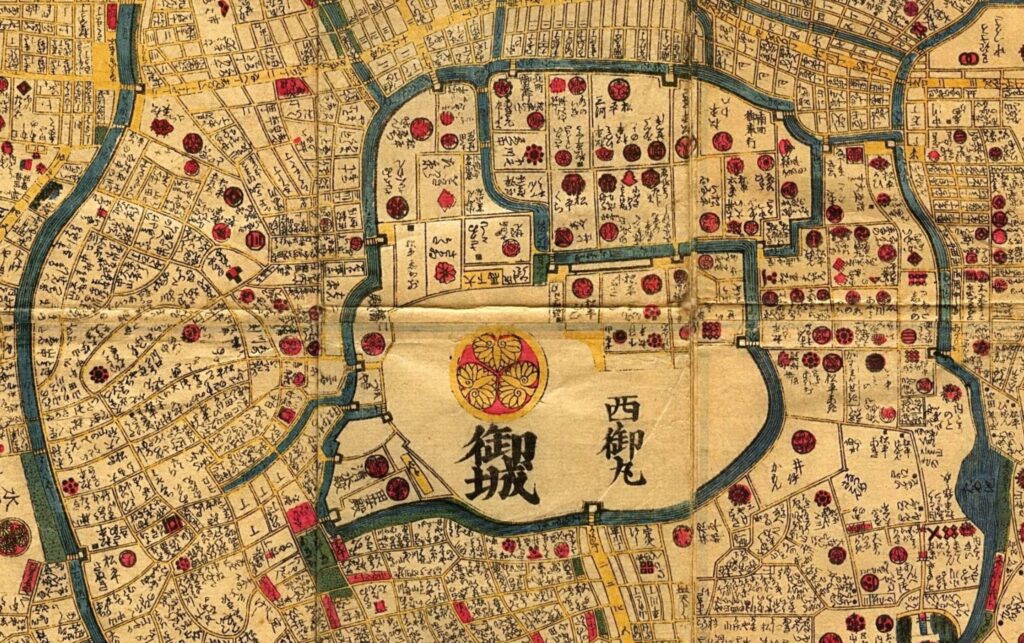
[The area around the shogun’s castle at Edo during Bakumatsu Japan — the era I specialize in]
I work with authors, editors, publishers, documentarians, producers, screenwriters, and other professionals who need expert guidance on Japan’s political and cultural revolution that encompassed the final years of samurai rule (mid-19th century).
I specialize in the Bakumatsu—the final years of the shogunate—and the Meiji Restoration, the pivotal transition in which the samurai-based political order collapsed and the modern Japanese state emerged.
Why This Era Matters
The political and social upheavals that ended samurai rule and culminated in the Restoration of Imperial Rule in 1868 reshaped the foundations of modern Japan. Yet despite its central importance, this era remains widely misunderstood in English-language media. Much of the era’s history—its political rivalries, ideological conflicts, and factional struggles—has never been accurately presented outside of Japan, largely because the essential sources remain in Japanese and require specialized historical and linguistic training to interpret.
Why the Era Is Culturally Powerful
This is the era in which most of what the world recognizes as “samurai culture” takes its classic form: the last generation of sword-bearing warriors; ritual suicide; the moral code known as bushidō; and the dramatic conflicts endlessly depicted in Japanese films, television dramas, novels, manga, anime, and video games.
For over a century, Japanese popular culture has returned to this moment—the collapse of the old order and the birth of the new—because it is the most cinematic, emotionally charged, and symbolically rich period in Japan’s history.
Importance of Expertise-based Accuracy
Accurately portraying this era requires:
• Direct access to Japanese-language archival and primary sources
• The ability to read mid-19th-century Japanese documents in their antiquated forms (most of which are unintelligible to modern Japanese readers without specialized training and are generally republished only in modernized editions)
• Insight into the conflicts between rival samurai factions
• An understanding of how those factions shaped the documents they left behind — letters, diaries, war journals, and other records — and the biases embedded in them
• In-depth knowledge of how the political and ideological structures of the period actually functioned
Much of my research draws on Japanese archival and primary sources, including mid-19th-century materials that require specialized historical, cultural, and linguistic training to interpret accurately. This is the level of grounding necessary to avoid the common errors, distortions, and misunderstandings that frequently appear in English-language treatments of this period.
Core Areas of Expertise
My work focuses on the political, military, social and ideological structures of the final years of samurai Japan, including:
• Political, military, social, cultural, and intellectual history of the Bakumatsu
• The foreign pressures and treaty crises that destabilized the Tokugawa regime
• Major political and military conflicts of the 1850s–1860s
• Political intrigue inside the shogunate, imperial court, and major feudal domains
• Samurai factions, rivalries, ideological movements, and the ideas and aims that shaped the era
• The fall of the shogunate and the movement to restore imperial rule
• The collapse of the samurai class and the social transformation that brought about the modern Meiji state
• Major figures of the era, including Katsu Kaishū, Sakamoto Ryōma, Saigō Takamori, Takechi Hanpeita, Kondō Isami, Hijikata Toshizō, Yoshida Shōin, Takasugi Shinsaku, Yamaoka Tesshū, Tokugawa Yoshinobu, and others
• The Shinsengumi — the shogun’s elite samurai corps and perhaps the most iconic embodiment of samurai culture in the popular imagination (focus of my forthcoming book Samurai Swordsmen)
• Social, cultural, and intellectual history of the era
• Character-driven historical insight, demonstrated throughout my published work, that strengthens the authenticity and depth of screen and narrative projects
In sum: I specialize in samurai history and culture—particularly the Bakumatsu–Meiji Restoration period and its political, military, social and philosophical dimensions.
Shinsengumi: The Focus of My Forthcoming Book
My research on the Shinsengumi spans more than three decades and draws extensively on Japanese-language archival and primary sources. My forthcoming book, Samurai Swordsmen: The Definitive History of the Shinsengumi (Helion, 2026), is the result of decades-long research into their origins, internal dynamics, leadership, factional conflicts, and their role in the political and military crises of the 1860s.
I assist authors, editors, documentarians, and producers in creating historically accurate portrayals of the Shinsengumi in nonfiction, narrative works, and screen projects—guiding them through sources, chronology, terminology, and the many myths surrounding the group.
My work includes detailed insight into the men at the heart of the corps: Kondō Isami, with his quiet resolve and sense of duty, and Hijikata Toshizō, whose austere intensity shaped the Shinsengumi’s iron discipline and reputation. Their intertwined temperaments—and the frictions and loyalties they inspired—are essential to understanding the group’s true history.
What I Provide
• Historical, cultural, and biographical accuracy
• Manuscript and narrative consulting
• Explanation of cultural meaning, etiquette, and social expectations of the samurai era
• Analysis of primary sources and key secondary scholarship
• Evaluation of conflicting Japanese-language sources
• Guidance on chronology, terminology, factional dynamics, and political structure
• Clarification of myths, misconceptions, and common errors in English-language treatments
• Support for nonfiction, literary, and screen-based projects
• Historical and character-based guidance that helps creators develop accurate, nuanced, and believable portrayals
• Occasional speaking engagements or seminar participation when invited
Qualifications
• 40+ years of research and writing
• Six books on the Bakumatsu–Meiji Restoration, translated into eight foreign languages
• Direct engagement with Japanese archival and primary sources
• Ability to read and interpret late-Edo-period documents and manuscripts
• Mastery across political, military, cultural, and ideological dimensions of the era
• Sixteen years living and working in Japan
• On-site research across Japan
• 50+ years of traditional Japanese martial arts practice
• Master’s degree in humanities
Selected Recognition
• Personal commendation from Prime Minister Keizō Obuchi
• Praised in The Japan Times, Yomiuri Daily News, TLS, Kirkus, and Choice
• Positive evaluations from multiple military-history editors
• Recognized for making this history and culture accessible to international audiences
• Featured on-camera in a History Channel documentary on the samurai
Inquiries:
For consulting inquiries or project discussion, please use the contact form.