
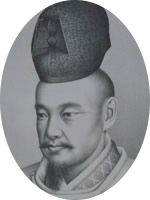
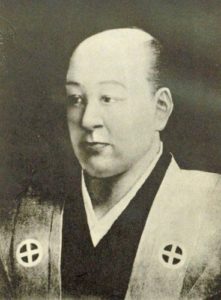
The powerful feudal lords Tokugawa Nariaki of Mito (left) and Shimazu Nariakira of Satsuma (right) fit, to a certain extent, the definition of Platonic “philosopher king.” They were of course contemporaries; and Nariakira supported Nariaki’s son, Yoshinobu, in the political fight against the shogun’s regent, Ii Naosuke, to succeed Shogun Iesada.
Tokugawa Yoshinobu was the last shogun. The most powerful driving force behind the overthrow of Yoshinobu’s government, the Tokugawa Bakufu, and Yoshinobu himself, was Saigo Takamori of Satsuma. Saigo was Nariakira’s favorite vassal (samurai).
I will not discuss the relationship between the two feudal lords here. Nor will I explain why I call them “philosopher kings,” other than to mention that both realized some very important technological, pedagogical and philosophical changes in their respective domains. I have written about both of these feudal lords, and of course about Yoshinobu and Saigo, in my two most recent books, Samurai Revolution and Samurai Assassins.
[The photo of Tokugawa Nariaki is from the Tokugawa Museum. The photo of Shimazu Nariaki is from the National Diet Library.]
_____________
Recently I have been focusing on my forthcoming Samurai Swordsmen: The Definitive History of the Shinsengumi (1863–1869), scheduled for publication in fall 2026 with Helion. I also provide consulting on Bakumatsu–Meiji Restoration history and culture to authors, editors, publishers, documentarians, producers, screenwriters, translators, and other professionals who need expert guidance on the era.
To explore my books on the Bakumatsu-Meiji Restoration, see Books at a Glance.
Follow me on Facebook | Amazon Author page