On The 150th Anniversary of the Meiji Restoration (4)

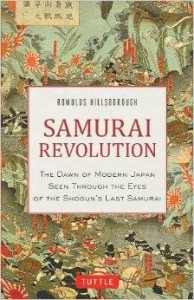
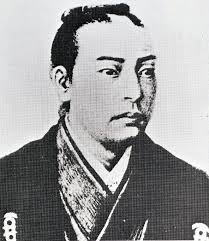
 “A man who thinks not of honor or disgrace, praise or criticism, but rather takes decisive action in what he believes—though he be considered by the world a consummate villain, a perfect scoundrel—I would support such a man.” Katsu Kaishū (Qtd. in Samurai Revolution, from Hikawa Seiwa. Originally published in interview with the newspaper Kokumin Shinbun, Jan. 29, 1895)


Katsu Kaishū is the “shōgun’s last samurai” of Samurai Revolution.

On The 150th Anniversary of the Meiji Restoration (3)

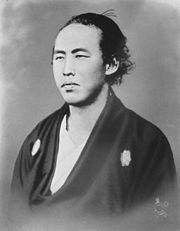
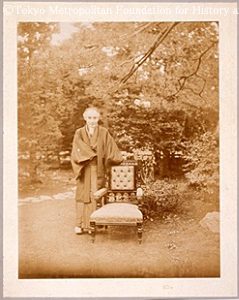
Takéchi Hanpeita and Sakamoto Ryōma: Leaders of the Meiji Restoration

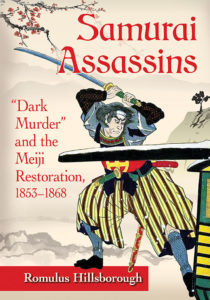
Takéchi Hanpeita and Sakamoto Ryōma both perished during the volatile and bloody years leading up to the Meiji Restoration of 1868. Close friends from the great domain of Tosa, both were “charismatic swordsmen originally from the lower rungs of Tosa society,” I wrote in Samurai Assassins, excerpted below:

Takéchi Hanpeita, aka Zuizan, was a planner of assassinations and stoic adherent of Imperial Loyalism and bushidō, whose struggle to bring Tosa into the Imperial fold led to his downfall and death. Sakamoto Ryōma, one of the most farsighted thinkers of his time, had the guts to throw off the old and embrace the new as few men ever have—and for his courage, both moral and physical, he was assassinated on the eve of a revolution of his own design. But while Ryōma abandoned Tosa to bring the revolution to the national stage, Takéchi, remaining loyal to his daimyo, was determined to position Tosa as one of the three leaders of the revolution. [end excerpt]

Takéchi died by his own hand (seppuku) in the intercalary Fifth Month of the year on the Japanese calendar corresponding to 1866. Ryōma was killed in the Tenth Month of the following year, just before the Restoration. Had they survived the revolution, they very well might have gone on to lead the new Meiji government.

hillsborough_978-1-4766-6880-2
widget_buy_amazon

On The 150th Anniversary of the Meiji Restoration (2)

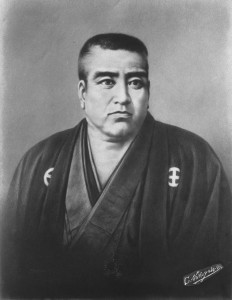
Saigō Takamori: The most powerful human force behind the Meiji Restoration

His repugnance of “love of self”: a lesson for the president and congress of the United States of America in 2018

Saigō Takamori taught that “a great man,” unlike the average man, “never turns away from difficulty or pursues [his own] benefit.” He “takes the blame for mistakes upon himself and gives credit [for meritorious deeds] to others.” His biographer, Kaionji Chōgorō, wrote that Saigo, “was physiologically unable to bear” even being suspected of any sort of underhandedness. Saigō had a deep-seated repugnance of “love of self,” which, in his own words, he described as “the primary immorality.”


Saigō Takamori is featured in Samurai Revolution.

S644502_247397672083151_1209814990_n

widget_buy_amazon

Katsu Kaishu’s Words of Wisdom to Current Stock Market Investors

“I know that when the price goes up, it’ll eventually go back down. When the price goes down, it’ll eventually go back up. And it never takes more than ten years for the market price to rise and fall. So, if I see that the price for me is down, all I need do is hunker down and wait a while—and sure enough it’ll rise again.” (In Hikawa Seiwa, as translated in Samurai Revolution)

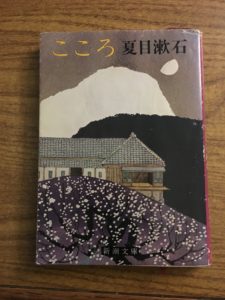
A Writer’s Bookshelf (9): Natsume Soseki’s Kokoro

Natsume Soseki’s Kokoro, published in 1914 shortly after the end of the Meiji era (1868-1912), is one of my favorite novels. An underlying theme, of course, is the final stamp of modernity with the death of Emperor Meiji, under whose rule, which actually began with the overthrow of the Tokugawa Bakufu in 1868, Japan was modernized. The reading of Kokoro is enhanced, I think, by Shiba Ryotarō’s wonderful historical novel Junshi, about General Nogi Maresuke the famed hero of the Russo-Japan War whose seppuku in the wake of the death of Meiji Emperor shocked the country.

________________

Recently I have been focusing on my forthcoming Samurai Swordsmen: The Definitive History of the Shinsengumi (1863–1869), scheduled for publication in fall 2026 with Helion. I also provide consulting on Bakumatsu–Meiji Restoration history and culture to authors, editors, publishers, documentarians, producers, screenwriters, and other professionals who need expert guidance on the era.

To explore my books on the Meiji Restoration, see Books at a Glance.

Follow me on Facebook | Amazon Author page