A Writer’s Bookshelf (7): Takasugi Shinsaku: “tickled pink”

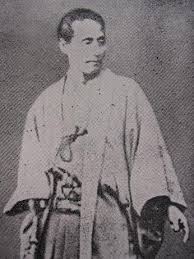
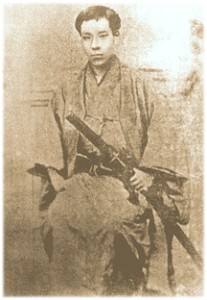
On a great stone monument near a flower-strewn grave in the verdant Yamaguchi countryside is a telltale description of the most radical samurai hero to hail from the most radical of samurai domains: “Once he got moving, he was like a bolt of lightening. Once he got started, he was like the wind and the rain.” Takasugi Shinsaku – pampered child prodigy; brilliant disciple of Yoshida Shoin; unruly swordsman who in a drunken rage cut a wild dog in two; sometimes stoic whose escapades in the Nagasaki and Kyoto pleasure quarters are the stuff of legend; restless youth who preferred “to think while on the run”; explosive military commander and gifted poet; creator of Japan’s first modern militia who played on the three-stringed shamisen even as the war around him raged; consumptive who kept his sake cup near the sickbed from which he laid his war plans, in defiance of the disease that would soon kill him.

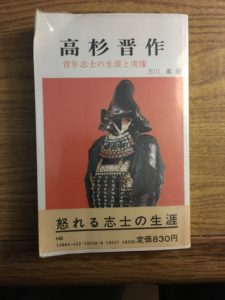
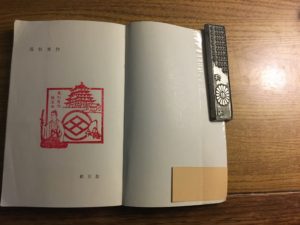
The above is from an article I wrote for Tokyo Journal in 2003. The “to think while on the run” description is from a biography by Furukawa Kaoru, published in 1971 (below).

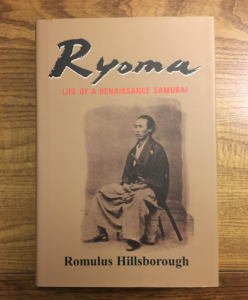
Takasugi of course was a friend and political ally of Sakamoto Ryōma. In the 1980s, while researching my novel Ryoma: Life of a Renaissance Samurai, I visited Hagi, Takasugi’s hometown, in Yamaguchi Prefecture. In front of Takasugi’s house I met an old woman selling copies of Furukawa’s biography, which featured a special stamp stating, “Birthplace of Takasugi Shinsaku.” She must have been in her eighties – and so Takasugi was most likely of her grandfather’s generation. It is entirely possible that her family lived in Hagi for many generations. If so, it is likely that she grew up hearing stories of Takasugi. When I bought a copy of this book, she smiled and told me that Shinsaku would be “tickled pink” to know that an American was buying his biography!
Recently I have been focusing on my forthcoming Samurai Swordsmen: The Definitive History of the Shinsengumi (1863–1869), scheduled for publication in fall 2026 with Helion. I also provide consulting on Bakumatsu–Meiji Restoration history and culture to authors, editors, publishers, documentarians, producers, screenwriters, and other professionals who need expert guidance on the era.

To explore my other books on the Meiji Restoration, see Books at a Glance.

Follow me on Facebook | Amazon Author page
“The sword is in the man” (剣は人なり) and Katsu Kaishū

The historical novelist Shiba Ryōtarō wrote that the original purpose of the sword was to kill people, though during the centuries of peace under the Tokugawa Bakufu “it became a philosophy.” With the enactment of the Laws for Warrior Households of Kanbun [Kanbun era: 1661-1673], which included a ban on matches using real swords, kenjutsu (“art of the sword”) was treated in some respects as a sport. Starting in the peaceful Genroku era (1688-1704), many samurai, especially those in Edo, led relatively easy lives as administrators rather than warriors – while form and a beautiful technique took precedence over effectiveness in actual fighting, and theory became more important than ability. But with the renaissance of the martial arts during the last years of the Bakufu (1853-68), kenjutsu practitioners shunned form and beauty for practical technique that would work in the real time.

Ken wa hito nari” (剣は人なり) goes an old saying. The meaning is cryptic but perhaps may be translated as, “The sword is in the man.” It is used to emphasize the importance of “polishing one’s mind” through rigorous training. This concept is articulated by Katsu Kaishū, who learned how to “polish the mind” from kenjutsu training, he said. Then, “… as long as you keep your mind clear, like a polished mirror and still water, no matter what adversity you might encounter, the means for coping with it will naturally come to you.”


Katsu Kaishū is “the shogun’s last samurai” of Samurai Revolution.