

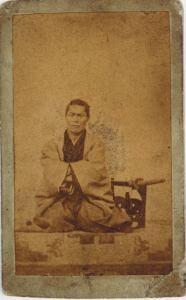
loyalty(忠), pronounced chū
Makoto is a combination of the characters for “to say” and “to do” (or “to accomplish”). “To do what one says” is to be sincere. Chū is a combination of the characters for “inside” and “heart” (or “mind”): A loyal samurai keeps his heart and mind within the fold of his feudal lord, or daimyo. This may be directed at one’s country, or even family or friends.
But even the most loyal person of the best intentions might lack the guts do what he says. It might be too dangerous. Or perhaps the sacrifice would be too great. Which is one of the reasons why courage, both physical and moral, is so important.
So if you think about it, these basic bushidō virtues are not exclusively “of the samurai” or even Japanese. Rather, it seems, “the way of the samurai” is to a certain extent universal.
This essay reflects on one of the central moral codes guiding the Shinsengumi — themes explored further in Samurai Swordsmen.
Samurai Swordsmen: The Definitive History of the Shinsengumi (Helion, 2026) is now in production.
For professional guidance on Bakumatsu–Meiji Restoration history, see Historical Consulting.
Explore my books at Books at a Glance.