The Ryōma Phenomenon (6) – Katsu Kaishū and Sakamoto Ryōma: The Meeting That Changed Japan

I have been speaking and writing about “The Ryōma Phenomenon” for most of this summer. But it seems certain that there would not have been a “Ryōma Phenomenon” at all without Katsu Kaishū, “the shogun’s last samurai” of my book, Samurai Revolution: The Dawn of Modern Japan Seen Through the Eyes of the Shogun’s Last Samurai.

When Ryōma fled his native domain of Tosa in the spring of 1862, thus becoming a ronin, he was still very much a man of the sword: i.e., determined to bring down the Bakufu my military force. And he still had strong anti-foreign leanings. In the future, of course, he would devise a plan for the bloodless overthrow of the Bakufu to avoid dangerous civil war and preserve national sovereignty against Western imperialism to usher in the modern age. This vision began to take shape in Ryōma’s mind around the end of 1862, under the Katsu Kaishū’s tutelage. Kaishū was a high-ranking naval officer in the Bakufu. He was a founder of the Japanese Navy who had sailed to San Francisco as captain of the Kanrin Maru, the first Japanese vessel to reach the United States in March 1860. Ryōma, meanwhile, was a political outlaw for having fled Tosa, and a known anti-Bakufu activist.
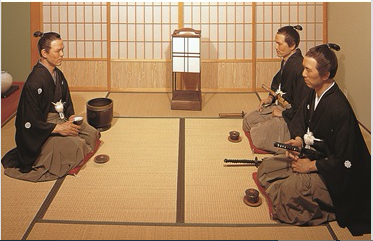
ryoma with Kaishu (museum)

Assassination was rampant at the time. According to Kaishū’s recollection of his first meeting with Ryōma, which took place at Kaishū’s home in Edo, Ryōma intended to kill him. (This depiction of the meeting is from the Ryōma History Museum in Kochi. It is one of a series of depictions of Ryōma’s life using wax figures.)

Of course, Ryōma did not kill Kaishū. Instead, he listened closely as Kaishū spoke of the futility of trying to defend against Western imperialism without a navy, for which Japan needed Western technology. He said that the navy must recruit capable young men from all over Japan, regardless of social class, and not only the privileged elite – radical ideas coming from an elite government official. This naturally would include Ryōma and his friends. Years later Kaishū wrote, “It was around midnight. After I had spoken incessantly about the reasons why we must have a [national] navy, [Ryōma], as if having understood, told me this: ‘I was resolved to kill you this evening, depending on what you had to say. But having heard you out, I am ashamed of myself.’”

Ryōma asked Kaishū to accept him as his student, which Kaishū did. Soon Ryōma recruited several friends from Tosa and elsewhere to work with him under Kaishū. During the following two years, Kaishū would not only change Ryōma’s life, but he would change Japanese history by providing Ryōma with the practical means to bring about the revolution.


Samurai Swordsmen: The Definitive History of the Shinsengumi (Helion, 2026) is now in production.
For professional guidance on Bakumatsu–Meiji Restoration history, see Historical Consulting.
Explore my books at Books at a Glance.
The Ryoma Phenomenon (5) – “You Gotta Have Big Dreams!”

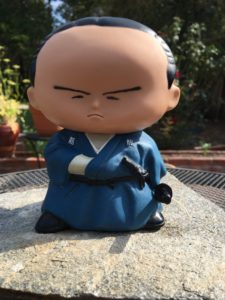
“You gotta have big dreams!” でっかい夢を持たなきゃいかんぜよ。

IMG_0973

If you travel to Sakamoto Ryoma’s hometown of Kochi you will find all kinds of “Ryoma goods,” such as this toy that says four “Ryoma-isms,” splendidly pronounced in the Tosa dialect. Its repertoire includes the above quote, along with the following three, translated by me:

“Your heart must always be as big as the Pacific Ocean.” (心はいつも太平洋ぜよ。)

“Don’t’ worry about little things.” (小さな事にこだわってちゃいかんぜよ。)

“Cheer up!” (クヨクヨしてちゃいかんぜよ。)

This toy was a gift from my Japanese teacher, Mrs. Tae Moriyama, a native of Kochi, years ago while I was writing my novel Ryoma: Life of a Renaissance Samurai. I can’t say that I’ve actually ever come across any of these Ryoma-isms in my research (lol), but I think that whoever produced this toy captured Ryoma’s personality quite well.


Explore my books at Books at a Glance.

The Ryoma Phenomenon (4) – A Nation Still Inspired

yonago ryoma 2002 (1)
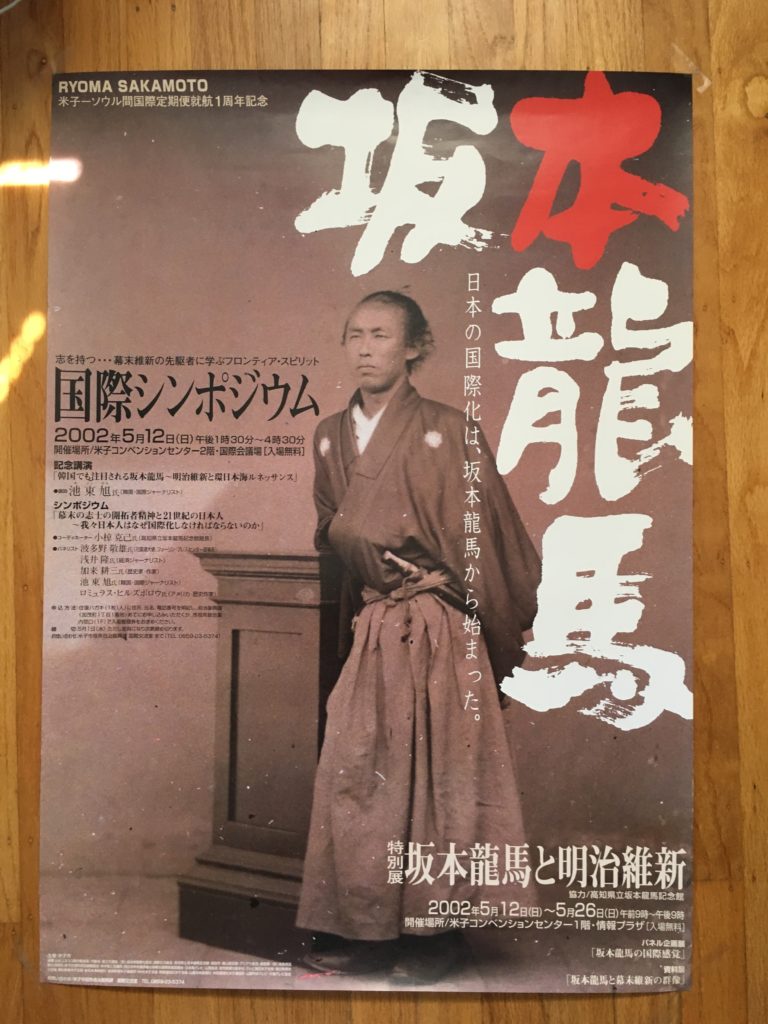
There are around 170 societies and clubs of “Ryoma fans” – tens if not hundreds of thousands of them – in cities throughout Japan. Ryoma fans gather each year to celebrate Ryoma’s life and legacy. These events are held alternately in Ryoma’s hometown of Kochi, and another Japanese city where a Ryoma Society resides.
Other Ryoma events are also frequently held around Japan, including symposiums featuring panel discussions with and lectures by historians and writers. The poster shown here is from a symposium on the theme of internationalism and Sakamoto Ryoma, held in Yonago, Tottori Prefecture, facing the Sea of Japan, in 2002. This was three years after the publication of my novel, Ryoma: Life of a Renaissance Samurai. I was honored to be included in the panel discussion.
yonago ryoma 2002 (2)

The Ryōma Phenomenon (3) – The Statue at Katsurahama

ryoma bronze
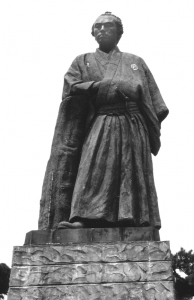
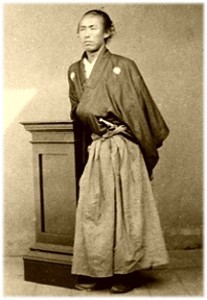
In 1928, fourteen years after the publication of Chikami’s biography mentioned in Part 2 of this series, this famous statue was unveiled at Katsurahama beach in Ryoma’s hometown of Kochi, further strengthening the foundation of “The Ryōma Phenomenon” in the 21st century. Looking out at the Pacific Ocean that he had intended to sail with his Kaientai (“Naval Auxiliary Corps”), precursor to the Mitsubishi, Ryōma, wearing boots, has his right hand inside his kimono. The boots and the pose were inspired by the famous standing photograph taken in Nagasaki in 1866, the year before his death.
Sakamoto Ryoma

Samurai Swordsmen: The Definitive History of the Shinsengumi (Helion, 2026) is now in production.
For professional guidance on Bakumatsu–Meiji Restoration history, see Historical Consulting.
Explore my books at Books at a Glance.
The Ryōma Phenomenon (2) – Find Out Why Ryōma Still Captivates Japan

ryoma

Sakamoto Ryōma: founder of Japan’s first trading company, swaggering swordsman who packed a Smith & Wesson, outlaw, leader in the “samurai revolution” at the dawn of modern Japan – and now, in the 21st century, he’s a superstar.

With the geopolitical and economic challenges facing Japan today, many people express their wish that a leader of Ryōma’s caliber would emerge. “Who from the past millennium of world history would be most useful in overcoming Japan’s current financial crisis?” a national newspaper asked executives of some 200 Japanese corporations. Ryōma received more mention than any other historical figure, topping such giants as Thomas Edison, Leonardo da Vinci, Saigō Takamori, Oda Nobunaga and the founders of NEC and Honda.

12239281_166492783701871_854606056761245490_o

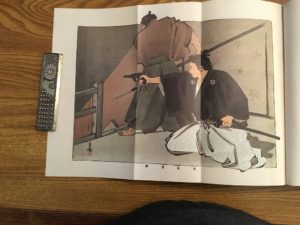
As I mentioned in a recent post, to the best of my knowledge the first book about Ryōma was Sakazaki Shiran’s novel, published in 1883. Ryoma’s fame and legacy were further boosted by Chikami Kiyomi’s 1914 biography, a famous illustration from which is shown here.

What’s so special about Ryōma? Why “The Ryoma Phenomenon” in the 21st century? To find out, read about his life and legacy in the only novel about him in English: Ryoma: Life of a Renaissance Samurai.


Samurai Swordsmen: The Definitive History of the Shinsengumi (Helion, 2026) is now in production.
For professional guidance on Bakumatsu–Meiji Restoration history, see Historical Consulting.
Explore my books at Books at a Glance.