Shiba Ryōtarō’s Masterpiece: “Ryōma ga Yuku”

shiba ryo with ryoma et al

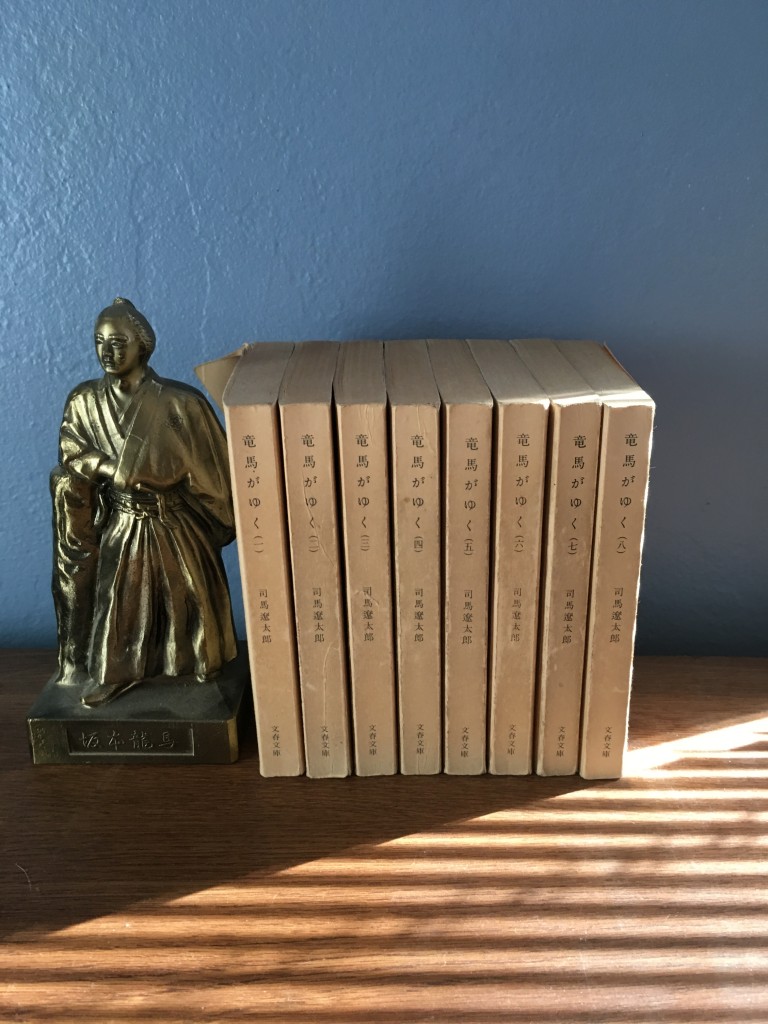
Among my favorite Japanese writers is the prolific historical novelist Shiba Ryōtarō (1923 – 1996), whose masterpiece Ryōma ga Yuku immortalized Sakamoto Ryōma in the psyche of the Japanese people. Originally published in serial form in the national newspaper Sankei Shimbun in 1962, this epic of the life and times of Sakamoto Ryōma comprises eight paperback volumes in its current printed form. My other favorite books by Shiba include Moeyo-ken, which focuses on Hijikata Toshizō, vice commander of the Shinsengumi; Yotte Sōrō, whose protagonist, Yamauchi Yōdō, the flamboyant daimyo of Ryōma’s native Tosa, played an important role in this history; Hitokiri Izō, the haunting portrait of the notorious assassin Okada Izō; and Saigō no Shōgun, about the life and times of the brilliant last shogun, Tokugawa Yoshinobu. Among these, Yotte Sōrō and Saigō no Shōgun have been published in English under the respective titles of Drunk as a Lord (Yōdō’s nom de plume was Geikaisuiko, “Drunken Lord of the Sea of Whales,” for the rich bounty of whales off the Tosa coast), and The Last Shogun: The Life of Tokugawa Yoshinobu.

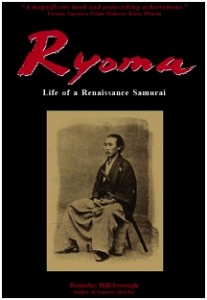
I was introduced to Sakamoto Ryōma and the epic history of the Bakumatsu (i.e., the final fifteen years of the Tokugawa Shogunate: 1853 – 1868) through Ryōma ga Yuku, when a friend gave me a copy of Vol. 1, sometime around 1982. I owe my inspiration for my historical novel, Ryoma: Life of a Renaissance Samurai, to Shiba’s book.

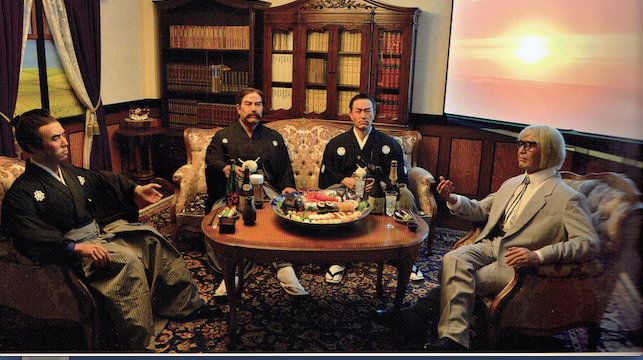
The above photo from Ryōma Rekishikan, a museum in Ryōma’s hometown of Kochi, shows one of 27 scenes of wax figures, some historical others personal, from Ryōma’s life. The fourth scene on the tour depicts Ryōma’s birth in Kochi in 1835. Scene 26 shows the gruesome assassinations of Ryōma and his friend and cohort in the revolution, Nakaoka Shintarō, in Kyoto in 1867. The final scene, number 27, depicts four immortals, perhaps discussing the state of Japan and the world today: Shiba Ryōtarō sits opposite Ryōma, joined by Mitsubishi founder Iwasaki Yatarō (left) and Nakaoka.

Below is a photo of my personal set of Ryōma ga Yuku, the jackets long since worn out.
IMG_0510


Samurai Swordsmen: The Definitive History of the Shinsengumi (Helion, 2026) is now in production.
For professional guidance on Bakumatsu–Meiji Restoration history, see Historical Consulting.
Explore my books at Books at a Glance.
 

Kondo Isami’s Embroidered Skull

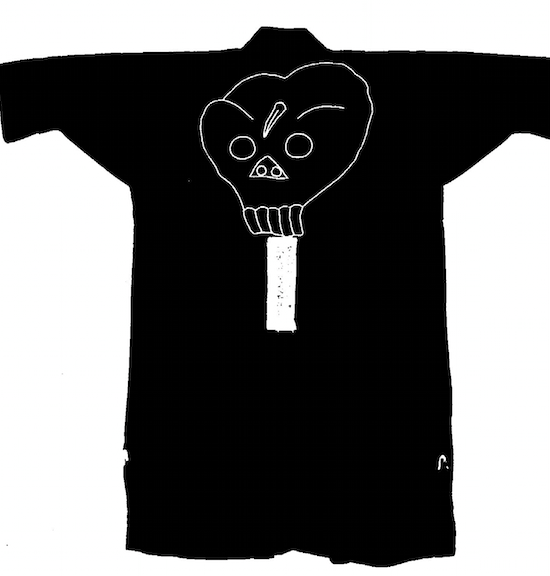
Shinsengumi Commander Kondo Isami was a peasant by birth, a warrior by nature. He was a man of traditional values and a martial mind-set, whose black training robe was embroidered in white on the backside with a large human skull – a symbol of his resolve to die in battle whenever he entered the dojo. He had enlisted in the Roshi Corps [precursor to Shinsengumi] with aspirations of becoming a samurai in the service of the shogun. As leader of the shogun’s most lethal samurai corps he secured a vehicle into the top strata of the Tokugawa hierarchy and indeed historic immortality. (excerpt from Shinsengumi: The Shogun’s Last Samurai Corps, p. 22)

Black training robe worn by Shinsengumi commander Kondō Isami, featuring a white embroidered skull symbolizing his dedication and courage.


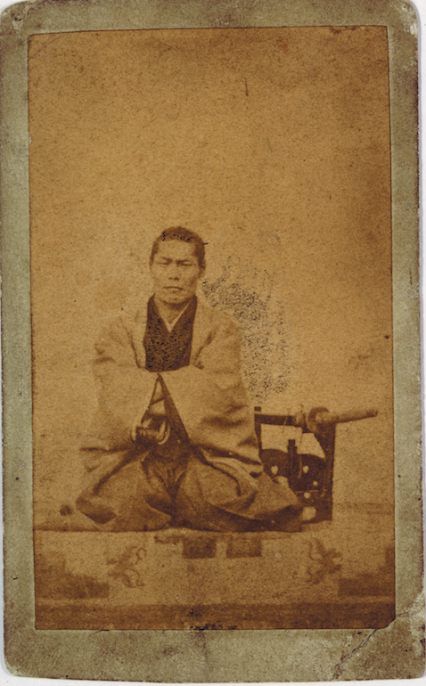
[The photograph of Kondo’s training robe is used in Shinsengumi: The Shogun’s Last Samurai Corps courtesy of Masataka Kojima. The photo of Kondo himself is used courtesy of the descendants of Sato Hikogoro and Hino-shi-Furusato Hakubutsukan.]


Follow Romulus Hillsborough on Facebook | Amazon Author page

Takasugi Shinsaku’s Indomitable Spirit

Takasugi Shinsaku

Recently I’ve been posting a lot of material about Sakamoto Ryoma. One of Ryoma’’s closest cohorts in the revolution to topple the Tokugawa Bakufu was Takasugi Shinsaku, the leader of Choshu’s revolutionary army. Aside from a bout of the smallpox that nearly killed him at age nine, Takasugi reportedly spent a relatively uneventful childhood as the only son of a high-ranking samurai in Hagi, the castle town of Choshu. Not much is known about his childhood, although a few anecdotes have been passed down.

One day during the New Year holiday of his fifth year, as he flew a kite near his home in observance of a New Year tradition, a visitor appeared. The visitor, a samurai, was dressed formally for the occasion in fine clothes–hakama and haori displaying his family crest–a gift from the Choshu daimyo. He had come to exchange New Year’s greetings with the Takasugi family. Just as he passed by the boy, the kite fell to the ground near a muddy patch of melting snow. The visitor accidentally stepped on the kite, crushing it. Since nobody was present but a small boy, he disregarded the incident and continued toward the house. But the boy was angry and picked up a handful of mud, with which he threatened to soil the visitor’s clothes unless he apologized. The visitor begged the small boy’s pardon and continued on his way.

Another episode indicative of Takasugi Shinsaku’s indomitable spirit involves the custom among the samurai of Hagi to send their young sons to the local execution grounds to witness the beheadings of criminals—which was supposed to nurture bravery. One day his mother prepared a boxed lunch and told him to go and watch the beheadings with other samurai boys. After the first beheading some of the boys ran home in horror. But not Shinsaku, who ate his boxed lunch and remained until the end of the day to watch the entire series of executions.

(source: Furukawa, Kaoru. Takasugi Shinsaku. Osaka: Sogensha, 1986; pp. 14-16)

For updates about new content, connect with me on Facebook.

Read more about Takasugi Shinsaku in my historical narrative, Samurai Revolution, and my biographical novel, Ryoma: Life of a Renaissance Samurai.


ryoma

Ryoma: Life of a Renaissance Samurai, the only biographical novel about Sakamoto Ryoma in English, is available on Amazon.com.

widget_buy_amazon